
Unbiased headlines. Facts, not spin.
Unbiased Headlines is an independently owned news organization. We bring you the facts, not opinions, written fresh from 110+ named sources. Sources linked so you can verify it yourself.
 defense
Breaking / Critical (9/10)
Event date: October 19, 2026 ·
IRGC Says Three Tankers Hit by Mines in Hormuz as Pakistan and Qatar Push New Iran Peace Proposal
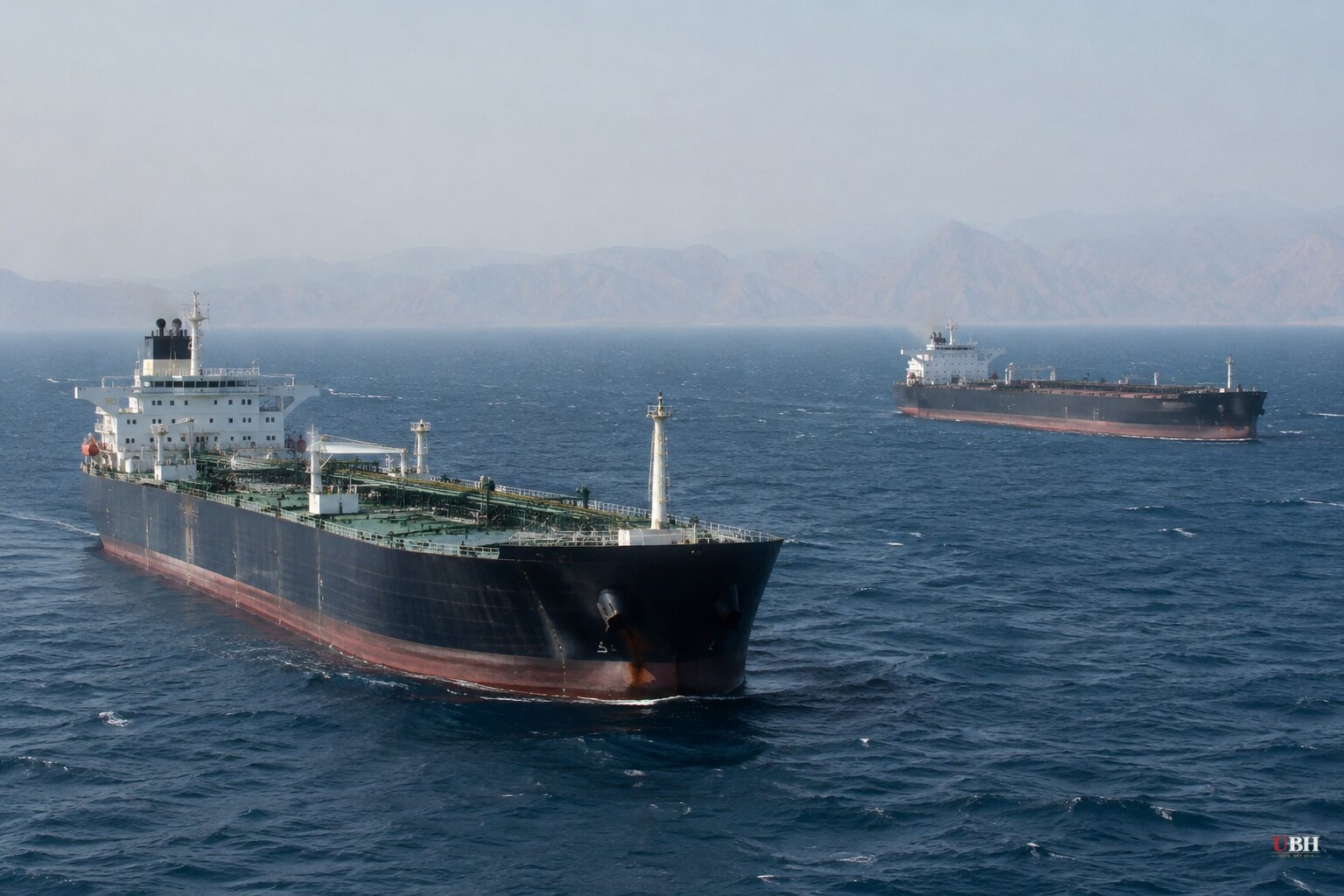
Since the U.S.-Israel war with Iran made the Strait of Hormuz a contested shipping lane, escalation and diplomacy have run on parallel tracks. Today, Oct. 21, both moved again.
Three tankers hit in the strait
Iran's Revolutionary Guard Corps announced that three oil tankers were struck by naval mines on routes south of the waterway. Two vessels were immobilized after catching fire. A third, carrying two million barrels of crude, exploded.
Iranian authorities warned that unauthorized transit through the mined corridor would lead to destruction. Foreign Minister Abbas Araghchi said the strait will remain closed until Washington accepts Tehran's terms.
The Washington Post, citing Iranian officials and diplomats in the region, reported that Tehran expects Trump to be less sensitive to high energy prices after the midterm elections. By that account, Iran is trying to inflict maximum pain now by escalating in Hormuz. That is the Post's sourcing, not a position Iran has stated on the record.
Washington's line
Secretary of State Marco Rubio told CNBC that a deal with Iran is exceptionally difficult to reach. He said economic pressure will continue until attacks on merchant vessels stop, and he expressed deep concern about the disruption of the corridor.
President Trump, speaking at a rally in Kansas, called rising energy costs a "small price to pay" to keep Iran from getting a nuclear weapon. "I have to decide on Iran, I have to decide how we want to win," he said. He signaled that results so far are not enough to end operations.
That is a political bet. Americans are paying for the fight at the pump, and the midterms are close.
Pakistan and Qatar carry a new proposal
Pakistani Field Marshal Asim Munir met President Masoud Pezeshkian in Tehran on Tuesday. The New Arab reported that Munir delivered a new peace proposal, which Pakistan and Qatar hope will head off renewed fighting and bring both sides back to the table. Iranian media reported the two discussed mediation efforts and regional developments.
Sources familiar with the mediation told The New Arab that Qatar and Pakistan presented a "middle-ground proposal" meeting the demands of both the U.S. and Iranian sides. Those sources said the proposal Munir brought to Iranian officials has U.S. approval and had already received prior Iranian approval. They also said it offers a "partial response" to Iran's demand to recover frozen funds held in banks in Qatar. These claims come from unnamed sources and have not been confirmed by either government.
The conservative Iranian daily Jomhouri Eslami, citing unnamed "informed sources," reported that Qatari- and Pakistani-mediated talks could take place this week. It said the framework would aim to halt clashes, address outstanding disputes and sequence concessions so fighting does not resume. Iranian officials publicly deny that substantive nuclear negotiations with Washington are under way.
Russia is working the same space. Foreign Minister Sergei Lavrov was in Tehran this week to discuss "de-escalation steps" with Araghchi and Pezeshkian. President Vladimir Putin told U.S. envoy Steve Witkoff on Wednesday that room for diplomacy remains and that an agreement with Tehran is needed, according to the Kremlin. Sobh-e No, a paper aligned with Parliament Speaker Mohammad Bagher Ghalibaf, reported a Russian idea for a joint Iranian-Russian-Chinese initiative on Hormuz.
Iran's conditions and threats
Tehran is raising the price of talks while it talks. Pezeshkian said threats and sanctions must be lifted in practice before conditions for negotiations can be set.
Revolutionary Guards spokesman Hossein Mohebbi said Iran would launch offensive operations against any country that attacks it, as part of a shift toward asymmetric warfare. An unnamed senior security official told Press TV that Iran is ready for all-out war and would respond "without restraint" to renewed attacks or assassinations.
Ghalibaf met Supreme Leader Mojtaba Khamenei on Wednesday to discuss military and economic developments, Iranian media reported.
Iran's account of the cause is blunt. Lavrov blamed the "unprovoked act of aggression" by the U.S. and Israel for the region's troubles, and Araghchi has told Trump: "Last time you wanted to 'finish the job, Iran emerged even stronger. Want to try your luck again? Be our guest." Defense Minister Mehrdad Ketabchi, approved by parliament on Sunday, said Iran has taken measures for any use of the U.S. "Mother of All Bombs."
Gulf states want Moscow to lean on Tehran
The night before Lavrov flew to Iran, Gulf Cooperation Council foreign ministers met him in Bahrain. They asked Russia to "play an active role in pressing Tehran" to stop attacking its neighbors.
GCC Secretary-General Jasem al-Budaiwi singled out Houthi drone and missile strikes on civilian airports and energy facilities in Saudi Arabia. He also cited Iranian attacks on commercial vessels in Hormuz.
Lavrov said Russia values its trade and diplomatic ties with the GCC but declined to use its influence with Iran. He pitched a Russian concept for direct dialogue among the Gulf's coastal states and neighbors such as Iraq and Jordan.
The wider security picture
The friction extends beyond the Gulf. Six people were arrested near RAF Fairford in England on Sept. 27 over a suspected terror plot, including a dual British-Iranian national suspected of preparing terrorist acts. A U.S. official confirmed that about a dozen B-1 bombers were redeployed from the base to the United States. A Department of War official said all U.S. bombers deployed to RAF Fairford have redeployed to their home stations in the United States.
Araghchi has also denied reports that Rubio demanded Iran's U.N. delegation leave the United States in late September. He said all diplomats but one left "as scheduled."
What to watch
The gap is wide and stated plainly. Tehran wants sanctions and threats lifted before it sets terms. Washington says pressure stays until the ship attacks end. Neither government has confirmed a date for talks. Jomhouri Eslami's "this week" is the only timeline on the table.
Sources used for this briefing
6 links from 5 independent newsrooms (syndicated copies of the same report count once)
These are the sources it draws on, linked so you can verify.


