
Unbiased headlines. Facts, not spin.
Unbiased Headlines is an independently owned news organization. We bring you the facts, not opinions, written fresh from 110+ named sources. Sources linked so you can verify it yourself.
 defense
Major Story (7/10)
Event date: October 14, 2026 ·
U.S. Lifts Sanctions on Venezuela's Jorge Rodríguez Days After New Torture Charges Against Maduro
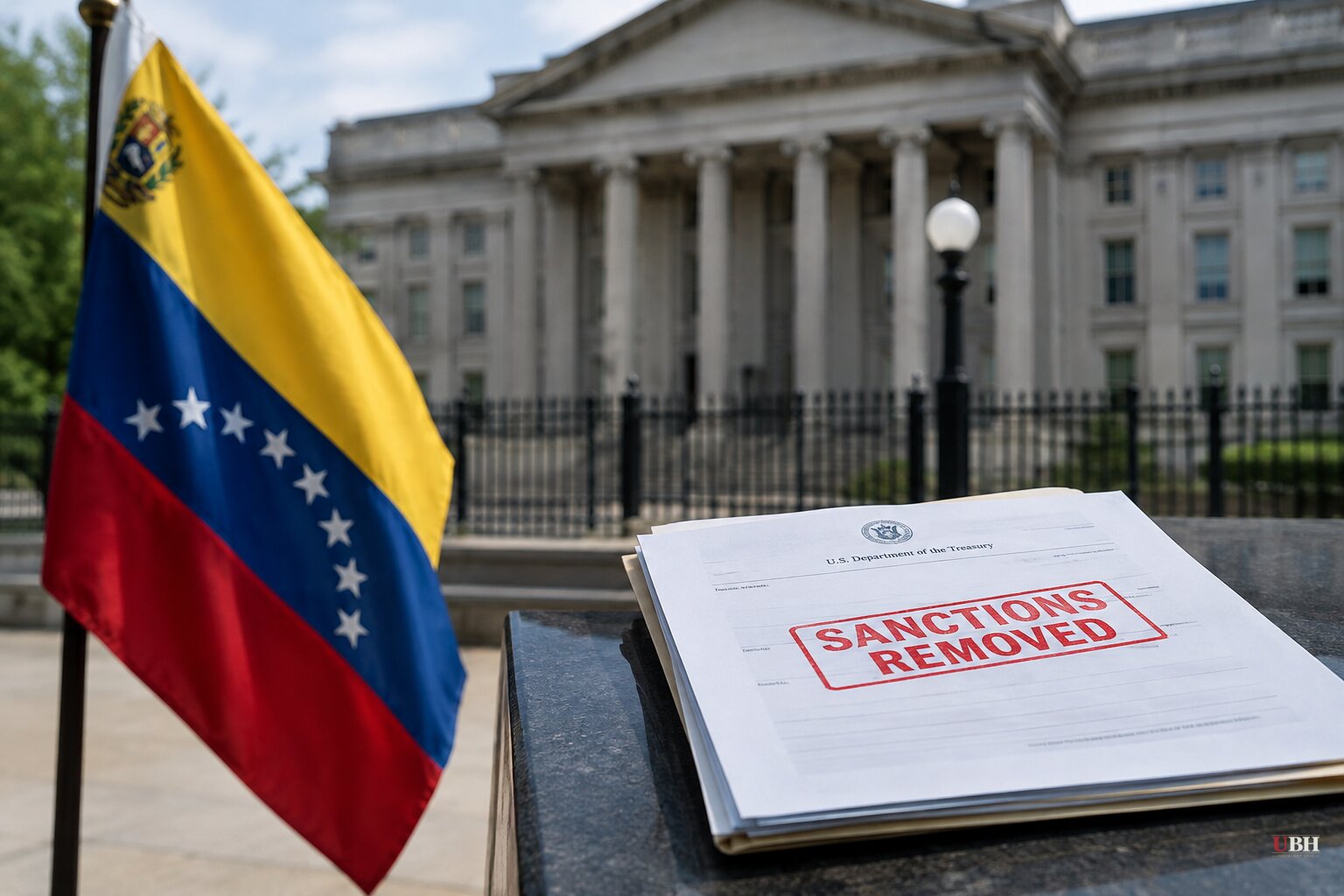
On Wednesday, Oct. 14, the Treasury Department's Office of Foreign Assets Control removed Jorge Rodríguez from its sanctions list. Rodríguez is president of Venezuela's National Assembly and the brother of acting President Delcy Rodríguez.
The order unblocks his property under U.S. jurisdiction and ends the ban on U.S. persons doing business with him. He had been sanctioned since September 2018, when he was Maduro's communications minister. OFAC imposed the designations under Executive Order 13692 against officials Washington said helped Maduro hold power and entrench authoritarian rule.
OFAC did not say why it acted. The delisting applies only to U.S. jurisdiction. Sanctions imposed by Canada and the European Union are not automatically lifted.
A pattern of easing
The move fits a trend since Maduro's capture in a U.S. military raid in January. Washington has eased sanctions affecting Venezuela's oil and mining sectors and had already lifted sanctions on Delcy Rodríguez.
The week before, the Justice Department was working to build a case against Maduro. On Thursday, Oct. 8, prosecutors in New York added a charge of conspiracy to commit torture against both Maduro and his wife, Cilia Flores.
The indictment alleges Maduro "authorized the use of torture against specific individuals and oversaw a system designed to use torture, arbitrary detention, and violence as a means of repression against the political opposition." It describes beatings, electrocutions, asphyxiation and rape of Americans and Venezuelans in custody. One American was allegedly forced to eat his own vomit.
U.S. Attorney Jamie McDonald said Maduro, Flores and other high-ranking members of their inner circle "used a violent system of torture and repression to maintain their power." He added that "American citizens were tortured, and so were thousands of Venezuelans."
Maduro's lawyer, Barry Pollack, said: "President Maduro denies the charges in the new indictment and looks forward to his day in court." Both defendants have pleaded not guilty to the earlier narcoterrorism conspiracy charges and are held without bail.
At the Oct. 8 hearing, the judge denied Flores' request for house arrest and called her a flight risk. Prosecutors had argued the new allegations were a reason to keep her detained. Judge Alvin Hellerstein set another hearing for Thursday, Oct. 15, where the couple was expected to respond to the added charges.
People briefed on the investigation told CNN that investigators have also discussed charging additional people over the torture of Americans. No names have been made public.
Rodríguez at the table
The delisted official is not a bystander. Rodríguez signed the joint statement ending the third round of government-opposition transition talks on Wednesday, Oct. 21, alongside Dinorah Figuera, who heads the delegation of the 2015-elected National Assembly.
The two sides agreed to review the Organic Law of the Comptroller General's Office, specifically the administrative process behind political disqualifications of opposition leaders. Nobel Peace Prize laureate María Corina Machado is the most prominent figure barred from seeking office under that process.
They also agreed to form a joint commission to work with UK institutions on releasing Venezuelan gold reserves frozen at the Bank of England. The round ran a week in Caracas, with six working sessions, two plenaries and 15 technical meetings across four working groups.
Rodríguez said the National Assembly would swear in the nominating committee for Supreme Court (TSJ) candidates today, Oct. 22. The panel has 12 civil society representatives and 11 legislators and will select the final list of principal and alternate justices.
The oil deal
Washington's economic stakes in Venezuela are also growing. In late August, President Trump announced what he called the "biggest oil deal in world history."
ProPublica says it reviewed an 18-page strategic partnership agreement signed for the U.S. by Secretary of State Marco Rubio and Defense Secretary Pete Hegseth. By ProPublica's account, the U.S. takes a 35% stake in North American Blue Energy Partners, a firm run by Venezuelan businessman Alejandro Betancourt, through a Barbados-registered parent company.
ProPublica reports that the deal sets a seven-member board for an initial 15-year term and protects Betancourt's role as chief executive. People with knowledge of the negotiations told the outlet that these features were meant to keep future U.S. and Venezuelan leaders from dismantling the venture. It also says the Venezuelan government's role and the benefit to Venezuelans are "largely absent" from the text.
ProPublica reports that Betancourt has faced money-laundering investigations in three countries. It also says Orlando Alvarado signed for the parent company, and cites the Miami Herald as reporting that federal prosecutors once identified Alvarado as an unindicted co-conspirator in a scheme to embezzle from Venezuela's state oil company.
NABEP spokesperson Terry Wade responded that "neither Mr. Betancourt nor Mr. Alvarado has ever been charged with any crime in any country, and any claims against them are baseless." The Trump administration has described the deal as securing American energy dominance for the next century.
What is unresolved
The government that Washington is now easing sanctions on includes officials who served under the man it is prosecuting for torture. Those officials are also negotiating the terms of their own country's political opening. OFAC has offered no rationale for the Rodríguez delisting.
Two near-term markers will show how far the transition goes. One is whether the Comptroller's Office review ends the administrative ban on Machado. The other is whether the TSJ nominating committee, with its 11 legislators, produces a court list the opposition delegation accepts.
In New York, Maduro and Flores remain jailed as the torture charges move forward.
Sources used for this briefing
6 links from 6 independent newsrooms (syndicated copies of the same report count once)
These are the sources it draws on, linked so you can verify.


