
Unbiased headlines. Facts, not spin.
Unbiased Headlines is an independently owned news organization. We bring you the facts, not opinions, written fresh from 110+ named sources. Sources linked so you can verify it yourself.
 defense
Major Story (7/10)
South Korea Proposes Border Military Talks as North Korea Readies Loudspeakers
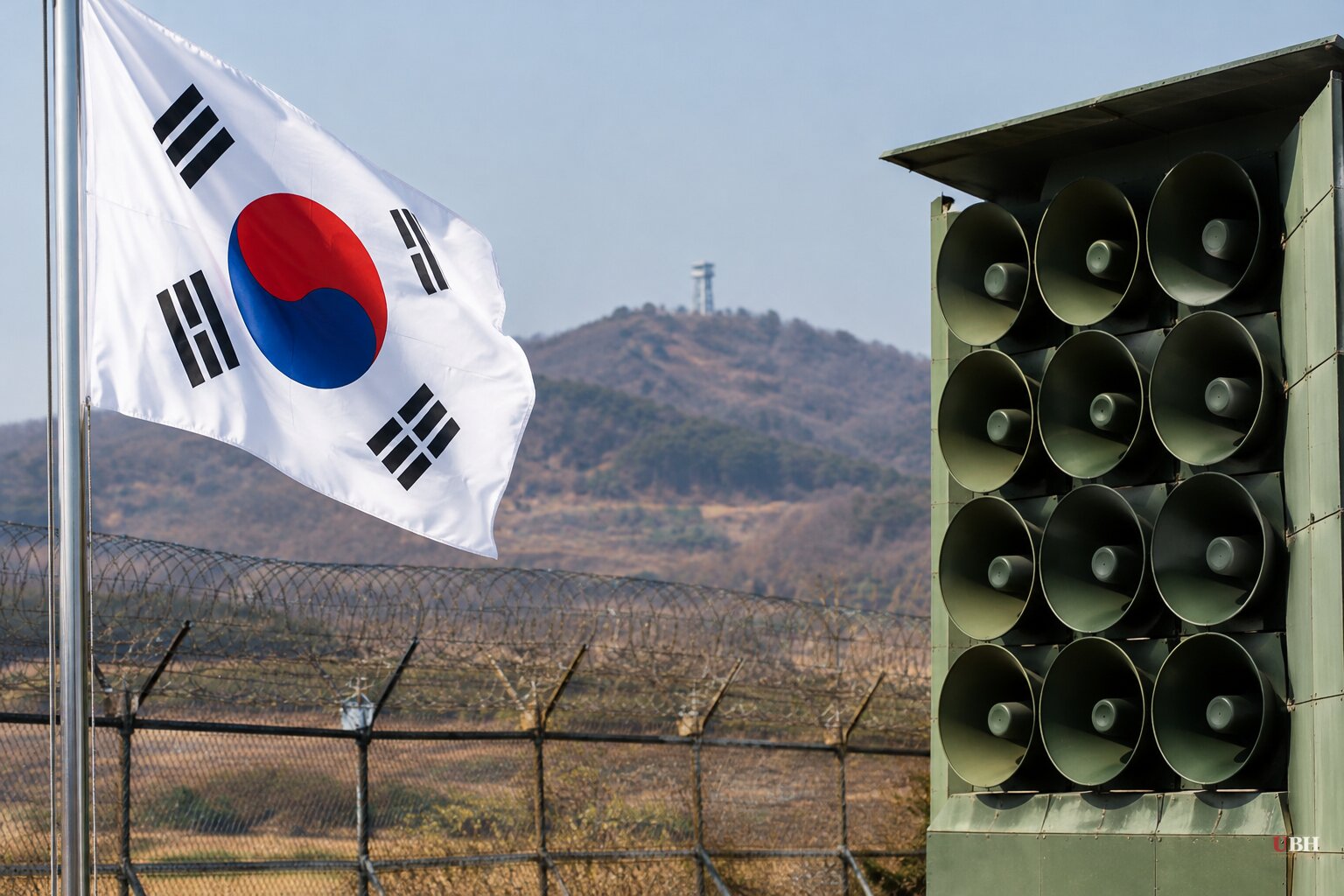
South Korea formally proposed military talks with North Korea today, Oct. 23, aiming to settle where the land border actually runs and to head off accidental clashes along the Demilitarized Zone.
Deputy Defense Minister for Policy Kim Hong-cheol announced the offer in a televised statement. The ministry wants the two militaries to "mutually confirm the exact location of the ground military demarcation line," discuss restoring military communication lines, and agree on measures to prevent accidental clashes.
Dates and locations could be worked out through Panmunjom, Kim said. Seoul is also open to three-way talks that include the U.S.-led United Nations Command.
North Korea has not responded.
A border that is not agreed
The dispute is over the Military Demarcation Line itself. North Korean troops have spent recent years laying mines and building barbed-wire fences, tactical roads and anti-tank walls near the line. South Korea's military says Northern soldiers crossed the line about 50 times this year during that work. Seoul says it answered with warning shots and broadcasts.
The Defense Ministry made a similar proposal last November. Pyongyang ignored it.
The mine blasts
The urgency traces to Sept. 21. Explosions near the line in the western DMZ wounded three South Korean soldiers, two of them seriously. South Korea's military concluded the mines were North Korean and had been buried south of the demarcation line. Seoul demanded an apology. The UN Command described the incident as an armistice violation.
Pyongyang rejects all of it. North Korean statements have called the South's findings "blame-shifting" and labeled the incident a "farce." North Korea has been accused of laying mines along the border since April 2024, but has not acknowledged planting land mines since 1998.
Escalating rhetoric this week
The offer arrived after several days of sharp exchanges. On Oct. 19, Kim Yo Jong, sister of leader Kim Jong Un, accused the South of endangering North Korean soldiers by firing warning shots during fortification work. She said the South's shots and broadcasts since August, which Seoul says respond to border crossings, had "gone beyond the red line."
On Oct. 20, South Korea's Defense Ministry called its warning shots and broadcasts a legitimate defensive measure meant to force Northern troops back across the line. "If North Korea uses our legitimate measures as a pretext to carry out further provocations, we will punish it resolutely," the ministry said. Joint Chiefs of Staff Chairman Jin Young-seung said the North's threats "cannot be accepted" and ordered operations to strengthen Seoul's initiative in the DMZ.
On Wednesday, Oct. 21, Kim Yo Jong said new military units had moved into firing positions along the border. In a second statement carried by the state news agency KCNA, she said new "counter means" would be on alert along the entire southern border and anti-South loudspeakers would be on standby "in a matter of days." She warned of "the most horrible and distressing situation" if Seoul persists with what she called interference. She also said the loudspeakers would be activated by late October.
The Defense Ministry said today it is difficult to predict "what further incidents could occur if this situation is allowed to continue unaddressed."
What Lee's policy did and did not buy
President Lee Jae Myung took office in June 2025 and moved to lower tensions. South Korea stopped its own propaganda broadcasts and began dismantling border loudspeakers. North Korea's broadcasts stopped afterward.
The quiet did not hold. Pyongyang still calls the South its main enemy, has suspended virtually all dialogue and cooperation with Seoul in recent years, and kept building up the border. A restart of loudspeaker broadcasts would reverse the most visible result of Lee's approach.
It is unclear whether Pyongyang will answer at all. Its past silence, its denial of responsibility for the mines, and its insistence that the South's warning shots are the provocation all point toward a rejection. If it does respond, Panmunjom is the proposed channel.
The next marker is Kim Yo Jong's own deadline. She said the loudspeakers would be live by late October, which is days away.
Sources used for this briefing
7 links from 7 independent newsrooms (syndicated copies of the same report count once)
These are the sources it draws on, linked so you can verify.


