
Unbiased headlines. Facts, not spin.
Unbiased Headlines is an independently owned news organization. We bring you the facts, not opinions, written fresh from 110+ named sources. Sources linked so you can verify it yourself.
 economy
Major Story (7/10)
Volkswagen posts €5.8 billion third-quarter loss, with about €8 billion in special items
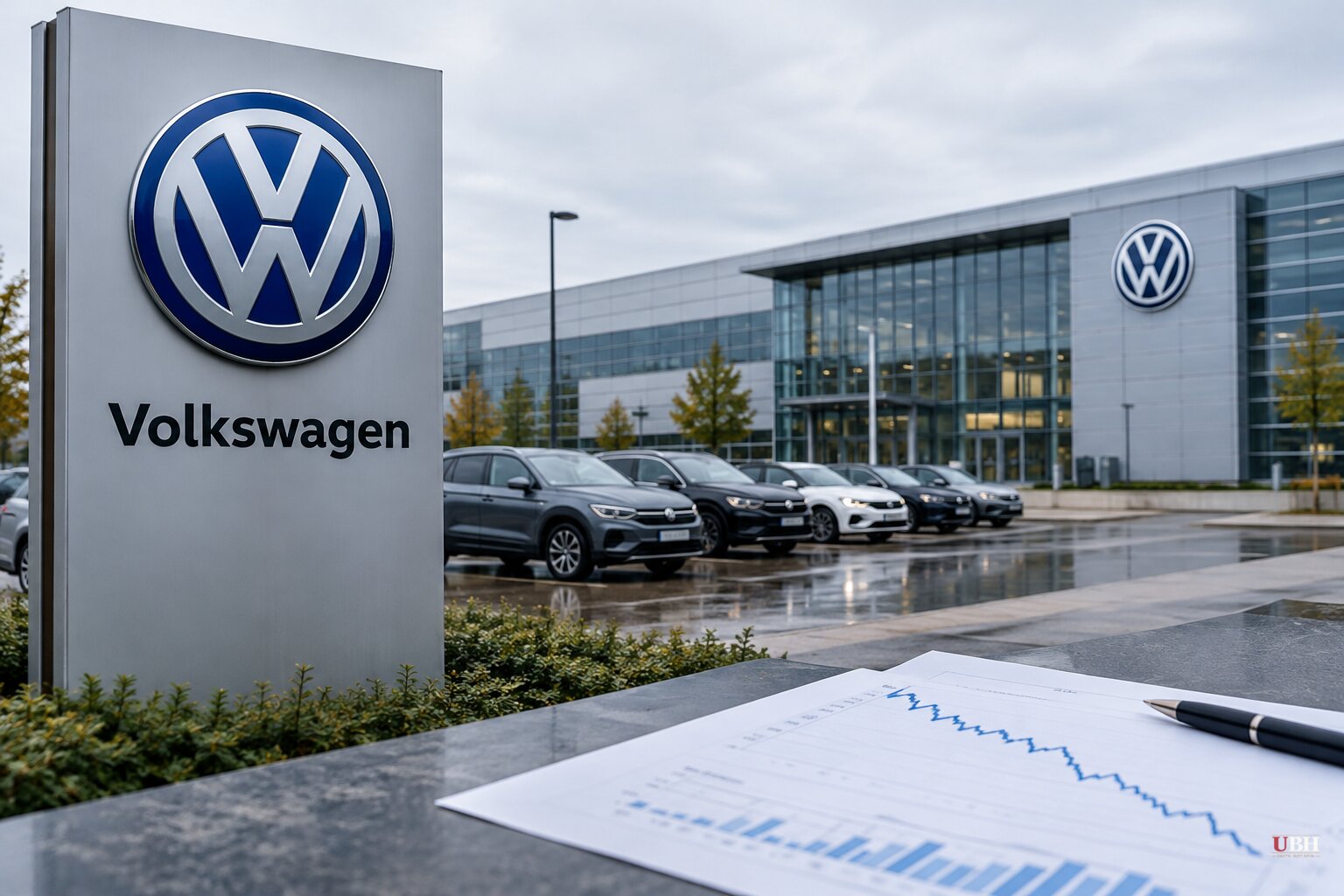
Volkswagen lost €5.8 billion ($6.5 billion) in the third quarter, the company said Thursday, Oct. 29. A year earlier the group lost €1.1 billion.
Sales fell 6.3% to €75.3 billion. Worldwide vehicle deliveries dropped 14.3%. In China, the world's largest car market, they fell almost 40%.
On an operating basis the loss was €5.9 billion, according to Reuters-reported figures. Analysts polled by Visible Alpha had forecast €2.6 billion. The year-earlier operating loss was €1.3 billion. Shares were indicated 1.1% lower in pre-market trading ahead of the open.
What drove the number
CFO Arno Antlitz said special items of around €8 billion caused the hit. Those include writedowns and restructuring costs.
Last month Volkswagen flagged roughly €10 billion in one-off charges for the year. Most of that is tied to the value of its stake in Porsche, which is also struggling in China.
Strip out the special items and the picture is still weak. Operating return on sales after nine months is 3.8%.
"That is not enough in the long term," Antlitz said. He warned that the company's ability to pay for future investments is at stake. "We no longer have unlimited time."
Guidance holds, costs climb
Volkswagen backed the full-year guidance it cut in September. That means group sales revenue of about €315 billion, an operating return on sales of up to 1%, and automotive net cash flow of €3 billion to €6 billion.
The company also said the restructuring would cost €31 billion.
CEO Oliver Blume's plan calls for 100,000 job cuts, after the supervisory board approved a doubling of earlier reductions last month. It also halves the model lineup. Volkswagen has also cited a figure of 120,000 job cuts by 2030. The group employed 652,000 people as of June, according to its website.
Up to four German plants face closure under the plan.
The pressure comes from several directions at once: Chinese competition at home and in Europe, billions in annual tariff costs, and the expense of ramping up EVs in Europe.
"The nine-month results make one thing clear: We cannot afford to lose any time and must act quickly and decisively," Antlitz said.
Who pays for the EV bet
Volkswagen is not alone. Stellantis took €22.2 billion ($24.9 billion) in write-downs in the second half of 2025 tied to its EV "reset." CEO Antonio Filosa said in February the charges reflect "the cost of overestimating the pace of the energy transition that distanced us from many car buyers' real-world needs, means and desires."
In the U.S., Ford announced a $19.5 billion write-down in January and General Motors followed with $6 billion.
Volkswagen committed $193 billion in 2023 to electrify its lineup, according to figures cited by The Epoch Times. The EU had mandated a full end to tailpipe CO2 emissions for new cars from 2035. That has since been revised to a 90% cut.
Jeff Degner, a research fellow at the American Institute for Economic Research, told the paper that European carmakers are "paying the price for paying more attention to what regulators want than what their customers are asking for." He calls much of the spending "government-induced malinvestment."
Volkswagen did not blame EU rules in its statements. Its stated drivers are China, tariffs and EV costs. The EV spending itself was a company decision made under the regulatory deadline Degner criticizes.
Labor pushes back
The workforce is not accepting the plan quietly. Unions have strongly opposed the job cuts and plant closures. Strikes are possible from early next year.
Volkswagen says speed is the answer. The unions say the cuts go too far. Antlitz's own numbers frame the clock: a 3.8% underlying margin and a company-stated warning that future investment funding is at risk.
The next test is whether management and the unions can settle plant-by-plant closures before the strike window opens in early 2027.
Sources used for this briefing
7 links from 6 independent newsrooms (syndicated copies of the same report count once)
These are the sources it draws on, linked so you can verify.


