
Unbiased headlines. Facts, not spin.
Unbiased Headlines is an independently owned news organization. We bring you the facts, not opinions, written fresh from 110+ named sources. Sources linked so you can verify it yourself.
 economy
Major Story (7/10)
Third-Quarter GDP Report Due Today: Economists Expect 3.2% Growth on AI Spending and Consumers
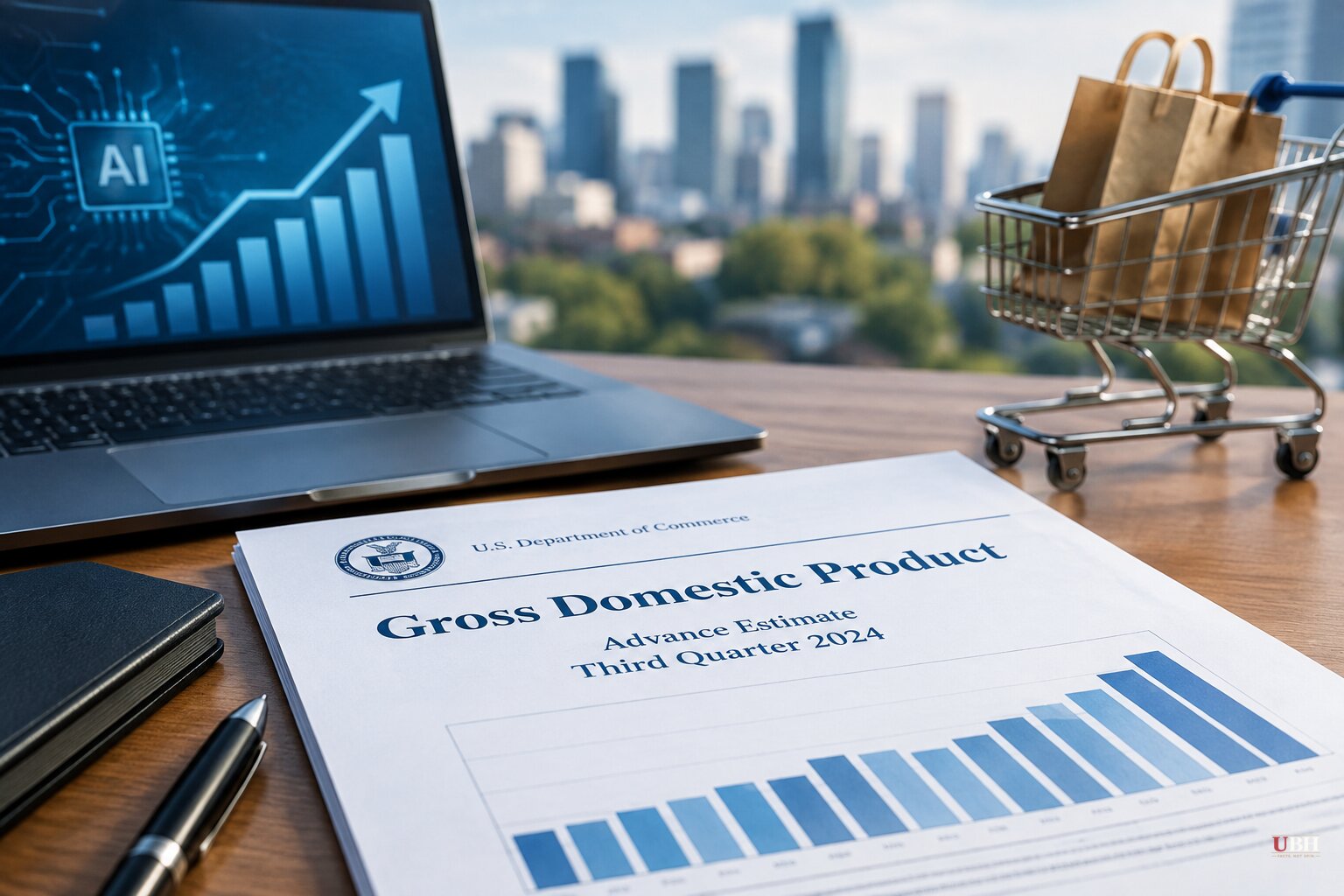
The government is scheduled to release its first read on third-quarter economic growth today, Oct. 29. The Commerce Department's advance GDP estimate has not been published yet, so everything below is forecast, not result.
A Reuters survey of economists predicted GDP grew at a 3.2% annualized rate from July through September. The economy grew at 2.2% in the April-June quarter.
The release comes less than a week before Tuesday's midterm elections, which will decide control of Congress.
What is expected to drive the number
Economists point to two engines: consumers and AI-related business investment. Together they are expected to more than offset the hit from higher oil prices tied to the conflict in the Middle East.
"People are very upset about high energy and food prices, and yet the fundamentals for consumers are still decent," said Gus Faucher, chief economist at PNC Financial. He cited job growth, wage gains and a strong stock market that is supporting spending by high-income households.
Business equipment spending is expected to have posted a third straight quarter of double-digit growth. Spending on intellectual property products likely got an AI lift as well, and inventories are expected to have added to growth.
The trade problem
The survey was taken before Wednesday's release of September's advance economic indicators report. That report showed the goods trade deficit widened as demand for capital goods tied to the AI buildout pushed imports to a record high.
Economists estimated the trade gap subtracted at least 4 percentage points from third-quarter GDP growth. The AI-driven equipment spending is expected to have blunted much of that drag. Because the survey predates the trade data, the 3.2% consensus may shift.
Strong numbers, sour public mood
The expected growth contrasts with how households feel. Trump's approval ratings are at record lows, and consumer sentiment has deteriorated sharply. Food and energy prices are the complaint Faucher highlighted.
Growth of 3.2% would sit well above the roughly 2% pace some Federal Reserve officials regard as non-inflationary. On Wednesday the Fed left its benchmark rate in the 3.75%-4.00% range and acknowledged inflation "remains elevated." Economists expect the Fed to raise rates in December.
How much of the boom rides on AI
The growth story leans hard on one sector. Dambisa Moyo, the economist and author, cited JPMorgan's estimate that AI-related investment accounted for roughly one-fifth of real US GDP growth over the past year, or 0.5 percentage point. Big Tech firms are projected to spend $650 billion on AI infrastructure in 2026.
Moyo argues the financing is the weak point. Companies once paid for AI capital spending out of internal cash. Increasingly they borrow or issue stock. She noted that SoftBank recently issued seven-year bonds at 9.75% and Meta issued debt at 7.5%, and that IPOs for SB Energy, Oura and OpenAI have been delayed this year. In her view, the competition for capital is pushing yields on 10-year and 30-year Treasuries toward levels not seen since 2002 and threatens to tip the global economy into recession.
The economists in the GDP forecast see less danger. "There's likely to be more discretion when it comes to investment in AI, but the underlying momentum remains quite strong," said Gregory Daco, chief economist at EY-Parthenon. He allowed for "some risks of pullbacks and some questions as to the return on all of its investment." Economists did not expect the heavy borrowing by tech firms to hinder the economy.
Higher yields, and who says they are healthy
Fed officials have acknowledged the link between AI spending and borrowing costs. At his Sept. 16 press conference, Fed Chairman Kevin Warsh was asked why long-term Treasury yields were climbing. He pointed to stronger economic growth and competition for capital from the technology giants building AI infrastructure. "The so-called hyperscalers are out in the market raising funding," Warsh said. "And so the competition for capital is real."
Fed Governor Christopher Waller made a similar case at a Bloomberg event in New Delhi last week. Rising yields, he said, mainly reflect economic strength rather than rising inflation expectations. "I'd rather have higher growth and higher yields than low growth and low yields," Waller said.
Other Fed officials have floated that the neutral interest rate may be higher than before the pandemic. Governor Lisa Cook said so in a February speech to the National Association for Business Economics, citing data center and semiconductor investment that kept soaring despite elevated rates. Vice Chair Philip Jefferson argued in a July speech at Stanford that faster productivity growth would raise expected returns on investment and demand for capital.
The Wall Street Journal's Greg Ip argued in a Tuesday newsletter that investors who think AI is immune to tighter monetary policy are kidding themselves. The Fed does not need to make AI unprofitable to slow the boom, he wrote. It only needs to tighten financial conditions enough to make financing it unsustainable.
What to watch
Today's number will show how much of the quarter's strength survives the record import surge. The next test is the Fed's December meeting, where economists expect a rate increase. A hike would raise borrowing costs for the same AI projects now carrying the expansion.
The election is Tuesday, Nov. 3.
Sources used for this briefing
6 links from 6 independent newsrooms (syndicated copies of the same report count once)
These are the sources it draws on, linked so you can verify.


