
Unbiased headlines. Facts, not spin.
Unbiased Headlines is an independently owned news organization. We bring you the facts, not opinions, written fresh from 110+ named sources. Sources linked so you can verify it yourself.
 economy
Notable (6/10)
EU Industry Groups Push Back on DiversifyEU Supplier Plan as Consultation Closes, Proposal Due in December
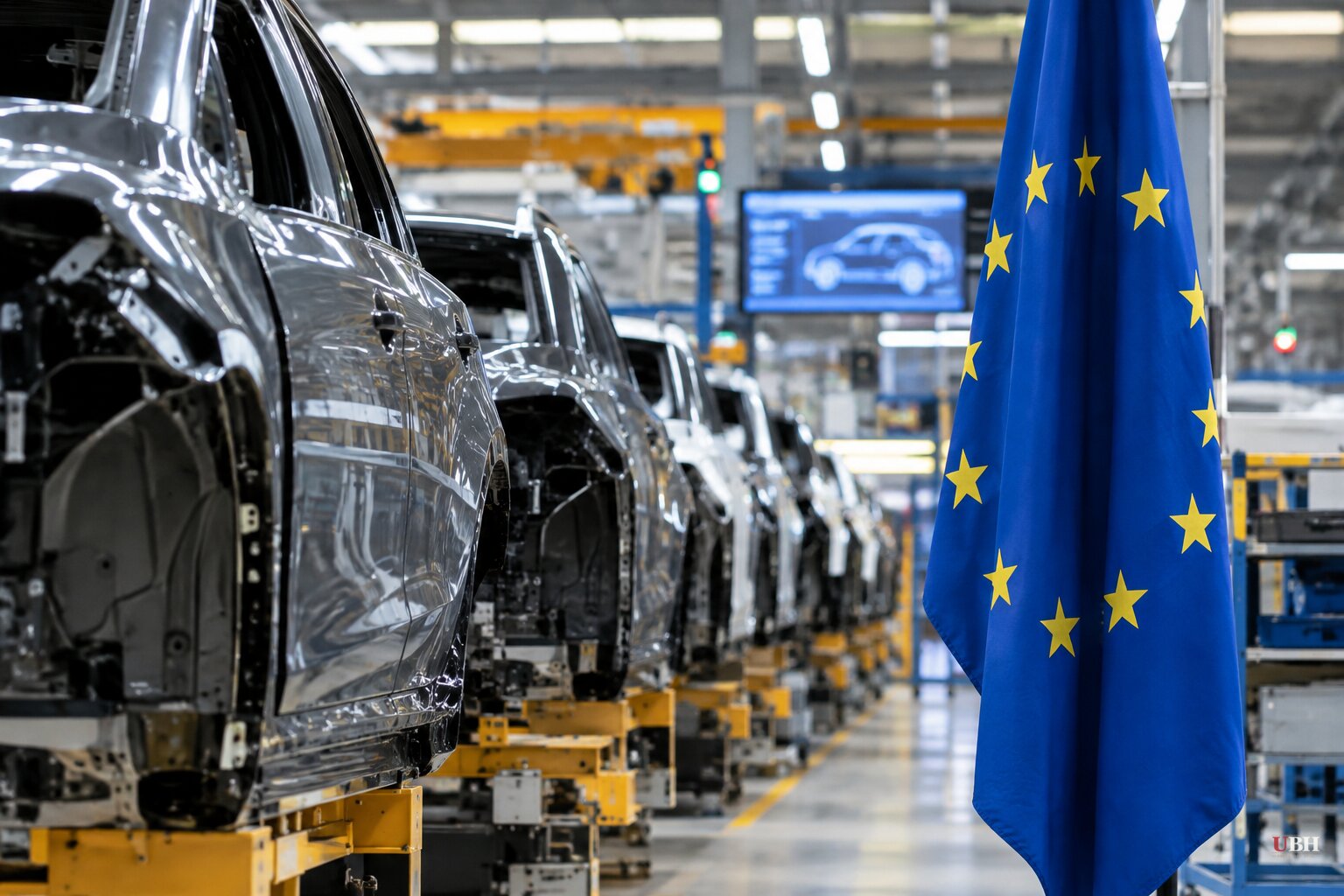
Since Brussels began drafting trade safeguards aimed at Chinese goods, the work has moved to a second track: a package meant to force European companies to spread their suppliers. The Commission's consultation on that tool, called DiversifyEU, closed Tuesday, Oct. 27. The responses show industry resisting the idea of being ordered to change how it buys.
Three instruments, none naming China
The Commission will present the package in early December, a week before a meeting of EU leaders. People familiar with the plans put the date at Dec. 9.
It is expected to contain three tools. DiversifyEU could compel companies in key sectors to broaden their supplier base, potentially through tariffs or incentives tied to public contracts and subsidies. A solidarity mechanism would create a pool of compensation for businesses hit by retaliation in a trade dispute. A rapid response trigger would close the EU market to countries engaged in active distortion or coercion.
None of them will name China. Commission President Ursula von der Leyen said this month that DiversifyEU "will be country-agnostic, and help European companies diversify their supply chains. The principle is simple – no critical dependence on a single supplier."
The target is still plain from the context. Beijing blocked rare earth exports in 2025 during its trade war with the U.S. That same year, China cut off access to strategic chips during a dispute with the Dutch government over Nexperia, which put the EU car industry at risk.
What industry told the Commission
The European Automobile Manufacturers' Association (ACEA) argued that for some inputs there is nothing to switch to. "For rare earths, magnets, battery materials, displays and some semiconductors, there is little or no alternative supply base, and Europe lacks the ecosystem to provide one," ACEA wrote in its submission.
ACEA added: "Europe will not match Chinese costs or become fully independent of China, nor does it need to … Diversification succeeds where alternatives are commercially viable and qualified; it does not where it is mandated against a supply base that does not yet exist."
The Federation of German Industries (BDI) has generally backed the EU's tougher China line. It said it views the plan "with scepticism." The group wrote: "We oppose new reporting requirements or binding mandates. We also consider tariffs, which are currently being discussed in this context, to be an inadequate tool for promoting diversification."
BusinessEurope's Deputy Director General Luisa Santos told Euronews that companies already run cost-effective supply structures. "If they are working with certain suppliers it is because they are the ones that have the best offer in terms of the product, regarding its cost and performance," she said.
Santos also argued for a narrow scope. "We should be focusing more on the areas where we are seeing weaponization. I don't think that our dependency on Chinese electric appliances for instance should fall within the scope."
The Commission's position
The Commission has told businesses the instrument would address "cases where a high level of strategic dependencies on a single supplier country creates a risk for the EU's security of supply and thus its economic security."
Trade Commissioner Maroš Šefčovič said in a June 5 speech that industry would be "on the front line" and that business models should integrate "the cost of resilience." He added that geopolitical risks should be treated "as what it is, the core business risks."
Officials privately see European firms as too slow to diversify voluntarily, according to people familiar with the planning. That is why regulators want to step in.
The scale of the exposure
The Commission's own figures show the size of the imbalance. The EU ran a goods trade deficit of €359.9 billion with China in 2025. Imports from China totaled €559.5 billion against €199.5 billion in exports.
The Commission says its policy is to reduce critical dependencies, not sever ties with China.
The Information Technology and Innovation Foundation, a Washington-based research group, filed comments Oct. 27 saying the initiative "merits support." It argued DiversifyEU should be explicit about countering Chinese trade aggression. It also said the Commission should separate dependence on China from import concentration among allied countries, since "treating trade relationships neutrally would waste resources." Its proposals include stronger rules of origin, development finance for alternative suppliers and joint trade investigations.
Taiwan's foreign minister, Lin Chia-lung, made a related pitch at the Warsaw Security Forum on Oct. 13. He warned that dependence on China is "a threat to European freedom and sovereignty itself" and offered Taiwan's semiconductor and electronics supply chains as a partner for European machinery, automotive and chemicals firms.
Mercedes shows the tension
Mercedes-Benz CEO Ola Källenius said Oct. 28 that the company is working to reduce its dependence on China under a strategy extending beyond 2030. "For a global automaker like Mercedes, there is no option to put China aside," he told analysts.
Mercedes cut its full-year profit target a day earlier. Adjusted operating profit at its core passenger car division halved year on year in the July-September quarter. Chief Financial Officer Harald Wilhelm said the company is accelerating supply-chain localization in China, aiming to source almost all parts locally for future China-built vehicles. The company plans to publish a strategy update next year that includes a detailed review of its China business.
Mercedes also plans more U.S. investment, with a goal of lifting annual U.S. sales from more than 300,000 vehicles to 400,000.
What comes next
The Commission has not said which sectors DiversifyEU will cover or what criteria will define a harmful dependency. Those answers are due when the package is presented in early December. The proposal will then have to survive both industry lobbying and a leaders' meeting a week later.
Sources used for this briefing
7 links from 6 independent newsrooms (syndicated copies of the same report count once)
These are the sources it draws on, linked so you can verify.


