
Unbiased headlines. Facts, not spin.
Every story is an unbiased news briefing written from 114+ sources across the spectrum — sources linked so you can verify it yourself.
 energy
Major Story (8/10)
October 6, 2026 at 04:33 PM
energy
Major Story (8/10)
October 6, 2026 at 04:33 PM
Vitol CEO: The Threat to $200 Oil Now Comes From Tankers, Not Crude Supply
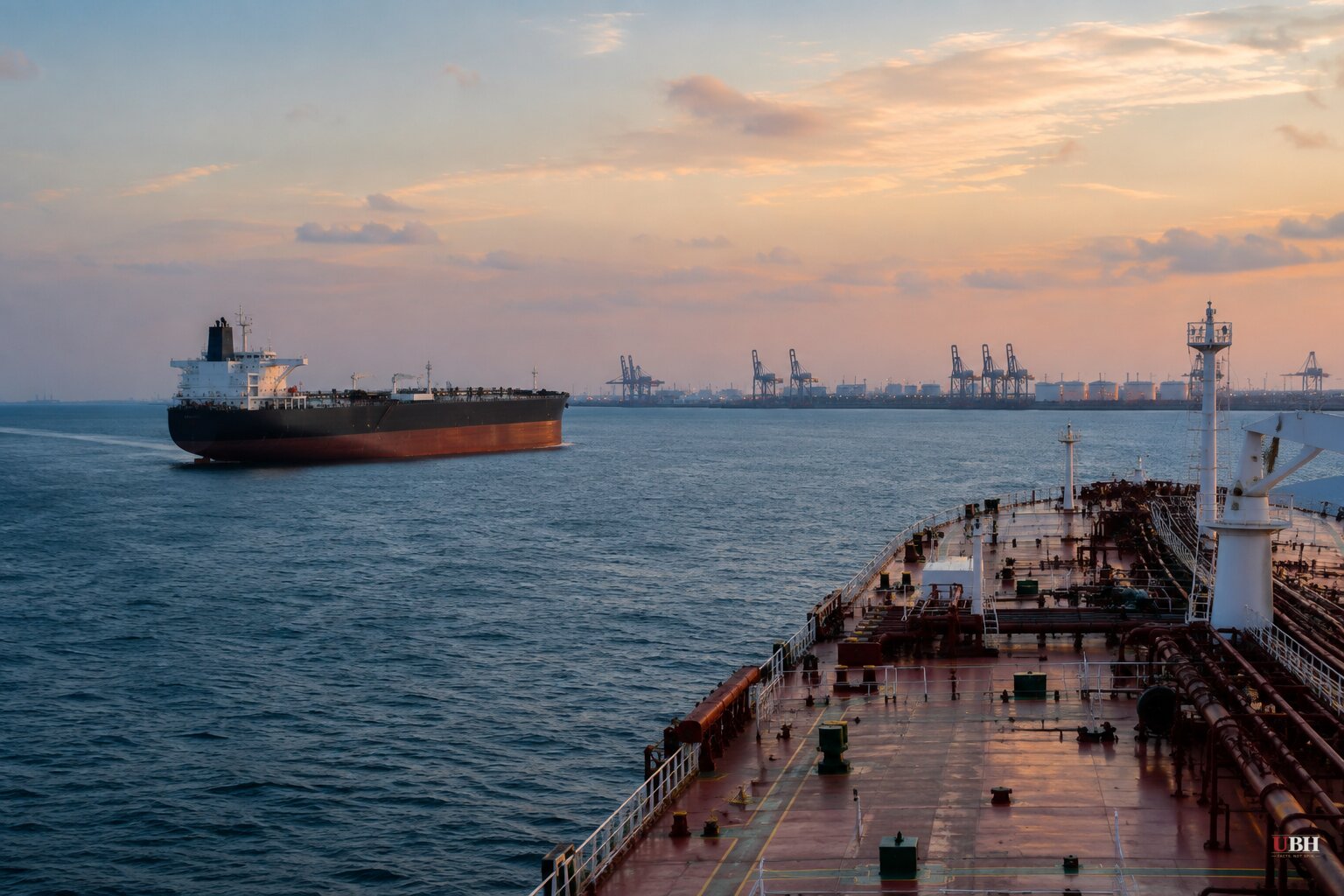
Since the G7 agreed on October 3 to release 100 million barrels of crude and diesel from strategic reserves, the oil market's biggest problem has moved from a question of supply to a question of shipping.
Russell Hardy, CEO of Vitol Group, the world's largest independent oil trader, told the Energy Intelligence Forum in London on Tuesday, October 6, that roughly 12 million barrels a day of crude and another 2 million barrels a day of refined products are leaving the Middle East on tankers, a combined flow of up to 14 million barrels a day. That volume is what's standing between the market and chaos.
"Without it, you do have that $200 per barrel scenario, so it's pretty important that it continues," Hardy said, according to Business Times Singapore and the Financial Times.
Hardy laid out how the crisis has mutated three times this year. It started as a crude shortage. Then it became a refined products squeeze. Now it's a shipping crisis. Tankers have to pass through the Strait of Hormuz and then transfer cargoes to a second set of ships waiting in the Gulf of Oman, an inefficient relay that ties up vessels for days or weeks at a time. That's shrinking tanker availability everywhere else and sending charter rates parabolic.
"We've had pretty parabolic pricing on shipping, which is creating a lot of stress for everybody, because nobody really knows to the nearest $2 to $4 per barrel how much their shipping costs are going to be," Hardy said.
The numbers back him up. Brent crude was trading around $98 a barrel Tuesday, per Business Times Singapore, while European diesel futures carried roughly a $70-a-barrel premium over crude. North Sea crude cargoes sold for $145 a barrel last week, according to an oil executive cited by Traders Union. European refining margins have turned negative. U.S. refining margins, by contrast, remain healthy above $70 a barrel.
Saudi and Kuwaiti Oil Chiefs Want the World to Pay Up
A day before Hardy spoke, Saudi Aramco CEO Amin Nasser and Kuwait Petroleum Corp. CEO Sheikh Nawaf Al-Sabah told the same forum that rebuilding war-damaged pipelines, refineries, gas plants and tankers has already cost tens of billions of dollars, and the bill isn't going away.
"No country should face this alone," Nasser said, according to NDTV Profit. "Oil and gas infrastructure is not a cost to be minimized or avoid. It is a collective necessity for producers and consumers alike."
Sheikh Nawaf said Europe specifically needs to invest in storage if it wants Kuwaiti diesel and jet fuel, since the continent has none to spare. Nasser added that even if the war ended today, the world would need roughly 2 million extra barrels a day of demand for up to two years just to refill depleted Western stockpiles. Chevron CEO Mike Wirth echoed that warning, saying reserve releases offer short-term relief but the market stays fragile.
That argument—that Western governments drew their reserves down for years without matching investment in storage and shipping capacity, and are now paying $145-a-barrel landed prices for it—is a fair criticism of decades of underinvestment on the consumer side. It is true that Iran's war triggered the squeeze in the first place.
Iran's Exports Hit Zero
While the shipping bottleneck grabs headlines in London, Iran's own oil trade has effectively collapsed. CNN reported that Iran shipped zero crude from its ports in September, the first month of zero exports since Kpler began tracking Iranian shipments in 2013. Iran's last successful loading was August 25.
Oil sitting outside the U.S. blockade zone has fallen to 10 million barrels, down from 100 million in July, according to Kpler data cited by CNN. At the current pace, Iran could run out of exportable crude by the end of October. Onshore stockpiles, meanwhile, are nearing 70 million barrels, close to their pandemic-era peak, Kpler's Matt Smith told CNN.
Iranian crude production has been cut roughly in half to about 2 million barrels a day, barely enough to cover domestic demand. Iran's government data shows the economy shrank at a 10% annualized rate between March and June, with inflation hitting 90% last month and averaging 73% over the past year, the highest since World War II, according to Adnan Mazarei of the Peterson Institute for International Economics.
CNN frames the blockade and sanctions as 'working,' noting the Strait of Hormuz has returned to largely normal flows for everyone except Iran. But the same report notes the regime isn't folding. Five decades of sanctions have taught Tehran how to survive them, its crackdown has quelled domestic unrest, and the political cost of America's open-ended naval operation is rising at home too.
The unresolved question heading into winter: whether Hardy's 14-million-barrel-a-day lifeline can keep holding as tanker capacity tightens, or whether a single disruption to shipping or to Iran's remaining production tips the market into the $200 scenario he says everyone is trying to avoid.
Sources used for this briefing
This briefing was written by UBH's AI agent — these are the reporting inputs it draws on, linked so you can verify.


