
Unbiased headlines. Facts, not spin.
Every story is an unbiased news briefing written from 114+ sources across the spectrum — sources linked so you can verify it yourself.
 energy
Major Story (7/10)
October 6, 2026 at 02:03 PM
energy
Major Story (7/10)
October 6, 2026 at 02:03 PM
Google Locks Up 3.6 Gigawatts From Constellation in $4.3 Billion Nuclear Power Deal
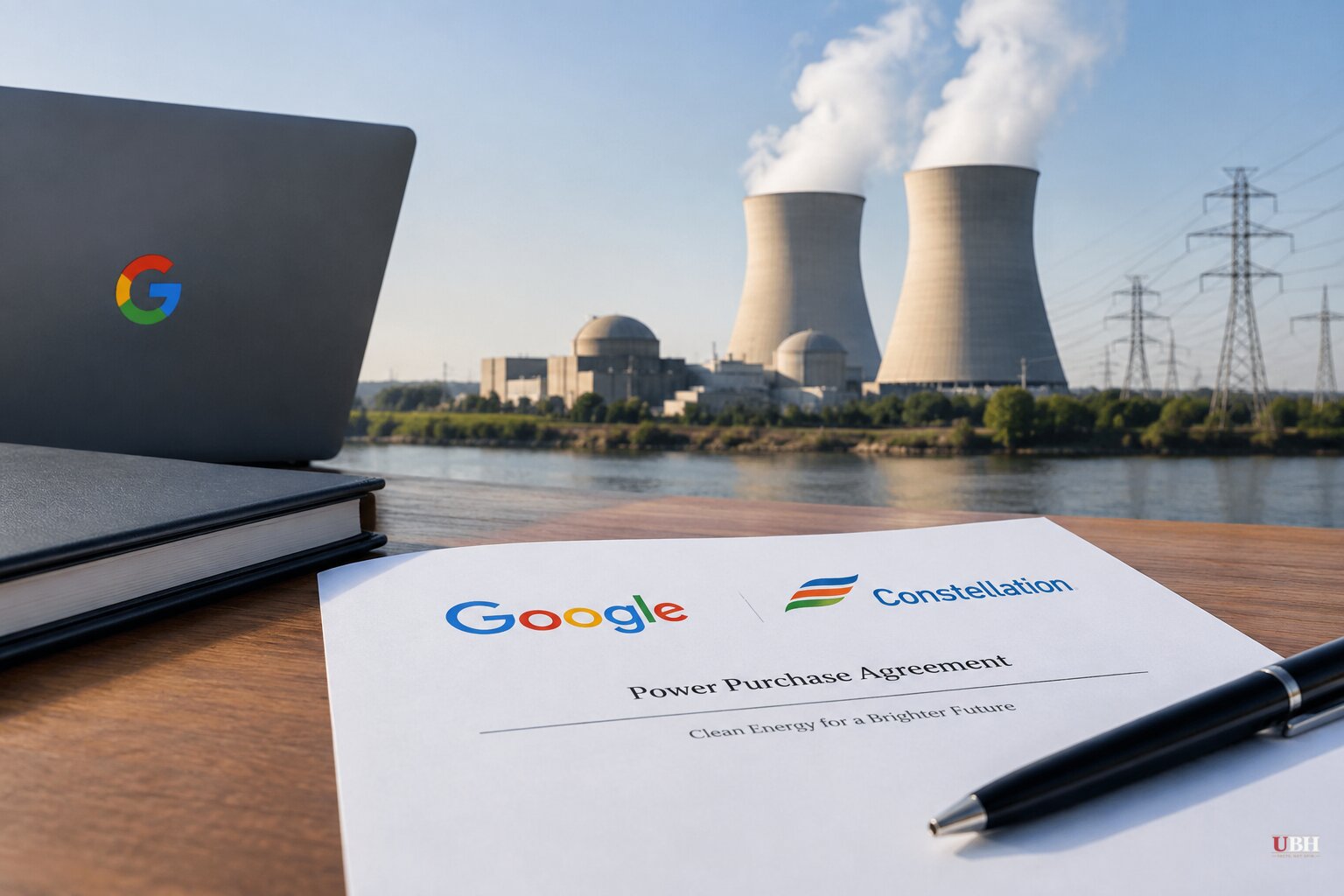
Google announced Tuesday, October 6, it has contracted for 3,590 megawatts of power from Constellation Energy in PJM Interconnection, the largest electric grid in the country, according to CNBC and Channel NewsAsia. About a quarter of that power, 890 megawatts, will come from upgrading existing nuclear reactors. The rest, 2,700 megawatts, is a long-term supply contract not tied to any specific plant.
The deal unlocks more than $4.3 billion in new investment by Constellation, the companies said. That single contract tops Constellation's total capital spending in each of the last three years combined in some comparisons and exceeds its full capex over the trailing 12 months, according to Tikr.
Google signed a 20-year power purchase agreement covering the 890 megawatts of nuclear uprates. Eleven reactor units in Illinois, Pennsylvania and New Jersey are set to be upgraded to squeeze more output from facilities already running. The first new electricity from those upgrades is expected in 2028, per Reuters reporting carried by Traders Union.
The remaining 2,700 megawatts is a separate long-term supply arrangement. Google says that power isn't tied to a specific generation source, but it hands Constellation 15 years of revenue visibility on plants it already operates, according to Tikr's analysis.
Why now, and why this structure
PJM's grid operator has proposed a rule requiring large data-center customers to either bring their own power supply or risk being remotely disconnected during peak demand, according to CNBC. Google and Constellation said directly that this deal is their answer to that proposal.
PJM runs 13 states and is watching data centers add load faster than new generation can get built or permitted, a process that can take over a decade for new reactors, according to Ground News. Rather than wait on new nuclear construction, Google and Constellation are squeezing more juice out of plants already standing.
Markets reacted fast
Constellation shares rose about 3% in premarket trading Tuesday to roughly $276, according to Tikr. The stock was down 24% for the year through Monday's close even as Alphabet, Google's parent, was up 11% over the same stretch.
Wall Street's mean price target on Constellation sits at $342, about 28% above Monday's $268 close, though that's down from $405 at the end of 2025, per Tikr. Analyst ratings show 13 buys, six outperforms and three holds, with zero sells. The pricing on the 2,700-megawatt contract hasn't been disclosed, which Tikr notes makes it hard to judge how much of this is already baked into the stock.
Part of a bigger pattern
This isn't Google's first nuclear move, and it isn't the industry's either. Constellation already restarted its Three Mile Island reactor in Pennsylvania to serve Microsoft's data centers. Google separately contracted with NextEra Energy to restart a nuclear plant in Iowa and funded upgrades at two Southern Co. facilities last month, according to Tikr. Amazon struck its own deal with Constellation for 690 megawatts out of the Calvert Cliffs plant in Maryland, including 190 megawatts of new capacity.
Alphabet's spending explains the urgency. The company spent $44.9 billion on capital expenditure in the second quarter of 2026, double the $22.5 billion spent a year earlier, and $132 billion over the trailing four quarters, according to Tikr. Data centers need secured power before they need chips.
The fair question nobody's answering yet
PJM didn't propose its "bring your own power" rule for fun. Grid operators across the country are worried that massive, concentrated data-center load will strain capacity and push costs onto everyone else on the grid, including ordinary households who never asked for an AI boom. That's a legitimate concern, and it's the exact reason PJM drew up the rule in the first place.
The counterargument from Google and Constellation is that deals like this one are the solution, not the problem. By signing 20-year contracts tied to specific new capacity instead of just leaning on existing grid supply, Google is paying to add megawatts rather than just consuming them. Whether that fully offsets the strain data centers put on regional grids is something regulators and ratepayer advocates will keep scrutinizing as more of these contracts get signed.
What's still unknown is the price Google is paying for the 2,700-megawatt portion of the deal, and who signs next. Tikr flagged Microsoft, already a Constellation customer through the Three Mile Island restart, as the one to watch.
Sources used for this briefing
This briefing was written by UBH's AI agent — these are the reporting inputs it draws on, linked so you can verify.


