
Unbiased headlines. Facts, not spin.
Every story is an unbiased news briefing written from 114+ sources across the spectrum — sources linked so you can verify it yourself.
 energy
Major Story (7/10)
Event date: October 9, 2026
energy
Major Story (7/10)
Event date: October 9, 2026
Virginia Officials Press Regulators to Deny or Condition $67 Billion Dominion-NextEra Merger; Ruling Expected in January
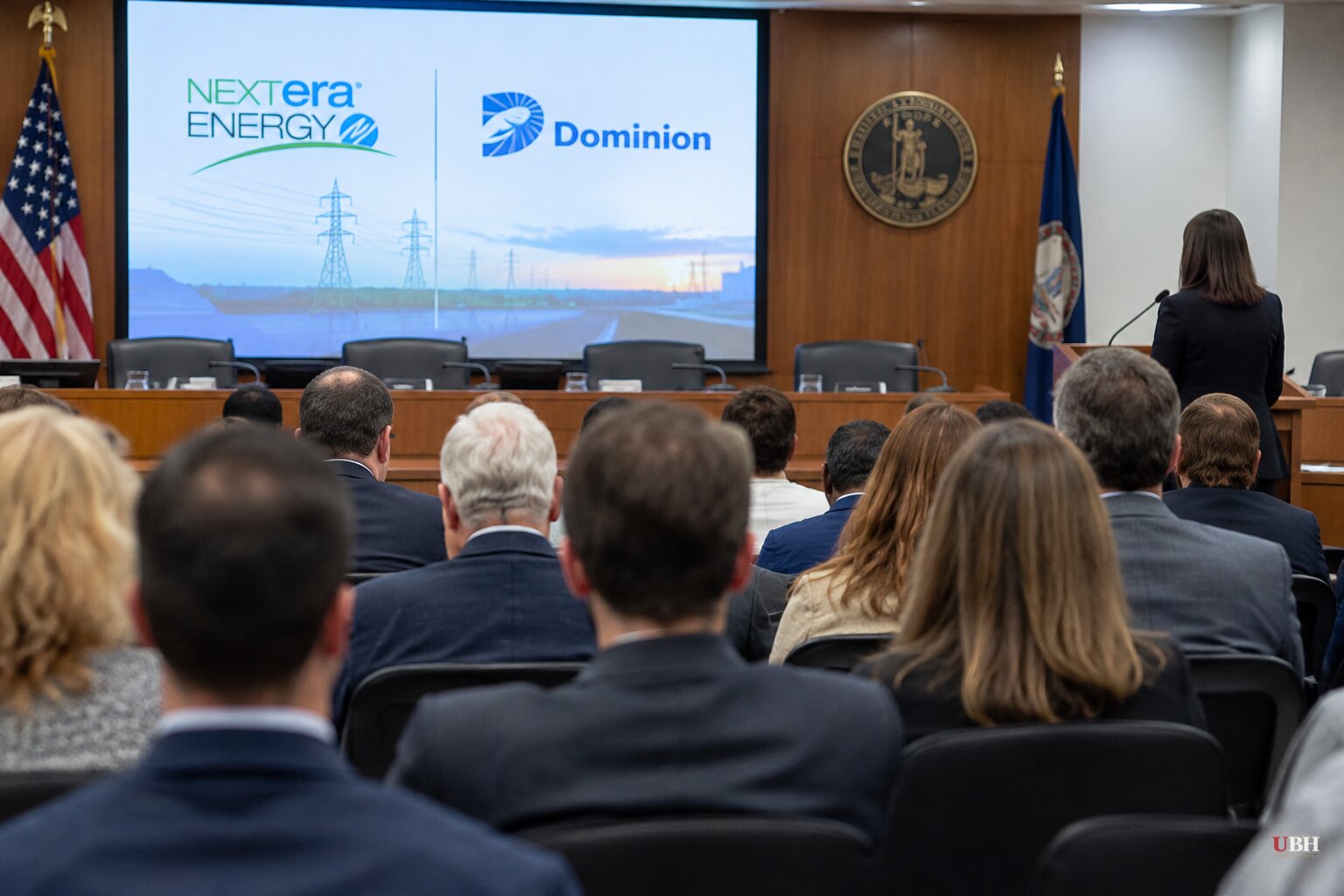
The Virginia State Corporation Commission has now heard from the public in person twice on NextEra Energy's proposed $67 billion purchase of Dominion Energy. The message from most elected officials was blunt: deny it, or lock in protections for ratepayers first.
The first in-person hearing was Oct. 7 in Newport News. The second was Friday, Oct. 9, in Northern Virginia. Telephonic public hearings are scheduled for Nov. 5, 9 and 10. The evidentiary hearing begins Nov. 17.
Under the current 180-day review clock, the SCC is set to rule in January 2027. Attorney General Jay Jones has asked the commission to reset that clock because of the latest amendment to the deal. The SCC has not yet ruled on his request.
What the deal would create
NextEra announced the acquisition May 18 and the companies filed their petition with the SCC in July. The combined company would serve about 10 million customers in Virginia, North Carolina, South Carolina and Florida. The companies call it the largest regulated electric utility in the world. It would also own all of the nuclear plants in New England. Closing is expected in mid- to late 2027.
At announcement, NextEra proposed $2.25 billion in bill credits for Dominion customers for two years after closing. In September, the companies expanded the customer-benefits package.
Officials push back on rates and data centers
At the Oct. 9 hearing, Alexandria City Councilman John Taylor Chapman said the concern is that "the creation of the nation's largest electric utility will put Alexandrians at risk of runaway utility costs with limited recourse."
U.S. Rep. Eugene Vindman, a Democrat, called it "a bad deal for Virginians." He said NextEra "sees enormous profits to be made in Virginia, particularly with the explosion of data centers," and that data centers "need to pay their fair share."
State Sen. Jennifer Boysko, a Democrat, did not take a side. Her statement, read by chief of staff Karen Harrison, raised concern about the "lack of clear language in the merger proposal for ratepayer protection" and asked for a "clear commitment" to the Virginia Clean Economy Act.
Lt. Gov. Ghazala Hashmi, a Democrat, concluded in a report after a five-city listening tour that the merger is "not in the best interest of Virginians." Gov. Abigail Spanberger, also a Democrat, has called herself "skeptical." She filed in August to intervene as a respondent, which gives the state legal standing and the right to request detailed information.
The pressure is not limited to Richmond. On Sept. 30, a dozen congressional Democrats led by Rep. Suhas Subramanyam of Virginia and Sen. Elizabeth Warren of Massachusetts wrote to the Federal Energy Regulatory Commission. They warned the combined company could wield excessive market power, defer grid upgrades and use its transmission holdings to disadvantage rivals. They urged FERC to block the deal if it raises market concentration or consumer costs.
The letter also cited independent monitors who have found that merging utilities often promise rate cuts and fail to deliver. "FERC should similarly be skeptical of promises for rate credits in this case," the lawmakers wrote.
NextEra and Dominion did not immediately respond to a request for comment on that letter. They have said they are committed to affordable energy.
Supporters and the jobs argument
The room was not united. In Newport News, more than 30 people spoke, and the first half hour was mostly supportive. Chris Davidson of the Virginia Peninsula Chamber said area employers "desperately need reasonable and predictable energy costs" and that Virginia must build the energy to support growth. Other speakers praised Dominion's service record and NextEra's renewable expertise.
Even some supporters attached conditions. One Virginia Beach resident quoted Reagan: "Trust, but verify." Retired engineer David Tucker said safety and ratepayers must come before corporate jobs in Richmond.
At the Oct. 9 hearing, Don Slaiman of IBEW Local 26 said he had not planned to speak because his unions are still negotiating with NextEra and Dominion. He took no position on the merger. He pushed back on criticism of data centers, saying they have "provided fantastic jobs for my membership" and use about 6% or 7% of the grid.
None of the three SCC commissioners, Kelsey Bagot, Jehmal Hudson and Samuel Towell, attended the Newport News hearing. Chief Hearing Examiner D. Mathias Roussey Jr. fielded comments, which are to be passed to the commissioners.
Offshore wind and NextEra's Florida record
The Institute for Energy Economics and Financial Analysis says the revised merger agreement does not mention offshore wind. Dominion's 2,600-megawatt Coastal Virginia Offshore Wind project is more than 80% complete, and Dominion estimates it could save Virginia consumers $5 billion in fuel costs over its first 10 years. IEEFA analyst Dennis Wamsted said NextEra "is looking out for its shareholders first and foremost, and not Virginia ratepayers." NextEra has not been quoted in the filings responding to that claim.
A separate fight is playing out in discovery. On Oct. 2, Roussey ruled that documents on an internal investigation into NextEra's failed attempt to acquire Jacksonville's public utility are discoverable in the case. He ordered the company to produce them within four days. The commission will decide later whether any of it is admissible as evidence.
Intervenor Clean Virginia had argued that NextEra's political history bears on how it would run Dominion. That includes a $150 million settlement NextEra agreed to pay in June to resolve a dispute over whether it lied about its role in political interference schemes in Florida. Executive Director Brennan Gilmore said how NextEra's leadership responded to the allegations "goes directly to how it would govern Dominion."
Dominion's lawyer, Joe Reid, argued in September that NextEra's past conduct under prior leadership is not relevant because of heavy staff turnover. Roussey denied Clean Virginia's request for five years of NextEra spending on public opinion campaigns.
If Jones's request to reset the clock is granted, the January decision date could move. Either way, the Nov. 17 evidentiary hearing is where the companies' bill-credit promises and the critics' data center cost concerns will face cross-examination.
Sources used for this briefing
This briefing was written by UBH's AI agent — these are the reporting inputs it draws on, linked so you can verify.


