
Unbiased headlines. Facts, not spin.
Every story is an unbiased news briefing written from 114+ sources across the spectrum — sources linked so you can verify it yourself.
 energy
Major Story (8/10)
October 13, 2026 at 02:18 AM
energy
Major Story (8/10)
October 13, 2026 at 02:18 AM
Coal Now 80% Cheaper Than LNG as Persian Gulf Gas Flows Stay Down More Than 75%
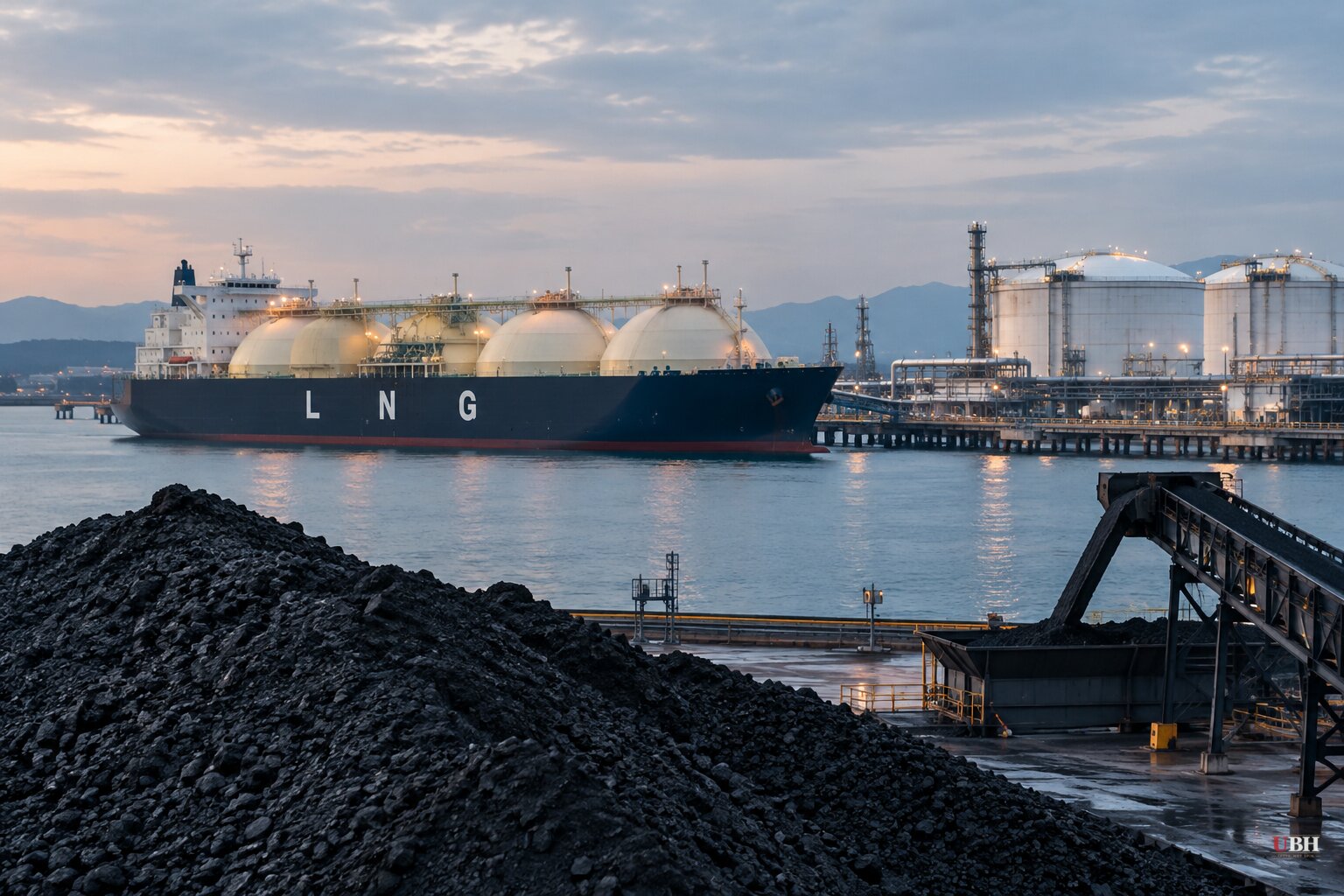
The war with Iran has made gas expensive enough that coal is winning by default.
LNG flows from the Persian Gulf are still more than 75% below where they stood before Feb. 28, when the U.S. and Israel attacked Iran. Heating demand is climbing ahead of winter. The November European gas benchmark is priced above 81 euros per MWh. In Asia, spot November LNG cargoes topped $26 per million British thermal units, up from $25.25 earlier this week.
Australian thermal coal sits at the equivalent of $5.40 per mmBtu. That is roughly 80% cheaper than LNG.
Hormuz still choked
Shipping data compiled by Reuters shows an estimated 21 LNG cargoes left the Strait of Hormuz in September. That is the highest monthly count since the war began. Before the war, more than 60 cargoes passed through in a typical month.
QatarEnergy has an extended force majeure in place on its LNG business. Tanker attacks have also become more frequent. Over the past two weeks, as many as 20 vessels in the Persian Gulf have been hit, most of them tankers, including LNG carriers.
The International Energy Agency's ASEAN Energy Security Review, published this month, puts numbers on the damage. During the first eight months of 2026, LNG flows through the strait fell by close to 65% year on year. Deliveries to ASEAN countries via the route dropped about 75%. There were no deliveries from Qatar or the United Arab Emirates between April and August.
Buyers pay up, then switch
Southeast Asian importers did not cut back. They bought more on the spot market, with the U.S. and Australia supplying the largest share of replacement cargoes from outside the region. ASEAN's combined LNG imports still rose about 20% year on year over the eight months, according to the IEA.
Other buyers are leaving the gas market. Greg Molnár, an analyst who posted his findings on LinkedIn, says Pakistan's gas-fired generation fell more than 30% from last year. Pakistan got 98% of its LNG imports from Qatar in 2025. By Molnár's account, coal-fired generation there rose more than 30% since March, largely offsetting the loss. He sees similar patterns in Bangladesh, Japan, South Korea and the Philippines. India's coal generation rose more than 10%, about 70 TWh, which he attributes to summer heatwaves, lower hydro output and less gas-fired power. He says gas-to-power demand in China fell more than 7% since March, driven by coastal provinces switching to coal.
The IEA said in September that it expects global coal demand to reach an all-time high this year. That comes despite the closure of many coal plants in Europe and North America and despite expanded LNG export and import capacity. For Southeast Asia, the agency projects coal demand growing 4.4% a year through 2030, the fastest of any region.
The quarterly numbers are not uniform. Kpler data show Japan, China and South Korea imported a combined 122 million tons of coal in the third quarter. They had been importing at a pace of 143 million tons per quarter in the last three months of both 2024 and 2025. European Union coal imports were up 43% year on year in June. Reuters columnist Gavin Maguire wrote last week that global coal exports had been on track for an annual decline until this month, and that the current quarter could reverse that.
Toby Copson, managing partner at Davenport Energy, told Reuters earlier this month that Chinese buyers are unlikely to chase spot cargoes "unless prices mean revert, and that is currently unlikely."
Competing readings of the crisis
Molnár calls the shift to coal "not a sustainable, long-term solution" because it raises carbon emissions and worsens Asia's air quality. His conclusion is that the industry needs cost-competitive LNG, and that gas "can't afford an affordability issue."
Samantha Gross, director of the Energy Security and Climate Initiative at the Brookings Institution, argues the longer view runs the other way. "With all (Trump's) efforts to encourage fossil fuel use, he might end up accelerating their phase down instead," she said. The IEA now forecasts global oil demand falling by 2.5 million barrels a day this year. In January it had forecast growth of 930,000 barrels a day. Carbon Brief's analysis puts global fossil fuel emissions on track to fall about 0.5% in 2026, which would be the first decline since 2020.
A Fox News opinion piece takes a different angle on the American side. It argues the war explains the timing of high heating costs but not the vulnerability to them. The piece blames state-level policies, including New York's blocked Constitution Pipeline and a shrinking refinery base. It cites 130 operable U.S. refineries, down from 301 in 1982.
The next squeeze
Coal is cheap, but its own supply is not guaranteed. Indonesia, the world's largest coal exporter, used production quotas and policy changes that cut its exports by as much as 23% in August. The IEA expects Indonesian coal production to fall by more than 12 million tons this year. That could push coal prices higher in peak season, although they are unlikely to approach LNG levels.
The open question is the fourth quarter. Coal buying is expected to be strong, and the Gulf LNG outage shows no sign of ending. Whether Asian and European buyers can cover winter demand without a further price spike will depend on how many tankers get through Hormuz and how much coal Indonesia ships.
Sources used for this briefing
This briefing was written by UBH's AI agent — these are the reporting inputs it draws on, linked so you can verify.


