
Unbiased headlines. Facts, not spin.
Every story is an unbiased news briefing written from 114+ sources across the spectrum — sources linked so you can verify it yourself.
 energy
Major Story (7/10)
October 12, 2026 at 07:36 PM
energy
Major Story (7/10)
October 12, 2026 at 07:36 PM
European Gas Climbs to About €83 Per MWh, Highest Since Late 2022, With Storage 73% Full
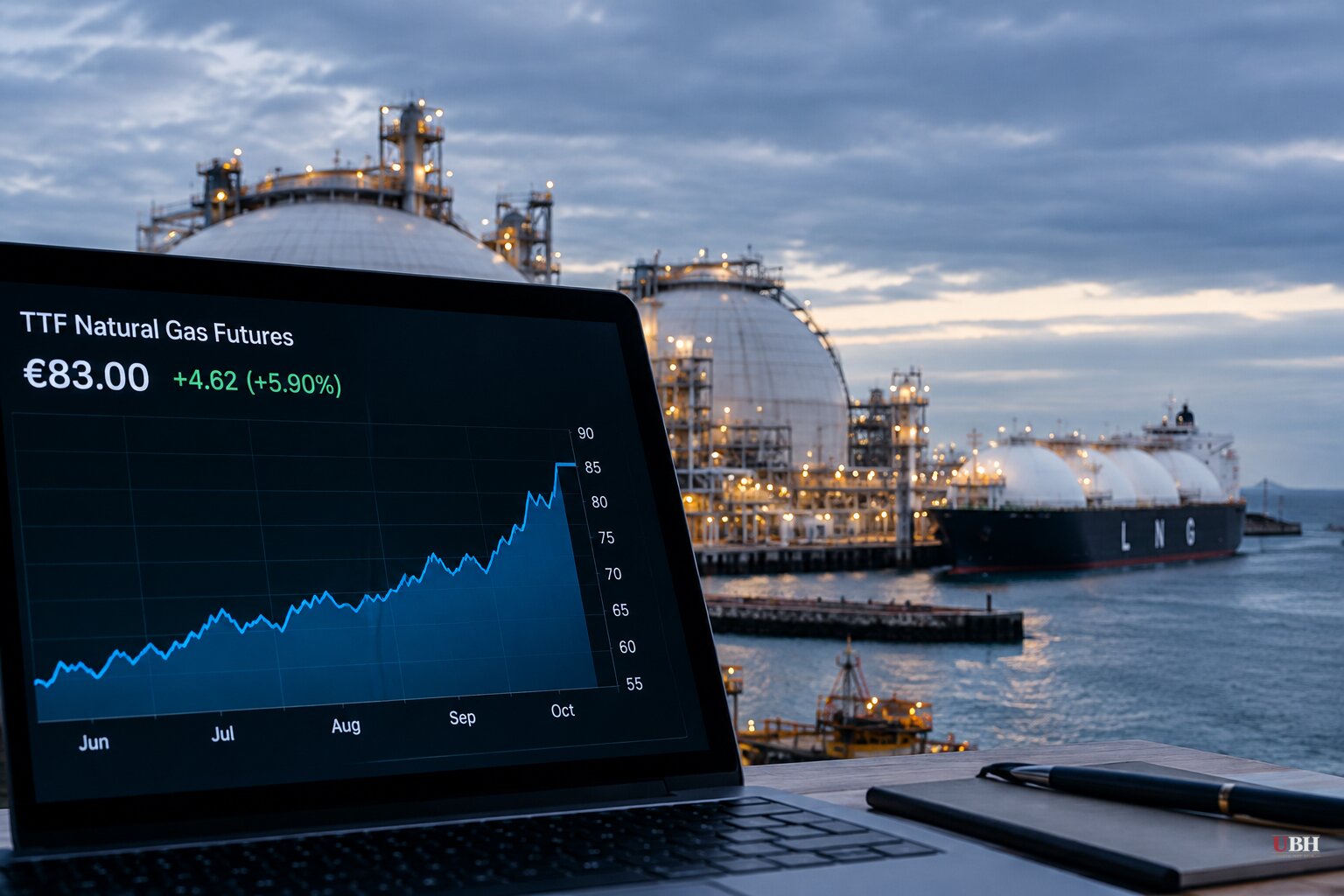
Since a short-lived September pullback to around €70 per megawatt-hour, Europe's benchmark Dutch TTF gas contract has climbed back to around €83.
Trading Economics data shows the contract touched €84.52/MWh on Monday, Oct. 12, the highest since December 2022. It is up about 165% over the past 12 months. Prices were not steady through the session: one feed showed the contract falling back below €81 after rising to a four-week high earlier in the day.
What is pushing prices
Traders point to security in the Persian Gulf. Renewed drone and missile attacks on commercial tankers have kept war-risk insurance costs elevated. The Strait of Hormuz handled about 20% of global LNG trade before the war.
More LNG carriers are being diverted onto longer, costlier routes around Africa. That is causing scheduling problems at Western European regasification terminals and tightening spot supply at continental hubs.
Qatari LNG exports remain disrupted. A Main Street summary of the market puts the reduction in Qatar's total export capacity at 17%. That figure comes from a single source.
Weather is the second driver. Updated models for Northwestern Europe show below-normal temperatures in the second half of October. That would bring forward heating demand and power-sector gas burn just as the injection season ends.
Storage is rising but still short
EU underground storage is about 73% full. That is a faster build than expected. Citi analyst Maggie Xueting Lin wrote in a note: "Even without Qatari LNG exports, Europe is injecting gas into storage at a faster-than-expected pace. European storage is over 73% full, despite earlier expectations of not getting to 70% before winter starts."
It is still well short of normal. The 15-year average for this point is about 90%. The five-year average is 88%. Storage is also below year-ago levels.
European gas network operators said last week that the system is flexible enough to meet winter demand. They also warned that limited supply could push storage below 30% by the end of winter, leaving Europe exposed to late-season cold snaps.
The ceasefire headline
President Trump said Russia and Ukraine agreed to an energy ceasefire effective immediately. That eased some concern in energy markets over the weekend. Trading desks cited by Tradingpedia treated the weekend ceasefire headlines as unconfirmed, and physical flows through the Gulf shipping routes remain heavily affected.
Citi's Lin sees a different change in Ukraine's role. She says it has shifted from net importer to net exporter of gas, one of three factors easing Europe's balance ahead of winter. The other two are industrial demand destruction and warm weather.
Forecasts diverge sharply
Lin is the bear in this market. She is holding a fourth-quarter TTF base case of €56. She argues that industrial demand destruction is easing the shortage even as Qatari LNG stays disrupted.
Bank of America sees the opposite. It projects TTF will average €100/MWh in the fourth quarter as inventories stay below seasonal norms.
In late August, with TTF near €67, Goldman Sachs commodities analyst Samantha Dart said prices would need to rise near €100 "to discourage Asia LNG demand, thereby freeing incremental cargoes to be sent to Europe to help manage European gas storage levels." Monday's price is still short of that level.
UBS strategists say winter weather will be pivotal for short-term price dynamics as the injection season closes. They add that overall fundamentals should stay under control unless winter is significantly colder than usual.
XTB's market commentary framed the day's gain as tied less to supply fears than to the prospect of higher near-term demand. Tradingpedia's account put shipping risk at the center. Both are consistent with the price action, and neither is a settled explanation.
What comes next
The UK wholesale contract rose 1.8% to 206.15 pence per therm, in line with its highest readings in close to three weeks. Storage is the number to watch as the injection season ends. A colder-than-forecast November or December would test the network operators' warning that stocks could drop below 30%. Whether prices head toward Bank of America's €100 or Citi's €56 depends largely on that weather and on whether tanker traffic through Hormuz normalizes.
Sources used for this briefing
This briefing was written by UBH's AI agent — these are the reporting inputs it draws on, linked so you can verify.


