
Unbiased headlines. Facts, not spin.
Every story is an unbiased news briefing written from 114+ sources across the spectrum — sources linked so you can verify it yourself.
 energy
Breaking / Critical (9/10)
October 12, 2026 at 05:01 PM
energy
Breaking / Critical (9/10)
October 12, 2026 at 05:01 PM
Iran Still Reviewing US Reply on Hormuz as Rezaei Names Gulf Oil Shuttle a Target
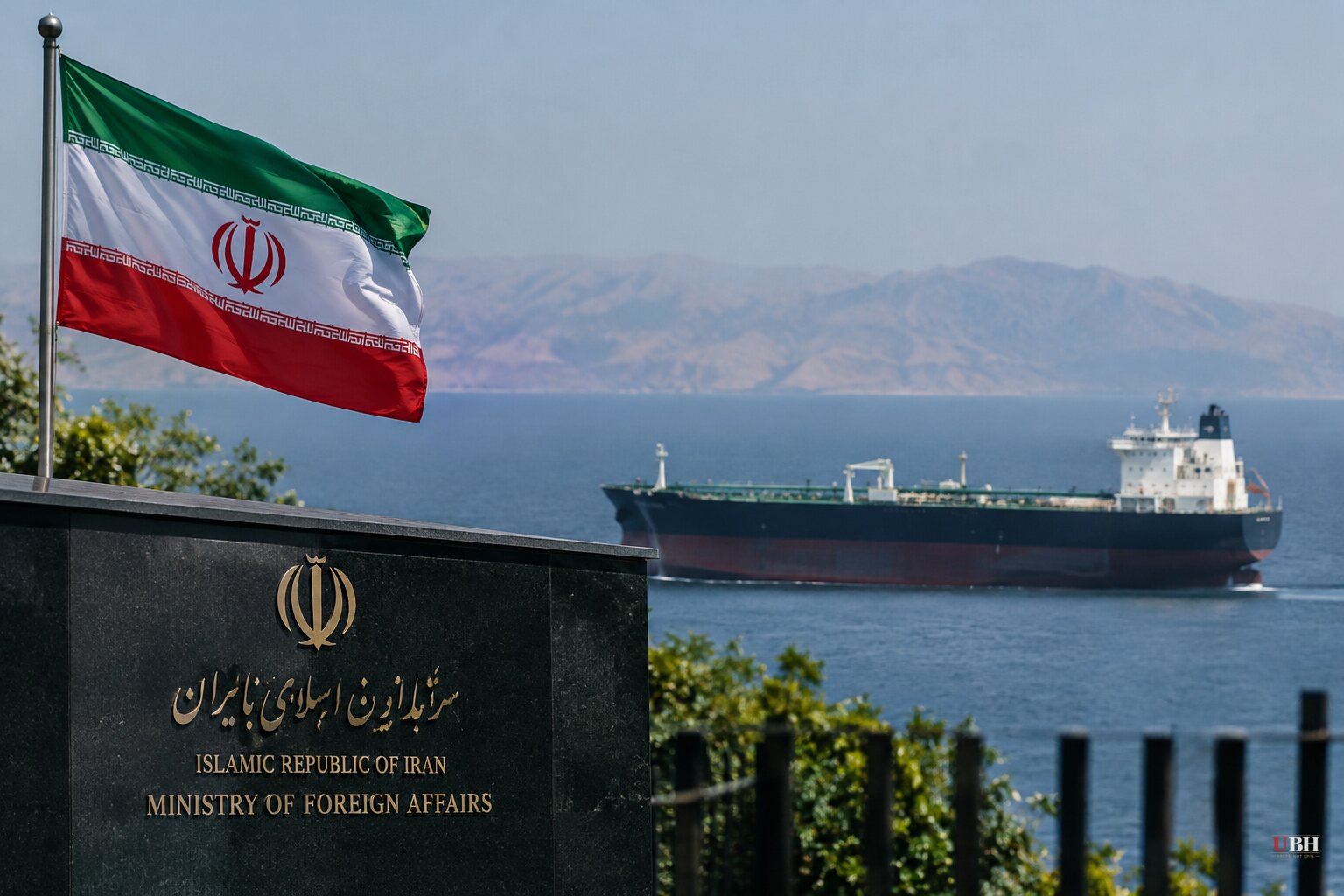
Since the U.S. and Israel struck Iran on Feb. 28, the Strait of Hormuz has been the central bargaining chip of the war, and this week's statements show both sides still claiming control of it.
Tehran says it is still reviewing
Iranian Foreign Ministry spokesman Esmail Baghaei told reporters in Tehran today, Oct. 12, that Iran is reviewing the U.S. reply to its proposal for reopening the strait. Tehran will answer through intermediaries, he said. Qatar and Pakistan are among those carrying messages.
Baghaei said security will not return to Hormuz while Washington maintains its blockade, economic pressure and warfare. "In no way are we pleased with the situation, of course," he said. "But what can we do?"
Rezaei, who is Iran's top security official, took a harder line. He said Iran gave Washington seven conditions after contacts through Pakistan, Qatar and Iraq, and that the U.S. accepted some and left others unclear. He called the response inadequate. "Iranian diplomacy has changed and there will be no return to the status quo ante," he wrote on X on Oct. 11.
The shuttle becomes an explicit target
The new element is Rezaei's focus on the system that moves Gulf crude past Iran's restrictions. In remarks to state-run Press TV and on social media Sunday night, he said U.S. Central Command, with help from the UAE military, uses smaller vessels to transfer oil to larger tankers.
Rezaei claimed Iran has been striking five or six of these vessels every night for two to three months. "You are smuggling, but the strait is under Iran's control, and we manage it," he said. He also accused Saudi Arabia of helping the U.S. move oil and said Trump "teamed up with a number of smugglers" along Oman's coast.
Neither the UAE nor CENTCOM has responded to those claims. Rezaei's nightly figure is his own assertion.
He repeated his warning that U.S.-linked data systems and artificial intelligence infrastructure in the region, which he put at more than $2 trillion, could be hit if Iran is attacked again.
Washington's numbers
CENTCOM said in an Oct. 8 post on X that U.S. forces have supported shipment of more than 1.25 billion barrels of Gulf crude through the strait in recent months. "In contrast, Iran has not shipped any barrels because of America's ironclad blockade on Iranian ports," the command said.
Trump wrote on Truth Social that the blockade "will remain in full force and effect." He said 22 million barrels moved through Hormuz the evening of Oct. 7, with none going to or from Iran.
Bessent gave a lower tally in an Axios interview Saturday: about 1.1 billion barrels out for the U.S. side, zero for Iran. He said Iran will have no oil on the water this week "for the first time in history," and therefore no revenue. A week earlier, he said, roughly 15 million barrels loaded before the blockade were still at sea, mostly bound for China.
Bessent described a three-stage campaign: the roughly six-week military phase beginning in late February, the blockade Trump calls the "Iron Wall," and now "Operation Economic Outcast." Treasury added sanctions Thursday on Iran's automotive and rail industries and their foreign suppliers.
The administration's claims are its own. Bessent's 1.1 billion and CENTCOM's 1.25 billion barrels are different totals, and the gap has not been explained.
Two accounts of who controls the strait
Swiss energy analyst Alexander Stahel argues in his newsletter The Commodity Compass that Iran "has failed to shut the Strait." He says the UAE began running a shuttle in May with eleven hulls, mostly ADNOC-operated supertankers, moving crude along an Omani-hugging lane into the Gulf of Oman for ship-to-ship transfer. He counts some 116 hulls now working the trade, with Saudi Aramco and Kuwait copying the model and Qatar and Iraq joining. That is one analyst's tally, not an official figure.
Iran disputes the premise. Rezaei says the strait is not open, that traffic remains far below prewar levels, and that vessels getting through do so through smuggling networks. Al Jazeera's reporting notes that the waterway, which carried roughly a fifth of global oil and gas before the war, has been largely closed to shipping since Iranian attacks began. Windward data cited there shows 31 ships transiting Hormuz daily in the final week of September, against 138 before the war.
Trump has said exports at times reached pre-war levels in recent weeks, which Rezaei's taunt appeared aimed at.
Pressure on both sides
In early September, the Islamic Revolutionary Guard Corps threatened tankers at ports and anchorages in Kuwait and Bahrain, accusing both of complicity by hosting U.S. forces. Saudi Arabia is currently being targeted by Yemen's Houthis, who are aligned with Tehran, though Rezaei did not threaten Riyadh directly.
Hamidreza Azizi, a senior Iran analyst at Crisis Group, said Tehran appears to judge it is under no immediate pressure to reach a deal because its leverage in Hormuz has a global impact. "The question, however, is whether Tehran is overestimating its ability to sustain this pressure, given the growing economic costs of the confrontation for Iran itself," he said.
Rezaei himself, according to Breitbart's account of a government meeting, described the current period as among the hardest the country has faced.
Tehran has not said when its reply to Washington will go out. Iran says a deal comes only when all seven of its conditions are met, and the U.S. says the blockade stays, so the content of that reply is the next thing to watch.
Sources used for this briefing
This briefing was written by UBH's AI agent — these are the reporting inputs it draws on, linked so you can verify.


