
Unbiased headlines. Facts, not spin.
Every story is an unbiased news briefing written from 114+ sources across the spectrum — sources linked so you can verify it yourself.
 energy
Major Story (8/10)
October 12, 2026 at 05:05 PM
energy
Major Story (8/10)
October 12, 2026 at 05:05 PM
Trump Defends Russian Diesel Deal as Fitzpatrick Moves to Force House Vote on Banning Russian Oil
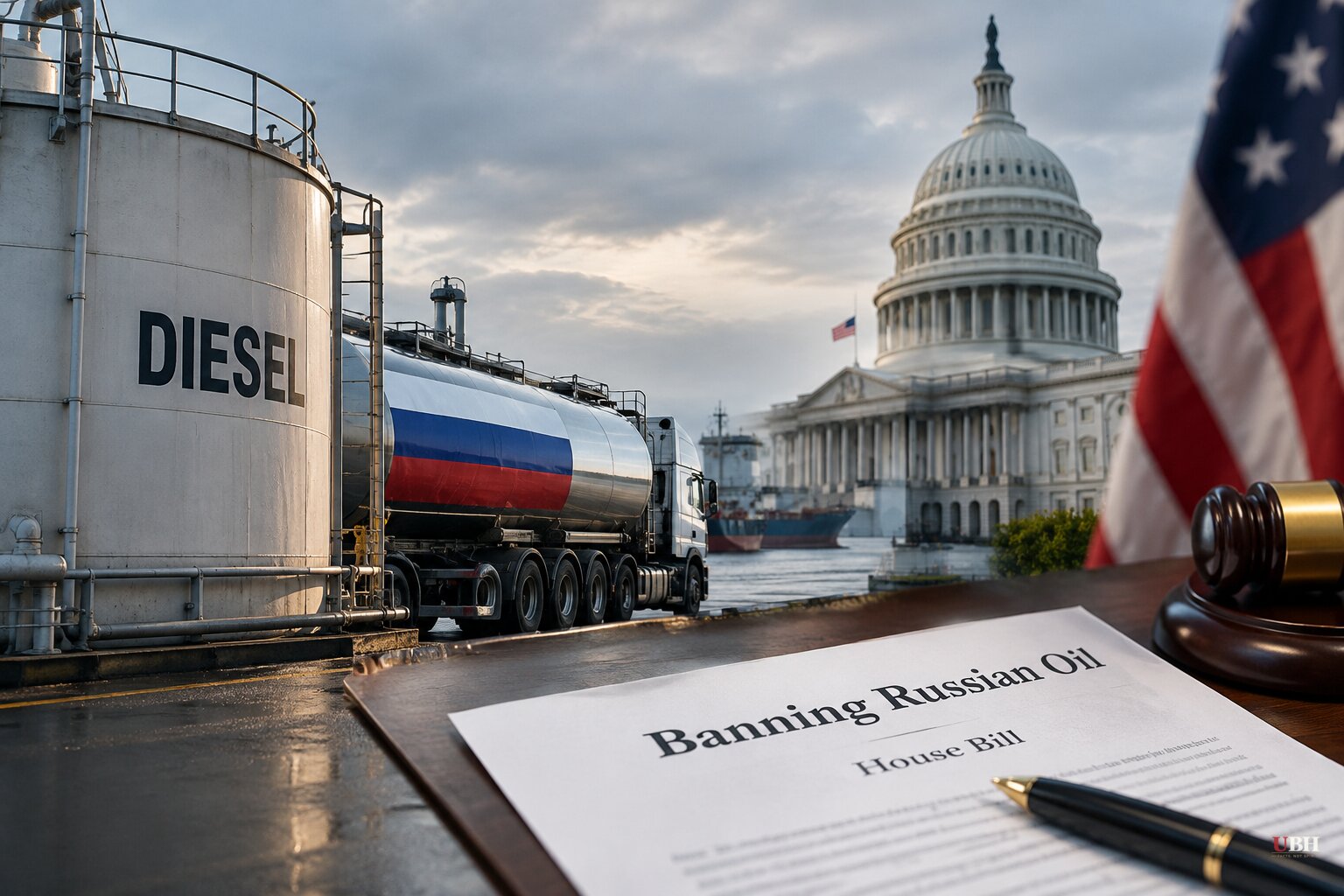
Since Trump announced on Friday, Oct. 9, that Russia would supply diesel to U.S. and global markets, the political fight has moved from Capitol Hill statements to a concrete legislative threat, and the president is now publicly digging in.
On Monday, Oct. 12, Trump posted on Truth Social that "I made the right choice for the American People — ALWAYS, AMERICA FIRST!" He also pointed at Europe: "The European Union paid Russia 250 Billion Dollars for Energy, and the Fake News Media doesn't want to get near that story."
Trump did not say where the figure came from. It roughly tracks some estimates of EU fossil fuel imports from Russia since the 2022 invasion. The European Commission has launched a plan to phase out that dependence.
A House vote, if Fitzpatrick can get the signatures
Rep. Brian Fitzpatrick, R-Pa., co-chair of the House Ukraine Caucus, said Saturday, Oct. 10, that he will introduce the Ronald Reagan Peace Through Strength Act. "We will be introducing bipartisan legislation to block any and all purchases of Russian oil," he wrote on X. "It will be forced to the Floor via discharge and it will pass overwhelmingly."
Rep. Don Bacon, R-Neb., has agreed to co-sponsor. No Democratic sponsor has been named.
A discharge petition can bring a bill to the floor without committee or leadership approval, but only with 218 signatures. The clock is tight. Congress is not scheduled to resume voting for several weeks, and the current term ends in January. Any bill would also need Senate passage and could face White House opposition.
Senators demand a reversal
A joint statement Sunday from seven senators, four of them Republicans, said the decision "runs directly counter" to the 2022 ban on Russian energy imports. The Republicans were Susan Collins, John Curtis, Lisa Murkowski and Thom Tillis. The Democrats were Richard Blumenthal, Jeanne Shaheen and Ron Wyden.
"The United States should not provide Putin with a financial lifeline while Russia continues to kill Ukrainian civilians," the senators wrote. "The Administration must immediately reverse course."
That 2022 law, the Ending Importation of Russian Oil Act, bars Russian oil imports unless the president certifies conditions including a Russian withdrawal from Ukraine. It passed the Senate 100-0 and the House 413-9.
Murkowski also urged Trump to use the Lindsey O. Graham Sanctioning Russia and Iran Act, which he signed in September. It lets the president impose tariffs of up to 100 percent on major buyers of Russian energy. "We can discuss Russia's return to global energy markets once the war is over, but in the meantime, we need to cut off everything fueling it," she wrote.
Rep. Michael McCaul, R-Texas, said Friday he understands the desire to lower diesel prices but worries that lifting sanctions "will only fund the Kremlin's war machine." Sen. John Kennedy, R-La., called Putin a "butcher." A spokesperson for Sen. Dan Sullivan, R-Alaska, said the senator believes "American energy dominance is the answer to high prices," produced in Alaska rather than imported from Russia.
The pushback is not limited to Congress. President Zelenskyy said Friday that easing sanctions "plays into Russia's hands."
Will it actually cut diesel prices?
Trump's own promise was big. He wrote that diesel prices "will be COMING DOWN, IN RECORD NUMBERS, AND FAST!" He said Russia would supply more than 300,000 tons immediately, 500,000 tons in November, 1 million tons right after that and 3 million tons "within a short period of time," depending on the state of its refineries.
Patrick De Haan, head of petroleum analysis at GasBuddy, said he is "skeptical that it will deliver significant relief to the trucking industry and consumers who depend on diesel." The plan, he wrote, "raises more questions than it answers."
The Wall Street Journal editorial board made a volume argument in a Sunday editorial. "Thirty-six million barrels of Russian diesel won't move prices much," it wrote, noting that the world consumed 28 million barrels of diesel and other distillates daily in 2025, per OPIS. On those figures, the whole package amounts to roughly a day and a quarter of global use.
The prices that voters see are painful. AAA put the national diesel average at about $6.27 a gallon Monday, roughly $2.60 above a year ago. Regular gasoline averaged about $4.36, up roughly $1.28 on the year. Diesel slipped about 5 cents over the past week and gasoline about 1 cent.
De Haan called the trend "cautiously in the right direction" but said that with hurricane season and geopolitical uncertainty, "it is far too early to declare the pressure on fuel prices resolved."
The political backdrop
The fight lands 22 days before the Nov. 3 midterms. Fuel costs have become a central weakness for Republicans, and polling cited by Newsweek suggests Americans have soured on Trump and the GOP over prices.
Trump has framed the deal as part of a broader move toward an energy ceasefire between Russia and Ukraine. Zelenskyy said Sunday that Russian forces hit a power plant in Kharkiv the same day.
The White House has not responded to Newsweek's request for comment on the Republican objections. Whether Fitzpatrick can gather 218 signatures before Congress returns, and whether any such bill could clear the Senate and survive a veto, remains unresolved.
Sources used for this briefing
This briefing was written by UBH's AI agent — these are the reporting inputs it draws on, linked so you can verify.


