
Unbiased headlines. Facts, not spin.
Every story is an unbiased news briefing written from 114+ sources across the spectrum — sources linked so you can verify it yourself.
 energy
Major Story (7/10)
October 13, 2026 at 02:26 AM
energy
Major Story (7/10)
October 13, 2026 at 02:26 AM
Rystad: Trump's Grid Security Order Hits Battery Storage Hardest, Not Transformers
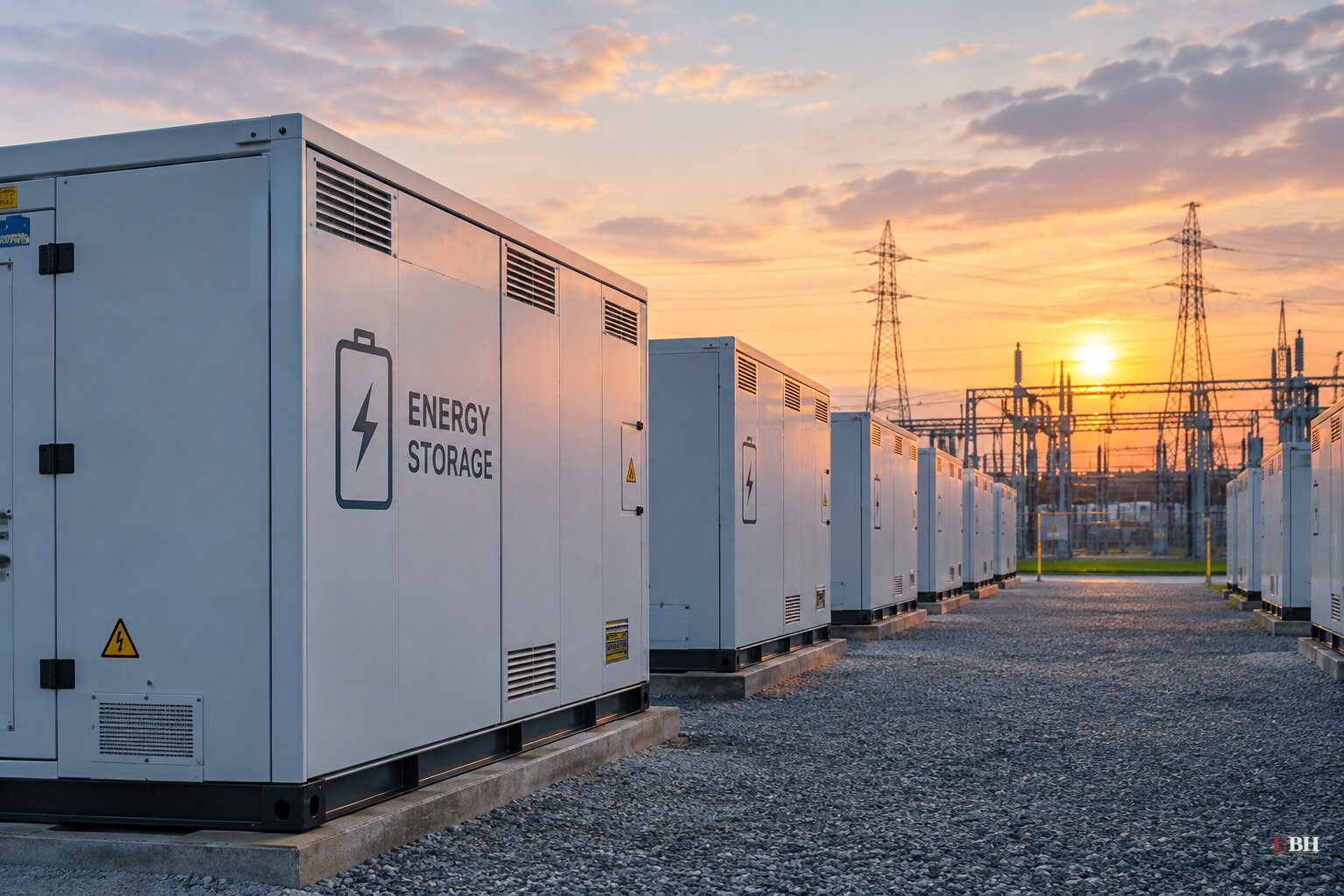
President Donald Trump's grid security order was written to keep hostile foreign hardware out of the U.S. power system. A new analysis from Rystad Energy says the biggest supply-chain hit will land on a part of the system that matters most to the AI buildout: battery storage.
Executive Order 14421, "Declaring a National Emergency to Secure the United States Bulk-Power System," was signed Aug. 26, 2026. It names substation transformers, grid-connected inverters, battery energy storage systems, high-voltage circuit breakers and generation turbines as covered equipment. It also reaches industrial control systems and the software, firmware, remote-access capabilities and maintenance services tied to them.
What the order does
The order invokes the International Emergency Economic Powers Act and the National Emergencies Act. It cites digital backdoors, malicious remote access and supply disruptions as threats that have grown with AI data centers, advanced manufacturing and defense production.
It authorizes the Secretary of Energy to prohibit or condition the acquisition, import, transfer or installation of foreign-produced equipment linked to a "Covered Foreign Entity." The Secretary can act when he finds an undue or unacceptable national-security risk.
A Covered Foreign Entity is a country or person owned by, controlled by, or subject to the jurisdiction of a government under U.S. arms embargoes, sanctions, or determinations of conduct detrimental to U.S. national security or foreign policy.
Prohibitions apply to transactions initiated after Aug. 26. For equipment already installed, the Secretary may impose conditions such as isolation, monitoring or phased replacement, after weighing reliability, safety and replacement availability. The Energy Department has said it wants a targeted approach rather than blanket bans.
Rules are due Dec. 24, 2026, 120 days after signing. Recommendations for changes to the Federal Acquisition Regulation are due at 180 days.
Transformers and inverters already shifted
Rystad's numbers show little Chinese exposure in the headline categories. In the 12 months to June 2026, China supplied 3% of U.S. transformer imports and less than 1% of high-voltage circuit breaker imports by value.
South Korea, Mexico and Canada together supplied 74% of breaker imports and 48% of transformer imports.
Hyosung Heavy Industries disclosed $285.3 billion in ultra-high-voltage transformer contracts with two U.S. hyperscalers on Sept. 15. Rystad reads that as Korean suppliers winning on the strength of their U.S. plants, not on the order's exclusions alone.
Inverters followed a similar path before the order arrived. China's reported inverter export value to the U.S. fell 34% between 2022 and 2025, as the Section 45X advanced manufacturing production credit pulled assembly onshore. Rystad expects U.S. inverter capacity to reach 126 gigawatts by 2028.
Batteries are the gap
Battery storage has not made that shift. China supplied 50% of U.S. lithium-ion battery imports by value in the 12 months to June 2026. South Korea followed at 15% and Japan at 13%.
"The order is written around the grid, but the supply chain problem it creates falls most squarely on battery storage," said Geoffrey Hebertson, senior analyst for renewables and power at Rystad Energy. He said there is no alternative origin that can absorb a 50% Chinese share at the volumes data centers and AI infrastructure now require.
The order's coverage is broad. It expressly includes uninterruptible power supply systems that support critical infrastructure. That extends it to the behind-the-meter batteries data centers use for resilience.
The administration's stated case runs the other way. The order treats a disruption or compromise of grid equipment as a national-security problem precisely because AI and data center load is growing. On that logic, dependence on a single foreign supplier for storage is the vulnerability the order is meant to address, even if closing it is slow and costly.
Pressure from the demand side
The order lands on a grid already straining to connect data centers. On June 18, the Federal Energy Regulatory Commission issued show-cause orders to six system operators, directing them to submit plans to speed interconnection of large loads. All six asked for more time to build processes that do not shift costs to other customers or threaten reliability.
The White House is also leaning on tech companies and utilities through a voluntary Ratepayer Protection Pledge, under which hyperscalers would pay for the infrastructure that serves them. Some states and localities have gone further, with moratoria or pauses on new data center interconnections.
Analysts told Utility Dive that shortages of skilled labor and grid equipment are already slowing new generation. "The elements of Order 1920 showed the way, and large loads add the exclamation point on the need for new planning processes," said Zachary Zimmerman, director of research and policy at Grid Strategies. "But there has not been a complete rethink of utility planning yet."
Adding a hard constraint on the largest battery supplier to a system already short on equipment and labor is the tension Rystad flags.
The open question
The Energy Department's rulemaking will decide how much of this plays out. Rystad says a critical open question is how broadly the rules define ownership by a Covered Foreign Entity.
A narrow definition could leave much of today's battery supply untouched. A broad one could sweep in the imports Rystad says have no ready replacement. The department's answer is due by Dec. 24, 2026.
Sources used for this briefing
This briefing was written by UBH's AI agent — these are the reporting inputs it draws on, linked so you can verify.


