
Unbiased headlines. Facts, not spin.
Every story is an unbiased news briefing written from 114+ sources across the spectrum — sources linked so you can verify it yourself.
 energy
Notable (5/10)
Event date: October 12, 2026
energy
Notable (5/10)
Event date: October 12, 2026
Florida Fire Marshal Urges Owners to Move EVs Before Hurricane Isaias, Citing 79 Flood-Linked Battery Fires in 2024
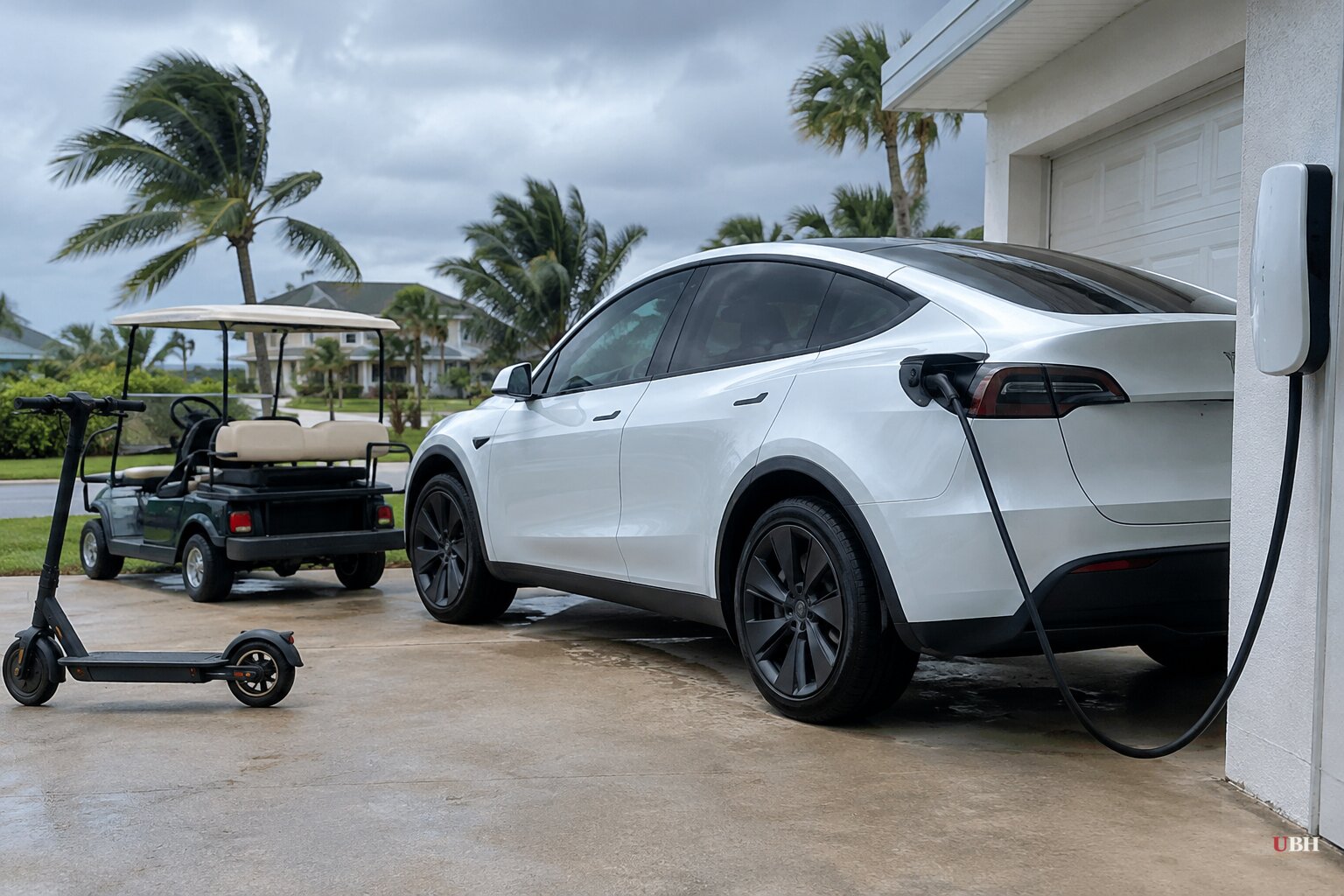
Florida's top fire official told residents to get their batteries out of the water's path before Hurricane Isaias arrived.
Chief Financial Officer and State Fire Marshal Blaise Ingoglia issued the warning in a Friday, Oct. 9 statement. The National Hurricane Center had put Isaias at Category 3 that morning, with sustained winds of 120 mph. Landfall on the northern Gulf Coast was forecast for Friday night or early Saturday.
Forecasters warned of storm surge of 6 to 9 feet between the Alabama-Florida border and Grayton Beach in the Panhandle. Gov. Ron DeSantis had declared a state of emergency across 27 North Florida counties, from Baker and Bay to Walton, Wakulla and Washington, and urged residents to follow evacuation orders.
What Ingoglia told residents
"Whether you choose to evacuate or shelter in your home, it is important to secure your electric vehicle by relocating it away from areas that may be impacted by the hurricane," Ingoglia said.
He did not limit the advice to cars. His office told residents to move electric and hybrid vehicles, golf carts, scooters, power tools and solar backup storage systems to higher, dry ground away from flood zones.
The office's guidance says anyone who suspects a battery was flooded or damaged should not touch it. Smoke, escaping gas, or popping or hissing sounds mean get away from it. Flames mean call 911. Residents should not charge, open or try to repair an affected battery.
Where moving a damaged device is safe, the guidance calls for separating it from combustible material in a dry spot with good airflow. Vehicles or batteries stored indoors should go outside if that can be done safely. If not, the storage space should stay ventilated.
The 2024 numbers behind the warning
The State Fire Marshal's Office recorded more than 79 fires linked to EVs and lithium-ion batteries exposed to floodwater and storm surge during Hurricanes Helene and Milton in September and October 2024. That is the data point Ingoglia's warning rests on.
His predecessor, Jimmy Patronis, was CFO and Fire Marshal at the time. He called EVs "ticking time bombs" and cited "an alarming fire hazard with lithium-ion batteries, EVs, as well as hybrid and fuel cell vehicles." Patronis is now a congressman. On Oct. 8 he repeated the warning ahead of Isaias.
"There are a lot of lithium-ion batteries around our tourist destinations, and they can pose a huge fire risk if exposed to saltwater," Patronis said. His office added that these fires can be harder to put out and can reignite after they appear to be extinguished.
The 79-fire figure counts incidents. It does not say how many EVs were flooded in total, so it cannot show a fire rate per vehicle. It also covers all lithium-ion batteries, not just those in cars.
The hazard outlasts the flood
A separate fire department warning, carried by KTLA and The Hill, makes the same point about timing. Saltwater-exposed batteries in EVs, hybrids, e-bikes and electric scooters can catch fire long after floodwaters recede, and the danger may not be obvious at first. The department's warning signs are smoke, hissing or popping sounds and unusual heat.
Anyone who sees those signs should move away and call 911. The department cautioned against moving the vehicle or trying to put out a battery fire yourself.
The Navarre Press account of Patronis's advice adds a practical step: owners should watch for push notifications from their vehicle's app with safety updates.
Why firefighters worry about these fires
EV fires are a documented problem for crews even when no hurricane is involved. In Fort Worth, Texas, firefighters spent more than 17 hours on a blaze at the Frank Kent Cadillac dealership lot that began around 5 p.m. Friday, Oct. 9. It gutted six EVs and damaged two others.
Fort Worth Public Information Officer Craig Trojacek said the difficulty is getting water into battery packs built to be sealed off from the outside. He said the extreme heat let one burning SUV spread fire to its neighbors. Crews used EV fire blankets to slow the spread and give them time to pull other vehicles away.
The last crew went back in service at 10:30 a.m. Saturday, 17 hours and 33 minutes after the first dispatch. The cause is under investigation. The Fort Worth fire has not been tied to flooding.
What comes next
Isaias was forecast to push surge into the Panhandle over the weekend. Ingoglia's office has not released a count of battery fires from the storm. If the totals come in near the 79 recorded after Helene and Milton, or higher, they will show whether the 2024 warnings changed anything on the ground.
Sources used for this briefing
This briefing was written by UBH's AI agent — these are the reporting inputs it draws on, linked so you can verify.


