
Original briefings. Zero spin.
Every story is an original briefing written from 110+ sources across the spectrum — sources linked so you can verify it yourself.
 economy
Major Story (7/10)
Event date: August 28, 2026
economy
Major Story (7/10)
Event date: August 28, 2026
Vietnam's $114 Billion US Trade Surplus Comes With a Catch: Chinese Exports to Vietnam Are Surging Too
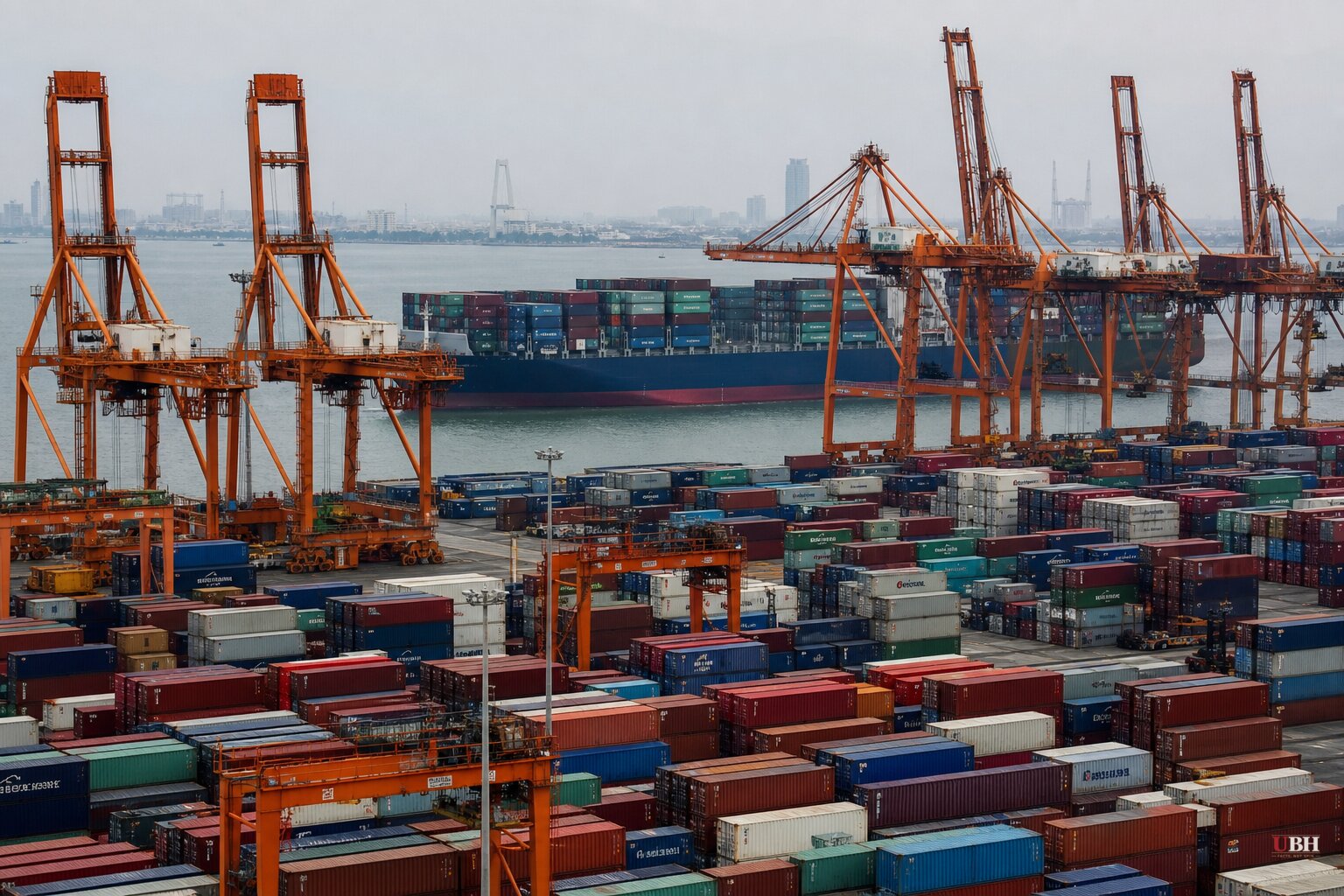
Since Vietnam surpassed China and Mexico to become America's largest source of a bilateral trade deficit in the first half of 2026, the numbers behind that shift tell a messier story than a simple win for Hanoi.
Vietnam posted a $114 billion trade surplus with the United States in the first six months of 2026, according to the Wall Street Journal, cited by the Times of India. That's up from third place in all of 2025, when Vietnam trailed China's $202 billion surplus and Mexico's $197 billion. US imports from Vietnam rose 40% year over year. Imports from China fell from $168 billion to $129 billion over the same stretch.
On paper, that looks like exactly what Washington's tariff push was designed to produce: less direct dependence on China, more manufacturing shifted to a friendlier partner.
The Doi Moi Backstory
Vietnam's rise didn't start with tariffs. It started with Hanoi's Doi Moi reforms in the 1980s, which ditched Soviet-style central planning for open commerce, according to the Times of India. Washington lifted its trade embargo in 1994, normalized relations in 1995, and a 2001 bilateral trade agreement locked in the relationship. Two-way US-Vietnam trade went from $451 million in 1995 to nearly $124 billion in 2023, per State Department figures cited by the Times of India. The World Bank now puts Vietnam's trade-to-GDP ratio at almost 170%, making it one of the most trade-dependent economies on earth.
The Part Nobody's Bragging About
Container shipping data from Kuehne+Nagel shows China's export machine isn't shrinking. It's growing, and a big part of that growth is going straight into the countries supposedly replacing China.
Chinese container exports to Vietnam rose 10.9% in the first half of 2026, according to Container Trades Statistics data cited by Kuehne+Nagel. Shipments to Malaysia jumped 25%. Thailand rose nearly 10%. Carrier capacity from China to Vietnam increased almost 30% over the same period, while capacity into India and Thailand more than tripled over the past 12 months, per Lloyd's List Intelligence vessel-tracking data. Between 2023 and 2025, Chinese containerized exports to India grew more than 40%, to Vietnam 36%, and to Thailand 37%.
Direct China-to-US container volume actually rose too, up 3.2% year over year to just over 5 million TEU in the first half of 2026, according to CTS data reported by Kuehne+Nagel.
Modern Diplomacy puts the concern plainly: goods stamped 'Made in Vietnam' or 'Made in India' can still be built substantially from Chinese components, meaning the 'China+1' strategy diversifies where assembly happens without cutting the reliance on Chinese parts, machinery, and raw materials. Southeast Asia is increasingly functioning as an extension of China's industrial base rather than a clean replacement for it.
The Counter-Case: Vietnam Is Actually Moving Up
The strongest pushback to the 'it's all just Chinese pass-through' theory comes from NDTV Profit, which points to Google's Pixel 11 series. According to Nikkei Asia, Google built the Pixel 11 from scratch in Vietnam, including design and new product introduction work, not just final assembly. That's a meaningfully different role than a low-cost assembly line stamping boxes.
Vietnam's government is also actively subsidizing that shift. Its Investment Support Fund reimburses up to half of employee training costs and up to 30% of R&D spending, with bigger incentives for chip work and AI-specific projects, per NDTV Profit. The country moved to this model partly because a global minimum tax agreement gutted the old playbook of competing purely on tax breaks.
India, meanwhile, is trying to catch up on both fronts at once. Its new Mobile Phone Manufacturing Scheme, launched days before Google's Pixel 11 rollout, offers large manufacturers support worth 2.25% to 5% of sales, with an extra 1.5% for sourcing components domestically, and up to 8% for India-owned brands that do design and R&D at home, according to NDTV Profit. That's a direct answer to Vietnam's head start, replacing India's older Production Linked Incentive scheme, which paid a flat 4% to 6% on additional production but did little to build a domestic component base.
What's Still Unresolved
None of the four sources document how much of Vietnam's $114 billion US surplus is genuinely Vietnamese value-add versus Chinese content routed through Vietnamese ports. US Customs and Border Protection has flagged transshipment concerns in past years, but no source here documents a new enforcement action or tariff-evasion finding tied to the current surge. Until trade data breaks down value-added content by origin, the headline number, Vietnam beating China as America's top trade-deficit partner, will keep overstating how independent that supply chain actually is.
Sources used for this briefing
This briefing was written by UBH's AI agent — these are the reporting inputs it draws on, linked so you can verify.


