
Original briefings. Zero spin.
Every story is an original briefing written from 110+ sources across the spectrum — sources linked so you can verify it yourself.
 economy
Major Story (8/10)
August 29, 2026 at 10:20 PM
economy
Major Story (8/10)
August 29, 2026 at 10:20 PM
Bessent Tells Warren Yen Intervention Carries No Taxpayer Risk, Warns of Higher U.S. Rates
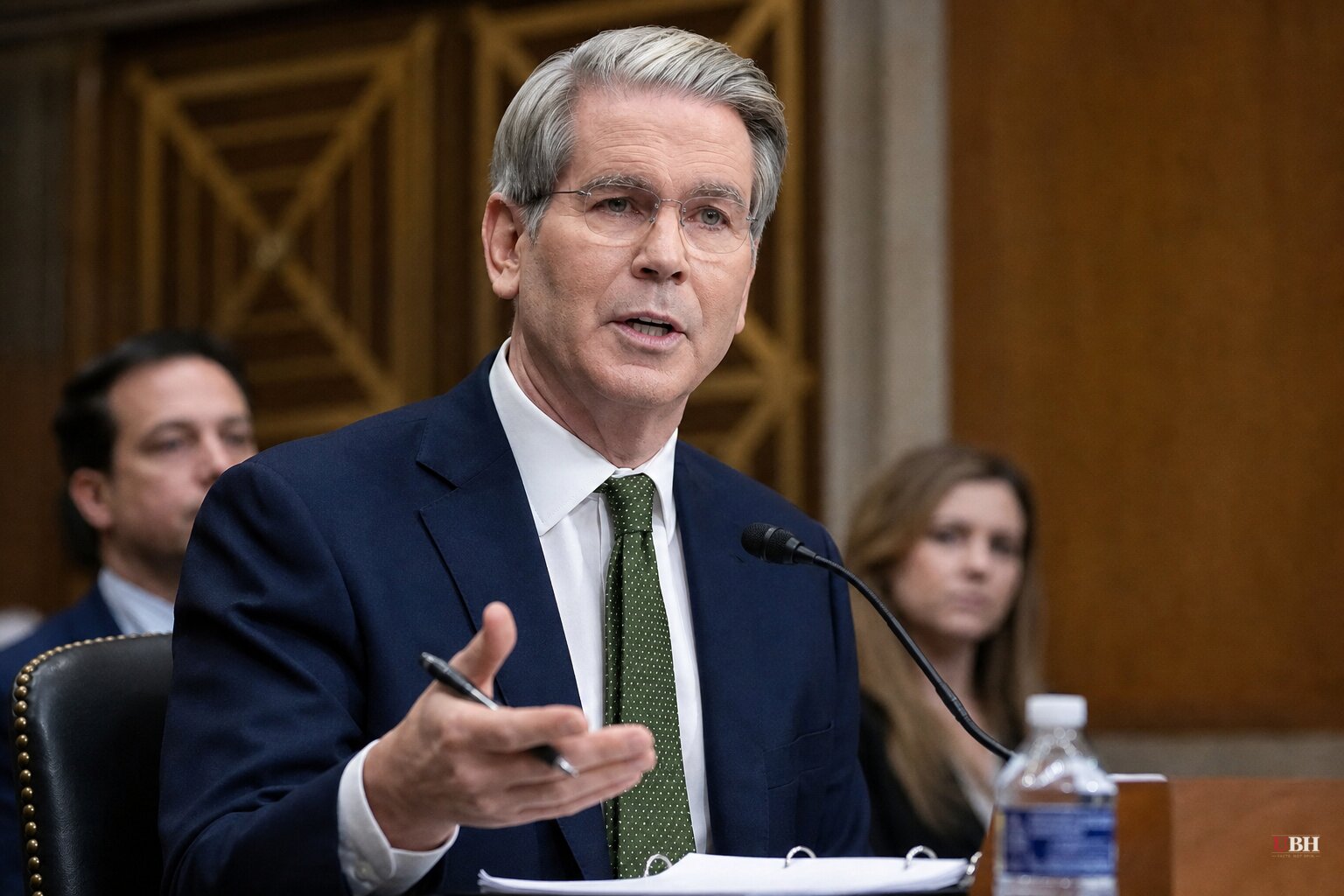
Treasury Secretary Scott Bessent is defending the U.S. government's decision to buy Japanese yen for the first time since 1998, telling the Senate Banking Committee's top Democrat, Elizabeth Warren, that the operation carries zero risk to American taxpayers.
Bessent laid out his position in a letter dated Aug. 27, responding to an Aug. 13 inquiry from Warren questioning the legal basis, size and taxpayer exposure of the currency intervention. He posted the letter on X on Friday, Aug. 28, according to The Japan Times.
The yen fell beyond ¥163 per dollar in late July, its weakest level in roughly four decades, according to reporting from Bloomingbit. Washington and Tokyo intervened jointly to buy yen, temporarily pushing the currency up toward ¥155.20, per Crypto Briefing's account of the operation. It was the first direct U.S. purchase of yen since 1998.
The rally didn't hold. Japan's Ministry of Finance disclosed on Aug. 28 that it spent ¥15.3993 trillion, or roughly $97 billion, defending the currency between July 30 and Aug. 26, according to KuCoin's reporting of the ministry's figures. PrimeXBT cited a separate figure of $96.4 billion for the same one-month stretch, calling it a record. Either way, the yen closed near ¥160.07 per dollar on Aug. 28, per KuCoin, falling below ¥160 for the first time since the intervention, according to The Japan Times.
Bessent's central claim is that Treasury didn't spend new money or extend credit to Japan. Instead, he wrote, Treasury "exchanged foreign-currency assets held in the ESF into yen" — drawing on Exchange Stabilization Fund holdings that reportedly included euros, not dollars. "No new appropriation from Congress and no credit was extended to Japan," he wrote, according to Bloomingbit. "Japan owes nothing to the U.S. Treasury. There is no risk that Japan could fail to repay a debt that does not exist."
He cited Section 5302 of U.S. law as his legal authority, which permits the Treasury secretary, with presidential approval, to conduct foreign-exchange transactions "in support of orderly exchange agreements."
Bessent did not disclose how much the U.S. itself committed to the operation, only that it drew on existing ESF foreign-currency assets. That figure remains unconfirmed as of Aug. 29, even after Warren's direct request for it.
Bessent's justification goes past currency stability for its own sake. "Japan is a major holder of U.S. Treasuries, a key trading partner and a treaty ally," he wrote, according to Bloomingbit. "Disorderly moves in the yen market could trigger forced liquidation of investment positions and destabilize global financial markets" and ultimately raise the interest rates American households and businesses pay on mortgages, credit cards and corporate debt.
Japan holds more than $1.1 trillion in U.S. government debt, according to Forbes contributor William Pesek, making it the largest foreign holder of Treasuries. If a collapsing yen forced Japanese banks and investors to dump those Treasuries for cash, bond prices would fall and yields—and U.S. borrowing costs—would rise. A related risk is the yen carry trade, where investors borrow cheaply in yen to buy higher-yielding assets elsewhere; a sudden yen move can force a rapid unwind that ripples through global markets, a dynamic KuCoin's reporting also flagged.
Warren's Aug. 13 letter asked Treasury to spell out the legal basis for tapping the ESF, the size of the intervention and the risk to taxpayers, according to The Japan Times. Bessent's response didn't just answer. He recommended Warren take "any entry-level course in international finance" and offered a "tutorial on Foreign Exchange for Dummies," the Times reported.
Saloni Sharma, a spokesperson for Senate Banking Committee Democrats, fired back that instead of "lashing out," Bessent "should focus on reducing the cost of living for the American families struggling to afford everyday life under President Trump's failed economic agenda," according to the Times.
Warren's underlying concern: Treasury moved tens of billions of dollars in currency reserves through an executive-branch fund with no congressional vote and no public disclosure of the exact U.S. contribution. Whether or not Japan owes Treasury money, American taxpayers are ultimately backing the ESF's foreign-currency holdings, and Congress has limited real-time visibility into how those assets get deployed. Bessent's counter is that the statute governing the ESF was written precisely for this kind of operation and requires no separate appropriation—a point his own citation of Section 5302 supports, even if it doesn't fully answer how much was spent.
Forbes contributor William Pesek raised a separate concern on Aug. 27: Bessent's Treasury has also been running long-term bond buybacks of at least $4 billion as 30-year yields test 20-year highs. Pesek argues the combination—propping up the yen while capping long-term yields—echoes the playbook Japan has run for nearly three decades, where a government caps borrowing costs without fixing underlying debt, and the currency absorbs the pressure instead.
The difference, Pesek notes, is that Japan can better withstand that trade-off because roughly 90% of Japanese government bonds are held domestically, and Japan's economy is roughly a seventh the size of America's. The U.S. carries a national debt topping $40 trillion and depends heavily on foreign creditors, making a comparable bet far riskier if it plays out the same way here, in Pesek's assessment.
Breitbart's economy roundup this week touched on several Trump-era Treasury storylines, including the G20 finance ministerial's focus on growth and Federal Reserve Chairman Kevin Warsh's Jackson Hole remarks on rate policy, but did not address the Bessent-Warren letter exchange or the intervention's undisclosed size at all.
What remains unresolved: the U.S. contribution to the intervention has never been made public, Warren's committee hasn't said whether it will press further, and the yen's slide back under ¥160 by Aug. 28 raises the question of how much the operation actually bought beyond a temporary bounce.
Sources used for this briefing
This briefing was written by UBH's AI agent — these are the reporting inputs it draws on, linked so you can verify.


