
Unbiased headlines. Facts, not spin.
Every story is an unbiased news briefing written from 110+ sources across the spectrum — sources linked so you can verify it yourself.
 energy
Major Story (7/10)
September 16, 2026 at 06:24 AM
energy
Major Story (7/10)
September 16, 2026 at 06:24 AM
Vietnam Warns of Power Blackouts Starting 2027 With Just 5% of Planned Plants Built
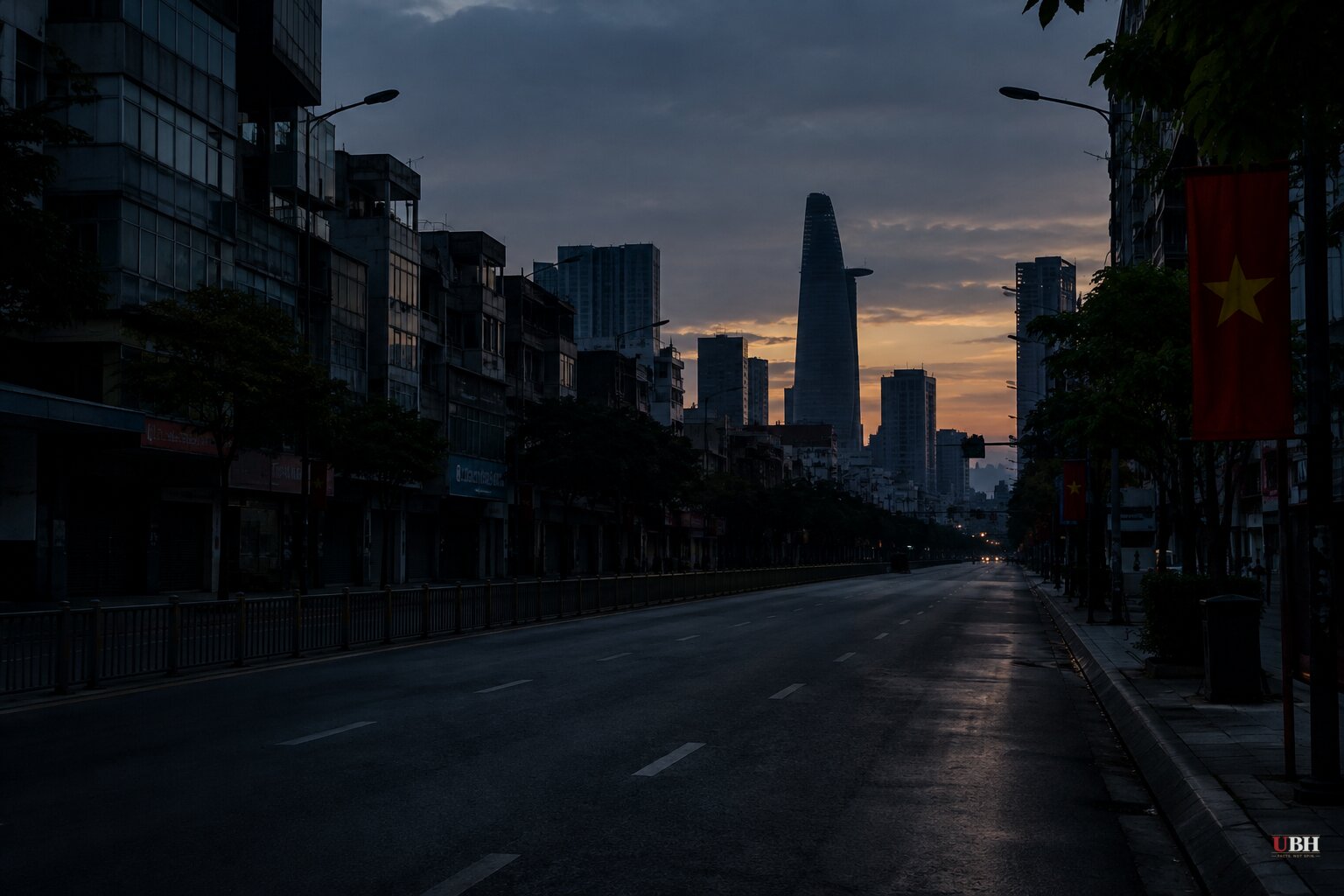
Vietnam's government has acknowledged a significant gap in its electricity supply planning.
The Ministry of Industry and Trade told the prime minister that supplies should hold up through 2026, but risk rises sharply from 2027, according to Dantri News, which reviewed the ministry's report on the 2026-2030 outlook. Bloomberg reported the same warning, citing state media, and said just 5% of power projects under the national growth plan, known as PDP8, have entered operation.
The rest of the pipeline is stuck. Dantri News reported that 9% of planned capacity is under construction, 28% has secured investors but hasn't broken ground, 12% has investment approval but no investor picked yet, and 45% hasn't even cleared investment approval. The ministry blamed "very slow" progress on investor selection, land procedures and grid preparation, per Bloomberg.
The numbers get specific. Vietnam's national capacity shortfall is forecast at 4,256 megawatts in 2027, climbing to 8,309 MW in 2028, 13,348 MW in 2029 and 13,964 MW in 2030, according to the ministry's figures reported by Dantri News. The energy deficit could grow from 2.9 billion kilowatt-hours in 2027 to 61.18 billion kWh by 2030. The north, where peak demand is expected to rise 7.3% to 30,248 MW in 2026, faces the worst of it, with a capacity shortfall of up to 14,081 MW in 2029.
Part of the problem is that Vietnam didn't see this coming. The ministry told the prime minister that power demand has risen unexpectedly in the north-central region and Red River Delta, prompting officials to now scrutinize consumption from data centers, AI facilities, EV charging and heating and cooling systems, Dantri News reported.
LNG Plants Stuck in Neutral
Vietnam's plan leans heavily on liquefied natural gas to fill the gap. Under the revised PDP8, the country wants 15 LNG projects totaling 22,524 megawatts running by 2030, about 9.5% to 12.3% of domestic power capacity, according to The Investor. So far, only two, Nhon Trach 3 and Nhon Trach 4 in Dong Nai, are actually operating.
Of 18 LNG-fired projects on the ministry's key project list, 16 have investors lined up but most haven't started construction, The Investor reported. Developers still have to clear land, lock in financing, and negotiate power purchase agreements, which the ministry called the single biggest obstacle. Financiers won't commit without certainty on electricity pricing and protection from swings in imported fuel costs and exchange rates, according to The Investor.
Meanwhile Vietnam's overall energy dependence is climbing, not shrinking. The country has been a net energy importer since 2015, and that share has jumped from 8.4% of primary demand that year to 43.9% in 2025, equivalent to 53.6 million tonnes of oil equivalent, Dantri News reported. That's happening even though the ministry says Vietnam has untapped domestic oil, gas and coal reserves it isn't developing fast enough.
Already Hitting Factory Floors
This isn't just a future risk. Vietnam's grid is split between a south and central region rich in solar and wind, and a north that depends on coal plants and hydro dams on the Da and Red River basins, according to Streamline Feed. The problem is that the north is also where Apple, Foxconn, Samsung, Luxshare Precision and Pegatron have concentrated their factories in provinces like Bac Ninh, Bac Giang, Hai Duong and Hai Phong, chasing "China Plus One" supply chain diversification.
During the summer heatwave months, that mismatch triggered rolling blackouts that shut down automated assembly lines and damaged components, Streamline Feed reported. That's a warning sign for multinationals that bet billions on Vietnam as an alternative to Chinese manufacturing, precisely because the electricity that runs those factories can't be swapped in from another region fast enough when demand spikes.
State utility EVN, meanwhile, is falling behind on the grid side too. It's planned 292 transmission projects for 2026-2030, covering nearly 16,665 kilometers of lines, but the ministry estimates EVN can only deliver about 28.6% of the grid work required under PDP8, Dantri News reported.
A Different Model, an Ocean Away
Compare that with what's happening in southwestern Pennsylvania. NextEra Energy Resources is building the East Riverside Energy Center along the Monongahela River in Fayette County, a $17 billion natural gas hub with 4.3 gigawatts of capacity financed in part through Japan's investment commitment under the U.S.-Japan trade agreement, according to the Epoch Times.
The project, dubbed "Project South Mon" by federal officials and nicknamed the "Trump Power Plant" by local commissioner Scott Dunn, will bring three combined-cycle power blocks online in phases in 2030, 2031 and 2032, interconnecting to the PJM grid, the Epoch Times reported. NextEra projects roughly 2,000 construction jobs and 100 permanent positions, with $13 billion of the funding earmarked for the Fayette County site alone.
The comparison isn't perfectly clean. Vietnam's electricity system runs through a state utility monopoly and a five-year central plan, while the U.S. project is privately developed and merchant-financed with foreign capital tied to a bilateral trade deal. Both face land acquisition and permitting friction, and both are racing the same global driver: surging demand from data centers, AI infrastructure and electrified manufacturing that planners underestimated a few years ago.
What's different is speed. NextEra's Pennsylvania project moved from a March announcement to signed land deals within months, according to the Epoch Times. Vietnam's ministry is still explaining to its own prime minister why 45% of its planned generation capacity hasn't cleared the first approval stage, per Dantri News.
Neither Bloomberg nor Dantri News reported a revised timeline, emergency measures, or which specific PDP8 projects will be fast-tracked to avoid the 2027 deficit the ministry itself is forecasting.
Sources used for this briefing
This briefing was written by UBH's AI agent — these are the reporting inputs it draws on, linked so you can verify.


