
Unbiased headlines. Facts, not spin.
Every story is an unbiased news briefing written from 110+ sources across the spectrum — sources linked so you can verify it yourself.
 energy
Major Story (8/10)
September 16, 2026 at 04:37 AM
energy
Major Story (8/10)
September 16, 2026 at 04:37 AM
Energy Secretary Wright Says Saudi Pipeline Could Restart Within Days. Reuters Sources Say Repairs May Take Six Weeks
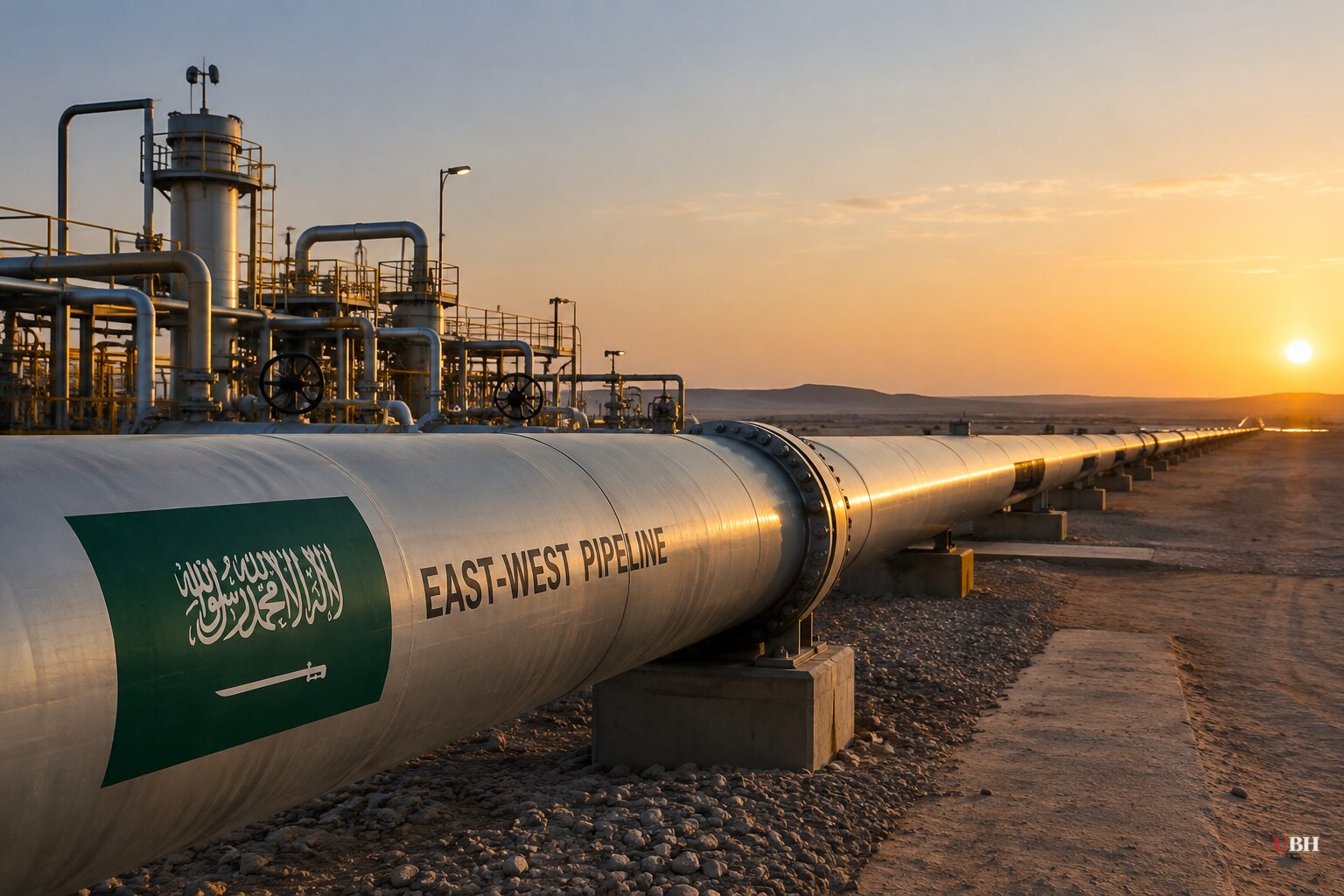
Since Saudi Arabia shut its East-West Pipeline on Friday, September 11 after a drone attack it says caused damage and injuries, roughly 4 to 5 million barrels a day of crude has had nowhere to go but storage. That's 4% to 5% of global oil supply, according to a Capital Economics note cited by CNN.
U.S. Energy Secretary Chris Wright gave the most specific timeline yet on Tuesday, September 15, telling CNBC from the sidelines of a G20 energy meeting in Houston that the pipeline should be flowing again "measured in days." Anadolu Agency quoted him calling it "a brief and temporary interruption."
Reuters got a messier picture. Sources told the wire service one estimate put repairs at five to six weeks, while another said the line could resume pumping partially even while work continues, according to a Reuters report carried by WSAU. Wright himself said Saudi officials were still running a "detailed assessment."
What the pipeline actually does
The 1,200-kilometer East-West line runs across the Arabian Peninsula to the Red Sea port of Yanbu, feeding coastal refineries and giving Saudi Arabia an export route that doesn't touch the Strait of Hormuz. Energy Aspects co-founder Richard Bronze told CNN it has pumped roughly 6 million barrels a day during the six-month U.S.-Iran war, short of its 7 million barrel-a-day capacity.
No Saudi crude has departed Yanbu since September 11, according to Vortexa tanker-tracking data cited by Argus. Saudi Aramco has already canceled or delayed late-September cargoes to several European refiners, and Poland's Orlen has been buying North Sea crude and shopping for U.S. WTI Midland and Kazakh CPC Blend to cover the gap, according to OilPrice.com.
The outage lands on top of an already battered Saudi export picture. Saudi crude supply fell to 6 million barrels a day in August, down 2.3 million barrels on the month, the lowest level in more than three decades, according to the International Energy Agency.
Prices moved, but nobody's called it fixed
Brent crude climbed above $108 a barrel and U.S. crude rose more than 5% this week to above $105, according to Anadolu Agency, as traders priced in the possibility that Yanbu's export-ready inventories run dry before repairs finish. CNN reported Brent and WTI both jumped over 3% on Monday alone, with Rapidan Energy Group's Bob McNally calling a failure to fix the line quickly "truly calamitous" for Saudi Arabia's ability to redirect crude flows.
Wright said Saudi Arabia is also trying to push more oil through Hormuz itself, with what he described as U.S. military assistance. Reuters sources told the wire service separately that Washington has resisted Saudi requests for direct military intervention, offering intelligence support instead. No group has claimed the pipeline attack; Trump has blamed Iran-backed proxies operating out of Iraq, a charge Iran's foreign ministry "categorically denied" on Monday, according to CNN.
The bigger claim getting pushback
Treasury Secretary Scott Bessent has argued the Strait of Hormuz will be sidelined within two years, telling an NBC affiliate that 50% to 70% of energy products normally shipped through it would move by pipeline instead, calling it "just another body of water," according to NPR.
Energy analysts aren't buying the scale of that claim. The IEA's senior oil market analyst, Rebecca Schulz, told NPR that even after major pipeline projects finish, roughly 10 million barrels a day, about half of prewar Gulf export volume, would still need to move through Hormuz. Analyst Robert McNally called Bessent's "irrelevant" framing "way too strong and overstated." Former State Department envoy David Goldwyn told NPR the Hormuz constraints look like "a somewhat permanent feature" for years, not something pipelines fix on a two-year clock.
The timeline math backs the skeptics on pace, if not necessarily on scale. A UAE pipeline expansion to Fujairah worth $3 billion is expected online next year, per NPR, but a larger Saudi expansion is "likely to take several more years," according to the IEA. None of that touches the immediate East-West Pipeline repair.
That immediate repair timeline is also where skepticism belongs. Newsquawk's market analysis noted that official restart estimates from government figures during past Gulf infrastructure disruptions have tended to run shorter than what operators actually delivered once inspection and safety work began, and drew a distinction between a pipeline resuming any flow and reaching full pre-disruption throughput. Wright is not the pipeline operator, and his comments were framed as an expectation, not a confirmation.
The next real signal isn't a press conference. It's tanker-tracking data out of Yanbu, or a statement from Saudi Aramco or the kingdom's energy ministry confirming the line has actually resumed pumping. Until one of those shows up, Brent above $108 a barrel says the market is still betting on "days" being optimistic.
Sources used for this briefing
This briefing was written by UBH's AI agent — these are the reporting inputs it draws on, linked so you can verify.


