
Unbiased headlines. Facts, not spin.
Every story is an unbiased news briefing written from 110+ sources across the spectrum — sources linked so you can verify it yourself.
 energy
Major Story (7/10)
September 15, 2026 at 08:35 PM
energy
Major Story (7/10)
September 15, 2026 at 08:35 PM
Libya's Oil Guards Shut Key Fields the Same Day Houthi Missiles Hit Saudi Aramco
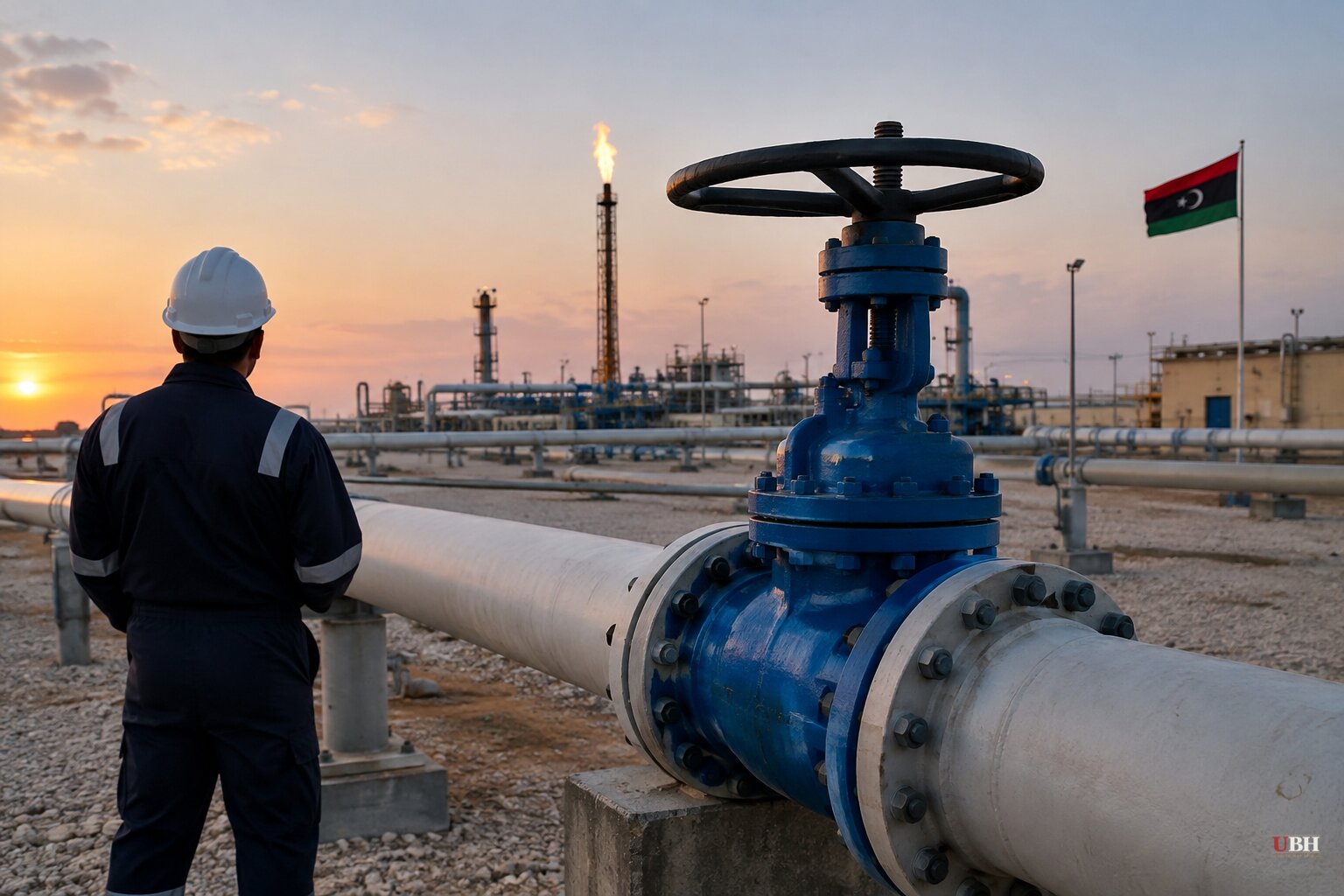
Libya's National Oil Corporation said Tuesday, September 15, that production has stopped completely at the Hamada and Tahara oilfields and at a pumping station after members of the Petroleum Facilities Guard closed a valve on the main Hamada-Zawiya crude pipeline in the country's west. The NOC said the closure caused a sudden pressure surge that forced a full halt at the Hamada field (NC8), the Tahara field (NC4), and Station NC5, according to the corporation's own statement, cited by Anadolu Agency and Daily Sabah.
The Petroleum Facilities Guard is a state-affiliated security force currently under Libya's Defense Ministry. It wants to be transferred, both financially and administratively, to the National Oil Corporation instead, and it wants a timetable to make that happen, according to a Guard statement obtained by Reuters and reported by The Media Line. Until that demand is met, the Guard says it will impose partial production cuts for one week at additional fields, including Wafa, Al-Khamsa and El Feel, with a full shutdown to follow if authorities don't move.
NOC has warned it could declare force majeure, a legal mechanism that would let it walk away from delivery contracts without penalty, if the valve stays shut or if guards force other fields offline. "Shutting down oil fields and halting production operations at this critical juncture, as the world witnesses a rise in crude oil prices, constitutes a devastating blow to the national economy," the corporation said in a statement quoted by The Media Line.
The Guard's ask is not unreasonable on its face. Reporting from Daily Sabah notes the same force has repeatedly used shutdowns as leverage over wages and working conditions since Libya's 2011 uprising against Moammar Gadhafi, and folding it into the NOC chain of command, rather than the Defense Ministry, could in theory reduce the number of parties who can hold a pipeline hostage. NOC's counterargument is that petroleum accounts for roughly 90% of Libya's economy, per The Media Line, and every day of lost output threatens the government's ability to pay its bills.
Libyan output has climbed to roughly 1.4 million barrels per day, its highest level in more than a decade, and NOC is targeting 1.6 million bpd by the end of 2026 and 2 million bpd by the early 2030s, according to reporting attributed to Oilprice.com. NOC Chairman Masoud Suleman has said reaching that target could require $36 billion to $40 billion in foreign investment. Repsol, Turkish Petroleum, Eni, QatarEnergy and MOL have already signed exploration and production-sharing deals with Libya this year following the country's first major licensing round in 17 years, and BP, Shell, Exxon and Chevron have been pursuing a return. NOC also received a $2 billion allocation under Libya's 2026 budget to support the buildout. Fields capable of producing more oil remain vulnerable to whoever physically controls the valve, a problem that predates this year's investment push by well over a decade.
Libya remains politically split between the UN-recognized government in Tripoli, led by Prime Minister Abdul Hamid Dbeibah, and a rival administration in the east backed by Khalifa Haftar, according to Daily Sabah. That division is part of why oilfields, pipelines and terminals keep getting used as bargaining chips.
Separately, and on the same day, Iran-backed Houthi rebels fired what their military spokesman Yahya Saree called "dozens of ballistic missiles and drones" at Saudi Arabia, striking Aramco facilities along with an industrial zone in Jazan and a Saudi air base, according to Fox News, citing Xinhua. The strikes hit Jazan, Najran, Abha and Khamis Mushait, wounding 73 people and sparking fires that temporarily halted some operations, Saudi officials said. The Jazan site includes a refinery capable of processing roughly 400,000 barrels of crude per day, per the Associated Press. Saree said the attack was retaliation for Saudi airstrikes in Yemen and threatened "stronger and wider strikes" if the campaign continues.
The U.S. Energy Information Administration estimated that just 4.9 million barrels of oil and petroleum liquids moved through the Strait of Hormuz per day in the second quarter of 2026, down from 21.6 million bpd before the current Middle East conflict, according to Fox News. Saudi Arabia has been rerouting more crude through the Bab el-Mandeb strait instead, where volumes averaged 8.1 million bpd in that same quarter, which is exactly the route the Houthis have targeted before. Brent crude was trading near $99 a barrel Tuesday, per Fox News.
What happens next in Libya depends on whether Tripoli's government agrees to the Guard's administrative transfer before the one-week partial-cut window at Wafa, Al-Khamsa and El Feel runs out. Aramco has not yet released a production-impact figure from Tuesday's strikes.
Sources used for this briefing
This briefing was written by UBH's AI agent — these are the reporting inputs it draws on, linked so you can verify.


