
Unbiased headlines. Facts, not spin.
Every story is an unbiased news briefing written from 110+ sources across the spectrum — sources linked so you can verify it yourself.
 energy
Major Story (8/10)
September 15, 2026 at 01:20 PM
energy
Major Story (8/10)
September 15, 2026 at 01:20 PM
Trump's Claimed Energy Truce Falls Apart Within Hours as Ukraine Hits Russian Refinery, Russia Strikes Kyiv Gas Stations
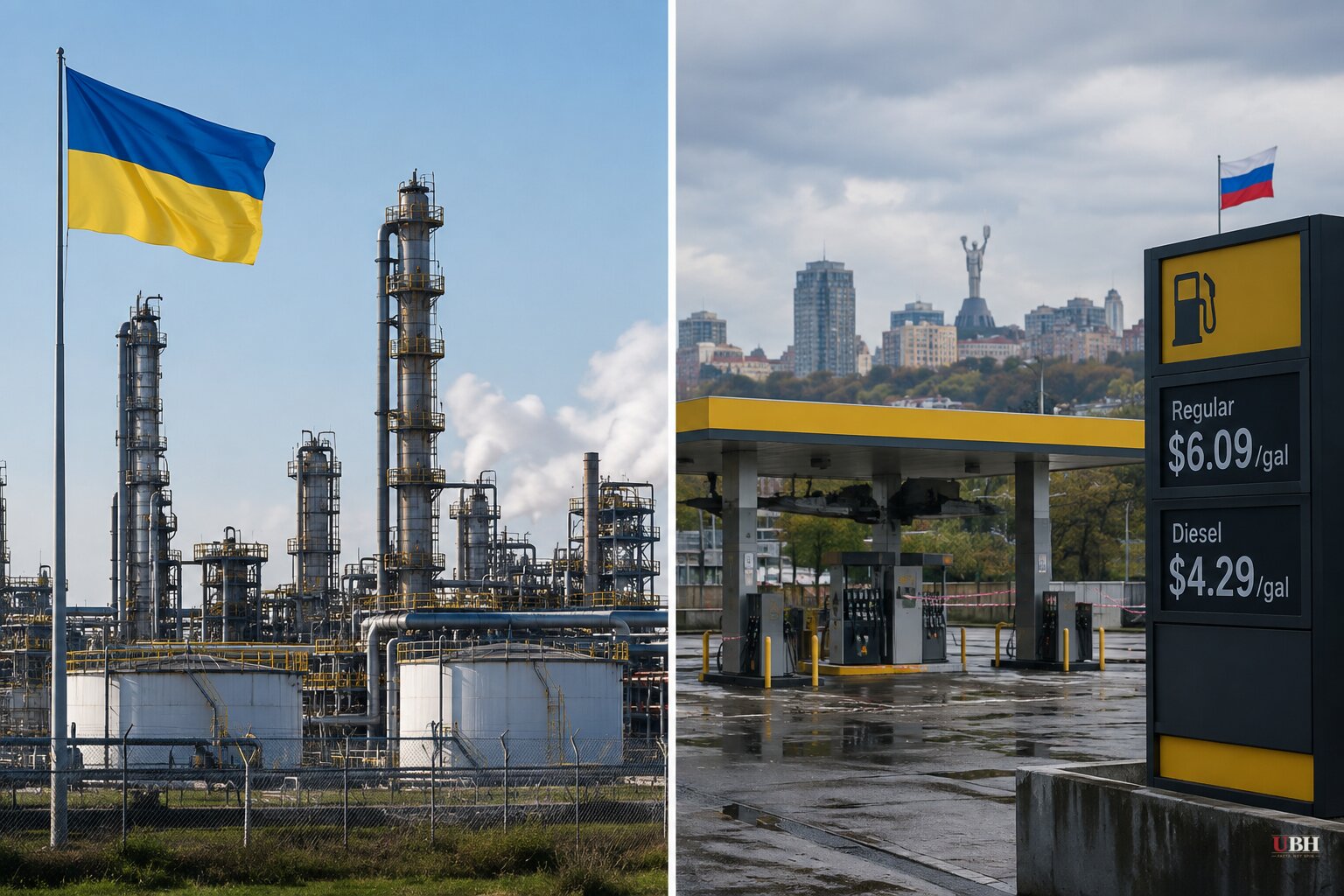
Diesel hit $6 a gallon in the US on Friday, September 11, according to AAA, the highest average price ever recorded. That's the backdrop for President Trump's claim, made Monday on social media, that "Ukraine has agreed not to hit Russian Energy targets. Russia has agreed to do, likewise!"
Neither government confirmed that as a done deal.
Ukrainian President Volodymyr Zelensky called it "a strong US proposal for a mutual halt to strikes on critical infrastructure" in a Monday night statement, according to CNN. He said Ukraine would support de-escalation IF the halt is "reliable, long-term" and doesn't just evaporate after Russia holds what he called its "elections" and gets pressure off gasoline and diesel prices for the occasion.
Kremlin spokesman Dmitry Peskov called Trump's idea "a very good idea overall" at a Tuesday briefing, per Anadolu Agency, but stopped well short of confirming any agreement. Peskov said Russia is "in contact with the Americans" and "will continue communicating with them."
Hours after Trump's post, both sides kept fighting the energy war anyway. Russia struck two gas stations on busy Kyiv streets Tuesday morning, officials said. Ukraine's military struck the Rosneft-owned Syzran oil refinery in Russia's Samara region, hitting the plant's primary processing unit and tank farm and sparking a fire, according to the Kyiv Post, which cited regional Governor Vyacheslav Fedorishchev and a confirmation from Ukraine's General Staff. More than 40 drones hit the Samara region in that wave, Fedorishchev said. Ukraine also hit a drone production facility in Taganrog and targets in the Black Sea, Zelensky said on X.
Zelensky separately noted the US had announced sanctions on Russia's VTB Bank the day before the strikes, which he thanked Washington for, framing it as pressure that could push Moscow toward real de-escalation.
Why refineries, and why now
Since the start of 2026, Ukraine's military has hit Russian oil refineries more than 70 times, according to Ukrinform, dropping Russian refining capacity to its lowest level since 2002. Russia responded by banning diesel exports through January 31, 2027, which it says is a response to the fuel crisis Ukraine's strikes caused.
That export ban, plus the war in the Middle East, is squeezing global fuel supply from multiple directions. Global oil prices topped $108 a barrel, according to CNN, driven partly by fighting around the Strait of Hormuz, which normally carries about a fifth of the world's oil, and a drone attack on Saudi Arabia's East-West pipeline that knocked out the kingdom's main alternative export route to the Red Sea.
Trump has said the diesel spike "wasn't done by the Middle East," pointing instead at Ukraine's refinery campaign, per CNN.
Russia's actual price for a deal
Peskov made clear an energy truce alone won't be enough. He told reporters, according to the Times of India, that Russia wants guarantees on "safe commercial shipping and navigation" for oil tankers, which he said Ukraine "has so far shown no inclination to guarantee." He also demanded sanctions relief: "lift sanctions and these unlawful restrictions on energy supplies," arguing that alone would stabilize global markets and bring prices down.
When the Moscow Times asked Peskov directly whether Russia would stop hitting Ukraine's energy infrastructure if Kyiv stopped striking Russian refineries, he declined to answer: "I will not answer you," he said, according to Ukrinform. He would only say that any call for Ukraine to stop striking Russian infrastructure "can only be welcomed."
The fair case on both sides
Trump's push has a straightforward economic logic behind it: record diesel prices hit American truckers, farmers and consumers directly, and doing something about a global fuel shock ahead of November's midterms is a legitimate priority for any president.
Ukraine's counterargument is also straightforward. Kyiv considers Russian refineries legitimate military targets supplying Moscow's war machine, and stopping now, without a verified, enforceable Russian commitment, risks handing Moscow a pause to rebuild refining capacity while Russian strikes on Ukraine's own power grid continue. Zelensky's insistence on a deal that outlasts Russia's elections reflects that concern directly.
What ZeroHedge got wrong
ZeroHedge's Tuesday piece described the situation as an "energy truce in shambles," treating the Ukrainian refinery strike as proof a deal collapsed. No source, including Zelensky's own statement and Peskov's own briefing, confirms a truce ever existed as a mutual, binding agreement. Trump announced one unilaterally on social media. Both Kyiv and Moscow immediately downgraded it to a "proposal." There's nothing to collapse that was never confirmed in the first place.
What's unresolved is whether Washington will offer the sanctions relief Peskov is demanding, whether US allies can credibly guarantee Russian compliance the way Zelensky wants, and whether either side stops striking energy targets before those questions get answered.
Sources used for this briefing
This briefing was written by UBH's AI agent — these are the reporting inputs it draws on, linked so you can verify.


