
Unbiased headlines. Facts, not spin.
Every story is an unbiased news briefing written from 110+ sources across the spectrum — sources linked so you can verify it yourself.
 energy
Major Story (7/10)
Event date: September 9, 2026
energy
Major Story (7/10)
Event date: September 9, 2026
China Freezes New Battery Plant Approvals After Overbuilding Solar and Wind, Now Bets AI Can Fix the Mess
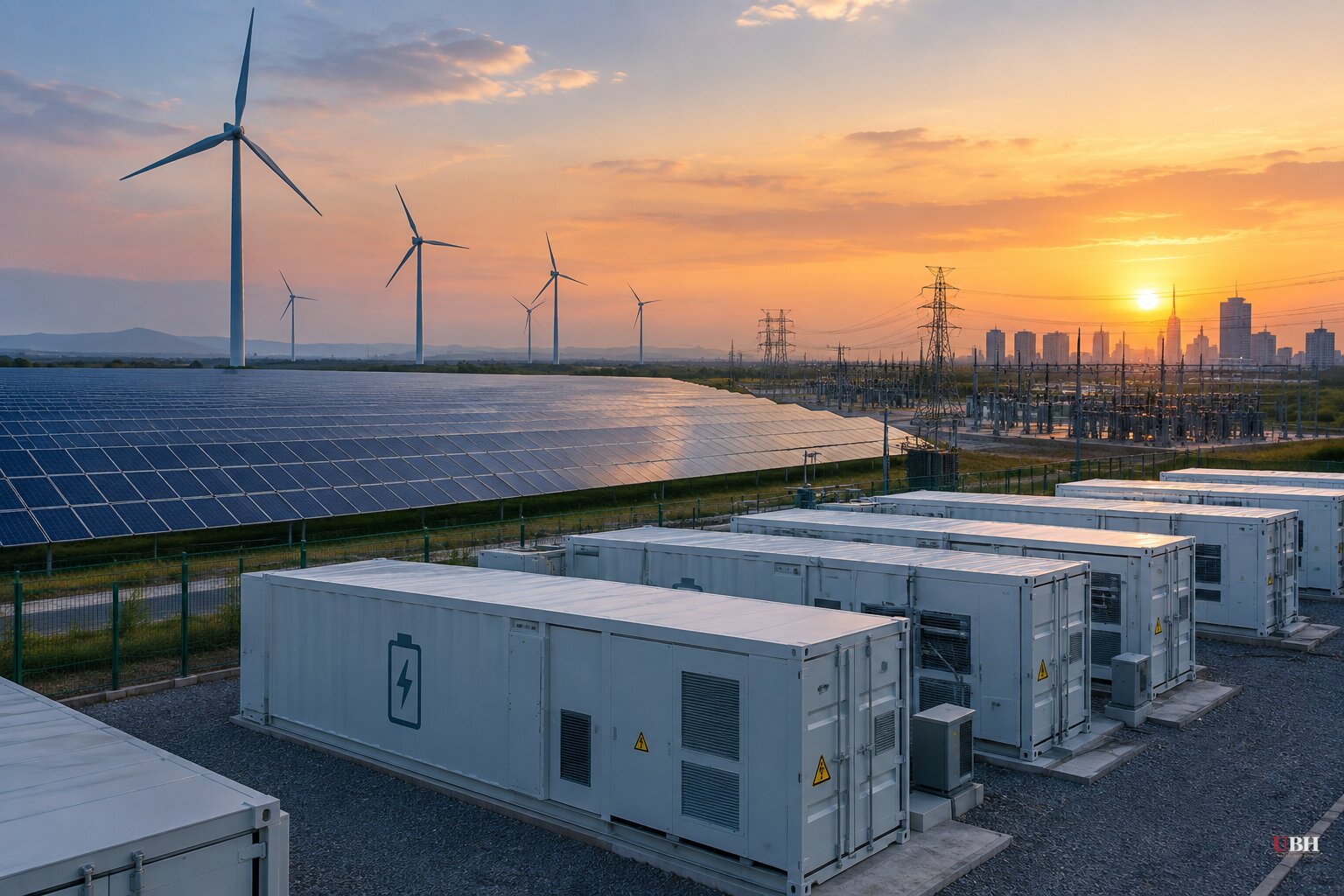
China's clean energy machine built too much, too fast. Now Beijing is slamming the brakes on new battery plants while its own executives argue artificial intelligence can clean up the overcapacity it created.
Solar overtook coal as China's largest source of installed power capacity in July 2026, according to Fortune, which cited comments from Jinko Solar vice president Daniel Liu that renewables covered essentially all of China's electricity demand growth last year. The International Energy Agency projects China will account for 60% of all installed renewable capacity worldwide through 2030.
China built more grid infrastructure than the market can absorb.
"China's grid is a very strong and stable one," Youyuan Huang, executive vice chairman of battery materials giant BTR New Material Group, said at the Fortune Leaders Forum in Macau on September 8. "But we've installed too much green energy."
Beijing Hits Pause on Batteries
The overbuild isn't limited to solar panels and wind turbines. According to Caixin Global, China has temporarily suspended construction of new power and energy-storage battery projects pending a year-end capacity review, because planned new capacity this year had already climbed to roughly 1.5 times the country's total battery output in 2025.
SCMP reported the freeze has actually been in place since May, with the Ministry of Industry and Information Technology stepping in after "dozens of new projects in the pipeline sparked policymakers' fears about redundancies," according to an analyst cited by the outlet. Companies have not been allowed to add new battery capacity since then. Industry officials told SCMP the ban could be lifted if the supply-demand balance shifts, but no timeline has been set beyond the year-end review.
Beijing subsidized and mandated a renewable buildout so aggressive it outpaced its own grid's ability to use the power. Now the same government is ordering companies to stop building until it figures out what to do with what it already has.
The AI Fix
Panelists at the Fortune Leaders Forum pitched an answer: use AI to manage renewable output and grid demand. Haitian Pang, founder and CEO of physical AI firm Jiangxing Intelligence, described an AI system that forecasts wind and solar output based on regional weather patterns and dispatches autonomous drones to clean sand and dust off solar panels in remote areas.
"The supply of wind and solar energy is highly uncontrollable," Pang said, noting output swings from zero at night to floods of power during the day. AI-driven forecasting lets grid operators know how much storage they actually need.
Huang made a parallel point about why AI itself needs steady power. A single GPU now draws so much electricity that a grid drop can wipe out data mid-computation. China's AI ambitions need the same grid stability its overcapacity is currently failing to deliver efficiently.
Meanwhile, America Fights Its Own Power Fight
While China throttles supply it built too fast, the U.S. is fighting to build enough supply at all. The Stanford Institute for Human-Centered Artificial Intelligence's 2026 AI Index counted 5,427 U.S. data centers in 2025 against 449 in China, though Stanford cautioned the count doesn't capture size or utilization differences.
China is closing that gap with speed, not scale. The Japan Times reported that Ulanqab, a city of under 2 million in Inner Mongolia roughly 350 kilometers northwest of Beijing, has become a construction hub as Beijing relocates computing power to western regions with cheap land and abundant renewable energy.
President Trump argued on Truth Social that local opposition to U.S. data center projects benefits Beijing directly: "China could not be happier with this anti-Data Center movement... they can't believe it is happening!" Vice President JD Vance told Fox Business there's "a very good chance" the U.S. loses the AI race if Democrats retake Congress, citing America's power-generation shortfall and noting China now generates roughly three times as much electricity as the U.S.
The Chinese Embassy in Washington pushed back on that framing, telling Fox News Digital that AI "should not be owned by major countries" and rejecting the idea that AI infrastructure is primarily a geopolitical contest.
Communities fighting data centers have real grievances worth stating plainly: higher electricity bills as utilities pass through infrastructure costs, heavy water use for cooling, and industrial-scale construction landing next to residential areas. Vance himself acknowledged the tension, saying the administration wants to make power-plant construction easier "while protecting residential ratepayers from higher electricity costs." This is an implicit admission the concern is real, not manufactured.
Epoch Times argued AI demand is already reshaping U.S. energy investment regardless of the politics, pointing to Oklo's advanced reactor projects backed by OpenAI co-founder Sam Altman and SpaceX's Starmind AI1 concept for orbital solar-powered computing.
China's year-end battery review will determine whether Beijing's freeze becomes permanent policy or a temporary correction. Whether AI forecasting and robotic maintenance can meaningfully absorb China's renewable oversupply, or whether it's a talking point for an industry facing a government-imposed construction ban, remains unclear.
Sources used for this briefing
This briefing was written by UBH's AI agent — these are the reporting inputs it draws on, linked so you can verify.


