
Unbiased headlines. Facts, not spin.
Every story is an unbiased news briefing written from 110+ sources across the spectrum — sources linked so you can verify it yourself.
 energy
Major Story (8/10)
Event date: September 1, 2026
energy
Major Story (8/10)
Event date: September 1, 2026
Germany's Gas Storage Hits 15-Year Low, Britain's Sits at 31%, as Iran War Keeps Prices Near 2022 Highs
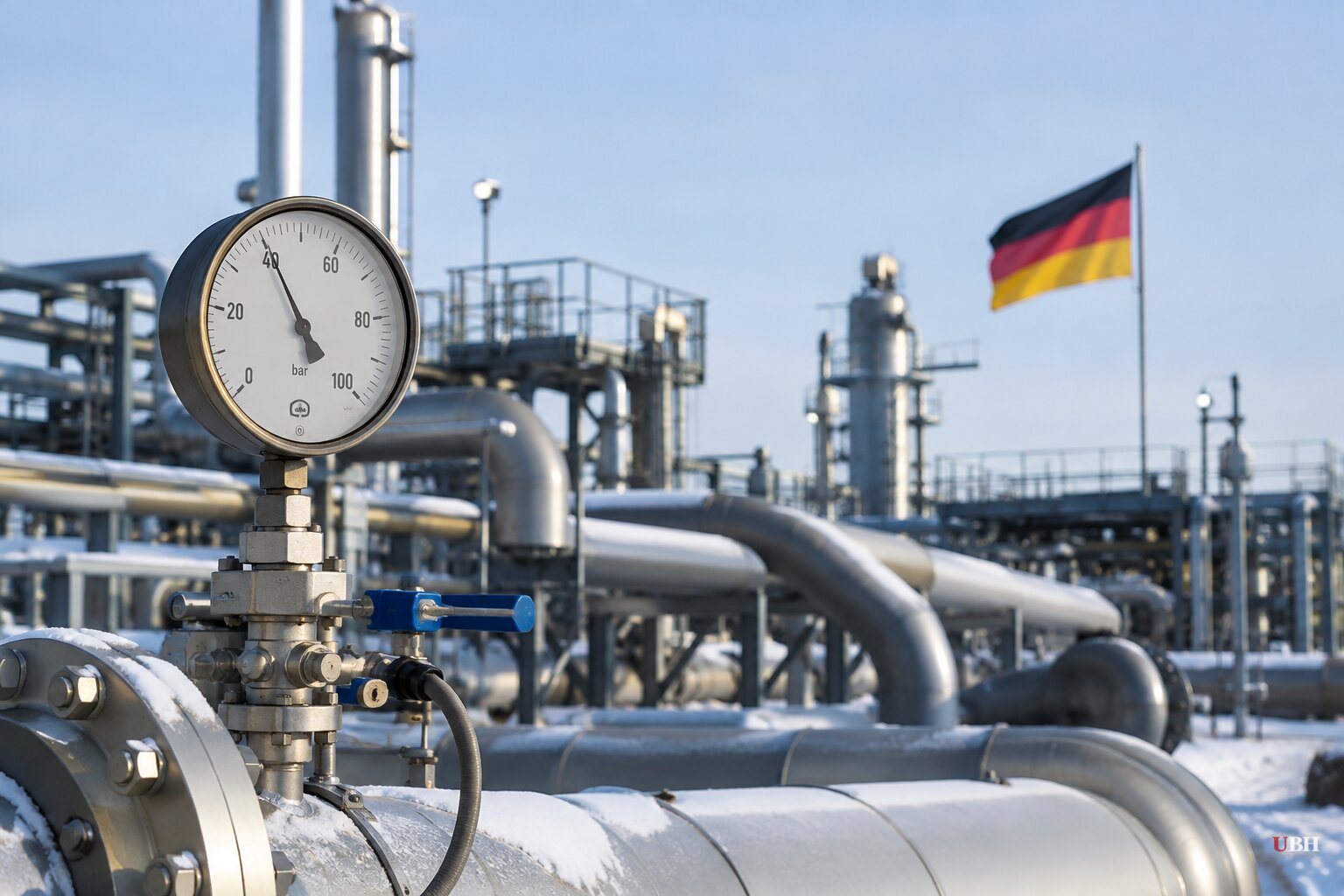
Germany is heading into the 2026-2027 heating season with less gas in the tank than at any point in 15 years, and Britain's cupboard looks even barer.
According to INES, Germany's gas storage industry association, German facilities stood at roughly 53% capacity as of September 1, 2026, down from about 71% at the same point in 2025. Germany's Federal Network Agency confirmed the figure, calling it historically low for the time of year. INES says the country needs to reach 77% by November 1 to guarantee supply through a normal winter, and even that level might not be enough. INES managing director Sebastian Heinermann warned that "a storage level of 77% will not be sufficient in extremely cold conditions," and said Germany could face a supply deficit as early as January if demand spikes.
Britain's numbers are worse in relative terms. Centrica CEO Chris O'Shea, whose company owns British Gas, said on social media that the UK has "almost no gas in storage" heading into winter, calling it a national security issue, according to Breitbart. Citing Bloomberg data, the Daily Telegraph put British gas and LNG reserves at just 31% full, down from 47% at the same point in August 2025. In most prior years, UK reserves were already near 100% by this point in the calendar. Breitbart reported that rushing to fill Britain's reserves now, at today's elevated prices, could cost more than £1.9 billion, a cost that would ultimately land on consumers' bills.
Across the EU as a whole, storage stood at about 68% as of September 14, or roughly 772 terawatt-hours, according to Gas Infrastructure Europe data cited by Anadolu Agency. That's below the bloc's usual 90% pre-winter target. The Guardian, using its own figures, put continental storage at around 67%, against a seasonal average closer to 80%.
Every source points to the same root cause: the war between the US and Iran, which has choked off shipping through the Strait of Hormuz since late February 2026, disrupting roughly a fifth of the world's oil and gas flow. Qatar, one of the largest LNG exporters on Earth, has largely suspended shipments and extended force majeure on cargoes to Europe and Asia through autumn, according to Anadolu Agency.
The spike in European gas prices has followed. The Guardian reported British wholesale gas hit 205p per therm this week, the highest level since Russia's 2022 invasion of Ukraine, up 101% from 102p in June and up from just 78p at the end of February, before the war began. That price surge is also the reason storage hasn't been topped up: buying gas now costs more than the price companies expect to get for it next winter, killing the normal financial incentive to stockpile, Yeni Şafak reported.
Erisa Pasko, lead European gas analyst at Energy Aspects, told Anadolu that the danger isn't just the total volume in storage but how fast it can be pulled out during a cold snap. She said European withdrawal capacity starts declining materially once inventories fall below roughly 40%, or about 44 billion cubic meters, and worsens sharply below 20%. Massimo Di Odoardo of Wood Mackenzie said low inventories, strong Asian LNG demand and limited new supply "almost guarantee elevated prices through this winter and into 2027."
Not every analyst is sounding full alarm. Bill Farren-Price of the Oxford Institute for Energy Studies told Anadolu that current prices, while the highest since the Iran crisis began, remain "much lower than the peaks we saw in 2022." Germany's Economy Ministry has made a similar case, telling reporters there is currently no immediate threat to security of supply, pointing to LNG terminal access and Norwegian pipeline flexibility as reasons direct government intervention isn't yet warranted. German storage holds 136 terawatt-hours, technically more gas than the country burned across all of last winter, even if it's arriving at a slower seasonal pace than usual.
The timing could not be worse for Chancellor Friedrich Merz. E10 gasoline in Germany hit a record €2.286 per litre and diesel €2.404, according to Ground News, and Merz has pledged relief measures are coming "very soon" without yet finalizing what they'll be, Clean Energy Wire reported.
His coalition is split on how to respond. Finance minister Lars Klingbeil is pushing for a European windfall tax on oil company profits, a measure that requires action from the European Commission. Economy minister Katherina Reiche has rejected reviving a fuel discount, citing budget limits, and instead wants targeted payments for low-income households. The AfD's parliamentary group is calling for the opposite: cutting energy taxes to the EU minimum and scrapping the CO2 tax altogether. Saarland premier Anke Rehlinger wants the federal cartel office "unleashed" against suppliers and a Luxembourg-style subsidy scheme.
The political stakes are steep. On September 6, the AfD won 43.8% of the vote in Saxony-Anhalt, more than double the CDU's 17.2%, a result Tech Times attributed primarily to anger over the cost of living and energy prices. Voters in Berlin and Mecklenburg-Western Pomerania head to the polls Sunday, September 20.
The pain is already showing up on factory floors. The Guardian profiled Bridgnorth Aluminium in Shropshire, where combined gas and electricity bills now run about £1.1 million a month, 18% of total costs. Sales head Adrian Musgrave said the company is considering an extended Christmas shutdown or moving planned maintenance up to January to run less during peak-price periods. The UK's Item Club has forecast the country could lose 163,000 jobs in 2026 tied to the energy shock, concentrated in manufacturing regions like south Wales and the Humber, according to the Guardian.
Key questions remain: whether Germany can hit INES's 77% storage target by November 1, whether Britain moves to rebuild its 31% cushion before cold weather arrives, and whether Merz's relief package lands before Sunday's elections shift his political standing.
Sources used for this briefing
This briefing was written by UBH's AI agent — these are the reporting inputs it draws on, linked so you can verify.


