
Unbiased headlines. Facts, not spin.
Unbiased Headlines is an independently owned news organization. We bring you the facts, not opinions, written fresh from 110+ named sources. Sources linked so you can verify it yourself.
 energy
Notable (6/10)
Finland Bets on Nuclear Twice in One Week: EU Bank Funds Reactor Startup, Helsinki Joins French Deterrence Pact
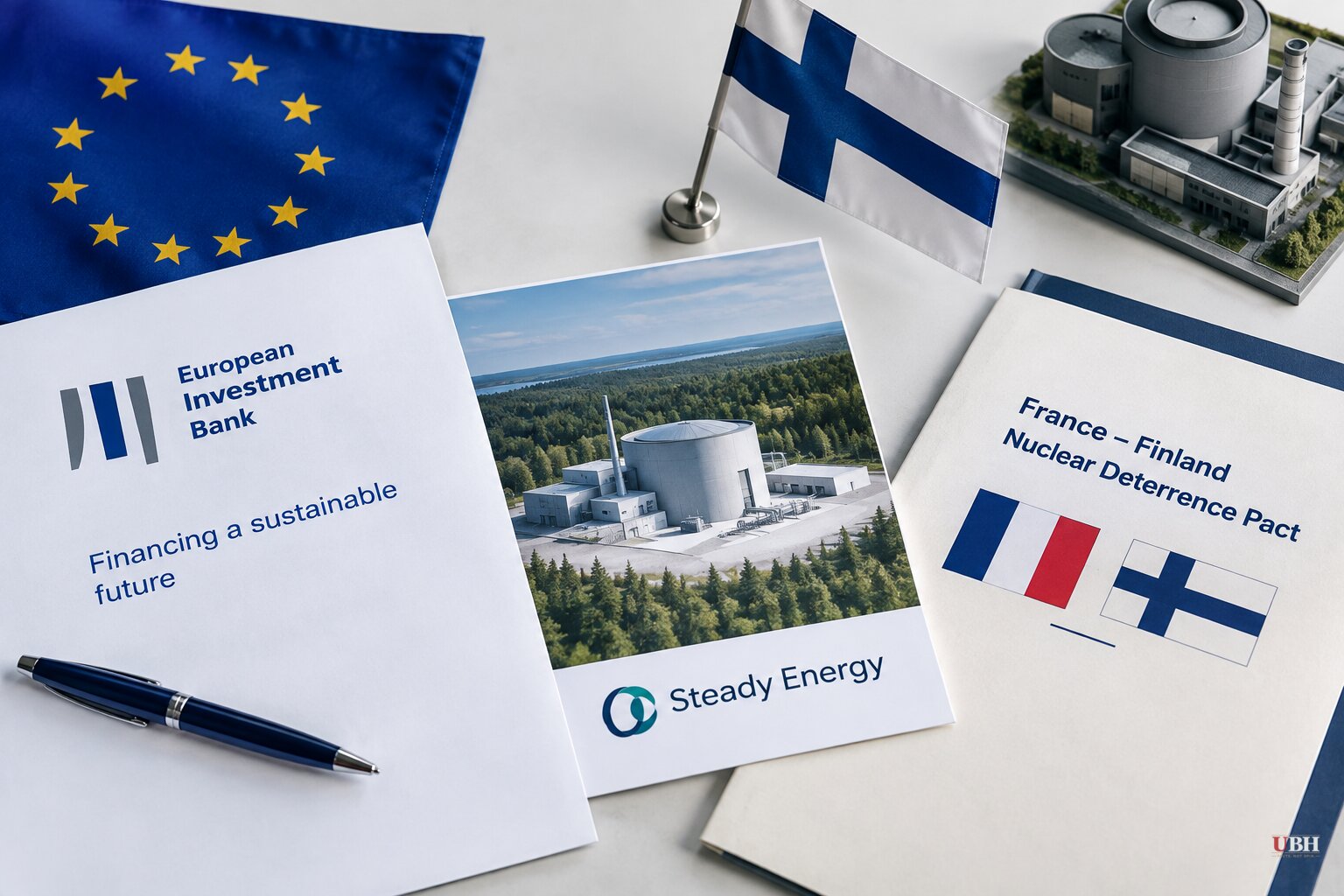
Two nuclear headlines came out of Finland this week, and they have nothing to do with each other except the word "nuclear" and the country making the moves.
The Money: EIB Backs a Heat Reactor
The European Investment Bank announced on Tuesday, September 15, that it will provide up to €40 million to Steady Energy, a Helsinki-based startup, according to the EIB's own statement. It is the bank's first-ever investment in small modular reactor technology.
Steady Energy isn't building a power plant in the traditional sense. Its 50-megawatt reactor is designed to produce heat only, for direct use in district heating networks, skipping the electricity-generation step entirely. The company says that design lets it capture more of the reactor's thermal output than conventional plants that convert heat to power first.
The reactor uses standard light-water technology, the same water-moderated, water-cooled approach used in most nuclear plants running today, according to the EIB. It's also designed to be built underground for added security. Steady Energy was spun out of VTT, Finland's state-run Technical Research Centre, in 2023, and is currently building a non-nuclear pilot facility in Helsinki to test safety systems ahead of licensing.
The EIB money is part of a larger funding round that includes institutional, strategic, and retail investors, and is backed by an EU budget guarantee through the InvestEU program. Funded work runs 2026 through 2028 in Finland, covering research, testing, and the licensing process. EIB Group Vice-President Karl Nehammer called it "a flagship example of how the EIB Group is backing innovation to strengthen Europe's competitiveness, enhancing energy autonomy and expanding access to affordable clean energy."
An EIB official told Reuters this is the first loan in a planned pipeline of SMR investments, though no further deals were named. Emmanuel Brutin, head of the industry group nucleareurope, said the EIB's move "sends a positive signal to investors."
Only two commercial SMRs are currently operating anywhere in the world, in Russia and China, according to Reuters. More than 80 SMR designs are in development globally, per the International Atomic Energy Agency, and the European Commission's target is to get Europe's first SMRs running by the early 2030s. Steady Energy's reactor is still at the concept stage.
The EU itself remains split on nuclear power. France and Sweden run existing fleets and want more. Germany and Austria have long objected on safety and waste-disposal grounds, a concern shared by segments of the European public who point to unresolved long-term nuclear waste storage as a legitimate unanswered question, not a fringe worry. That divide is exactly why the EU budget doesn't fund nuclear plants directly. The Steady Energy loan gets around that by routing through the EIB with an EU guarantee rather than direct EU budget money, a structural workaround that lets Brussels support nuclear without forcing anti-nuclear member states to sign off on it.
The Deterrent: Finland Joins France's Nuclear Umbrella
A day earlier, on September 14, Finland and France announced Finland had joined France's "Forward Deterrence" initiative, which extends the reach of France's nuclear arsenal through partnerships with other European states. Finland is the 10th country to join, following Denmark, Norway, and Sweden, according to Finland's Ministry of Defence.
The two governments called it "an important step for European security" in a joint statement, aimed at strengthening Europe's ability to manage escalation from what they termed aggressive actors. A nuclear steering group is set to be established in the coming months to work out specifics.
Finnish President Alexander Stubb posted that the move "strengthens Europe's grip on its own defense and helps prevent escalations." Finnish Defence Minister Antti Häkkänen was explicit that this is not NATO membership by another name. "Countries joining the French program will not have obligations like NATO's collective defence," he said, adding that France isn't asking partner countries to help pay for its deterrent. Häkkänen said cooperation could include joint military exercises or temporary deployment of French air force assets in Finland.
Finland's defense ministry stressed the program doesn't overlap with NATO's nuclear-sharing arrangements, which rely on the U.S. arsenal. French President Emmanuel Macron has described the broader posture as "advanced deterrence," telling allies France will always retain sole authority over any decision to cross the nuclear threshold, even while factoring in allied interests.
The timing lines up with what the Epoch Times described as the U.S. shifting focus away from Europe toward the Western Hemisphere, and with Russia's war on Ukraine now in its fifth year. Whether that characterization of U.S. posture holds up is a separate, unresolved question the joint statement itself doesn't address. A NATO member picking up a second layer of nuclear-adjacent security cooperation, on top of its own defense spending, is a European ally shouldering more of its own security burden rather than leaning solely on Washington, which is the kind of burden-sharing the U.S. has pushed allies toward for years.
What happens next: the Finland-France nuclear steering group has no set date but is expected within months, and Steady Energy still needs Finnish regulatory sign-off before any reactor gets built, a process the EIB's own funding runs through 2028.
Sources used for this briefing
4 links from 4 independent newsrooms (syndicated copies of the same report count once)
These are the sources it draws on, linked so you can verify.


