
Unbiased headlines. Facts, not spin.
Every story is an unbiased news briefing written from 110+ sources across the spectrum — sources linked so you can verify it yourself.
 energy
Major Story (8/10)
Event date: September 12, 2026
energy
Major Story (8/10)
Event date: September 12, 2026
Solar Panels Hit 12 Cents a Watt as U.S. Slaps Duties Up to 173% on Asian Imports
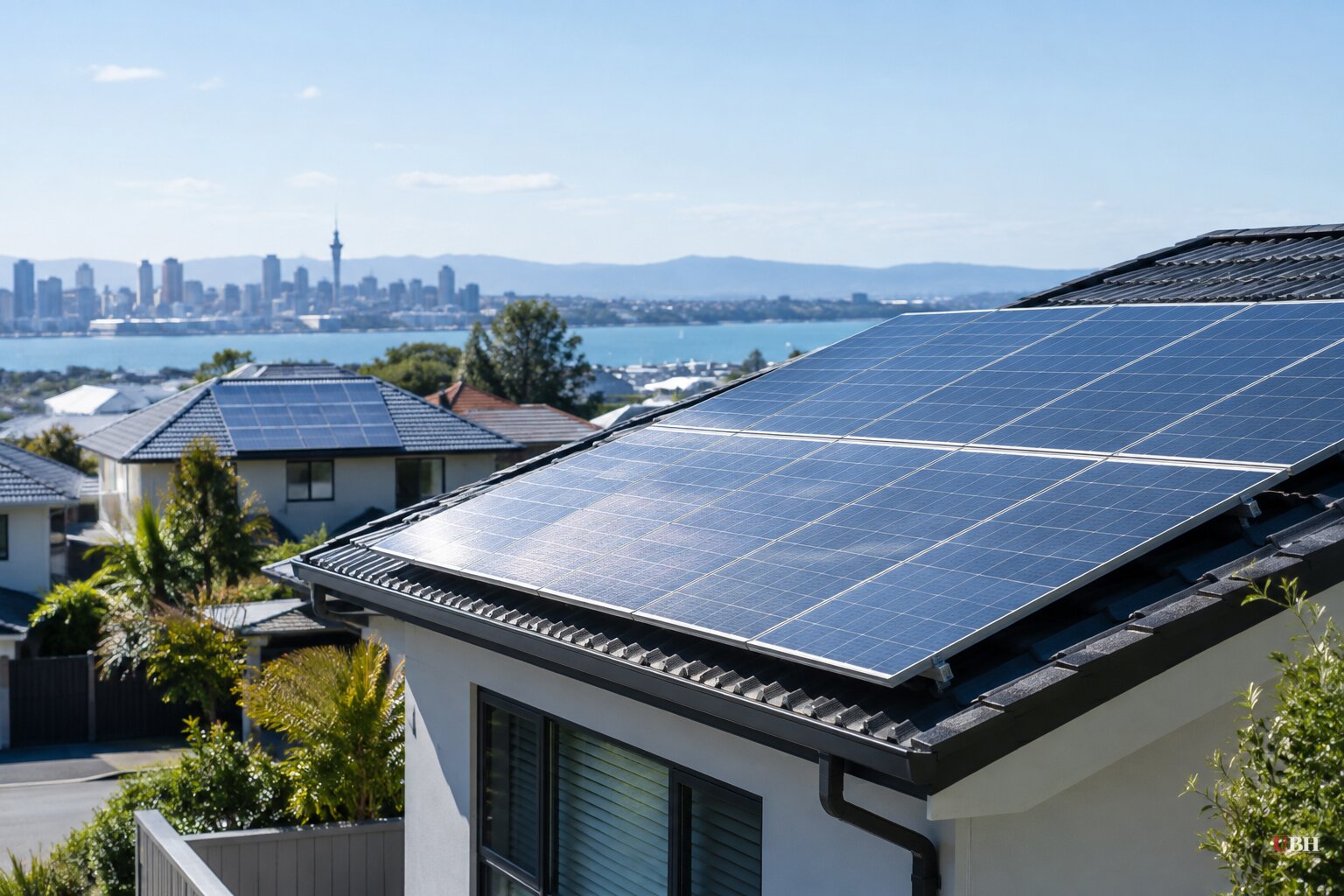
Solar panels made in China cost 12 cents a watt in 2026. At the turn of the millennium, they cost $5 to $6 a watt. That's a steep price decline over roughly a quarter century, and it's rewiring how the world gets power.
The Financial Times, cited by OilPrice.com, reports the cheap panels are now showing up everywhere power is scarce, expensive, or unreliable. Pakistan's Bestway Cement Limited installed 26 megawatts of solar capacity at its Chakwal plant, cutting electricity costs there by up to 40%. "It's the only way we can compete," plant general manager Abdul Waheed told the Financial Times. "Our rivals have already gone in this direction."
The pattern repeats worldwide. Rooftop solar capacity in the Philippines nearly doubled in the 12 months through April, according to the energy think tank Ember, with residential systems now paying for themselves in a little over three years. Meralco, the Philippines' electricity distributor, says rooftop solar generated 372 gigawatt-hours in the first half of 2026 alone.
Ember projects Africa will install a record 17 gigawatts of solar in 2026, a 45% jump from last year, with three-quarters of that growth coming from small commercial and residential systems. India's government rooftop program, launched in February 2024, has reached 5.5 million homes and is adding roughly 500,000 more a month, according to OilPrice.com. Australia now has solar on more than 4.3 million homes and small businesses, 43% of eligible properties, with total rooftop capacity of 28.3 gigawatts, according to ua.news, citing the Financial Times.
Washington Answers With Tariffs
While the rest of the world buys cheap, the U.S. government is making cheap imports harder to get.
The Commerce Department finalized steep anti-dumping and countervailing duty rates on solar cells and panels from India, Indonesia, and Laos, according to the Epoch Times. The department said producers in those countries dumped underpriced products in the U.S. and received unfair government subsidies.
The numbers are brutal. Anti-dumping margins hit 123.04% for Indian producers, 94.36% for Indonesian producers, and 65.43% for Laotian producers. Countervailing duty rates ran even higher in some cases: Indian producers were assigned 126.09%, Indonesian producers face rates between 73.2% and 173.7%, and Lao producers face rates between 82.03% and 153.67%.
The case was brought by the Alliance for American Solar Manufacturing and Trade, whose members include First Solar, Hanwha Qcells, and Mission Solar Energy. "These are an essential step toward enforcing our trade laws and restoring fair competition for U.S. solar manufacturers and the workers they employ," said Tim Brightbill, the Alliance's lead attorney, per the Epoch Times.
This isn't new. The U.S. first imposed duties on Chinese solar products in 2012, and Chinese manufacturers responded by shifting production to other Asian countries. In August 2023, Commerce found Chinese producers were routing products through Cambodia, Malaysia, Thailand, and Vietnam to dodge the tariffs. William Reinsch, a former Clinton administration trade official now at the Center for Strategic and International Studies, called it "a huge cat and mouse game."
The U.S. International Trade Commission is scheduled to vote October 14 on whether the imports caused material injury to domestic manufacturers. If it votes yes, Commerce is expected to issue final duty orders in November.
Separately, the Commerce proclamation set minimum import prices: $21 per kilogram for polysilicon, $100 per kilogram for ingots and wafers, 22 cents per watt for cells, and 38 cents per watt for modules. Commerce Secretary Howard Lutnick summed up the strategy bluntly, per the Epoch Times: "We're setting prices so that the Chinese can't dump anymore, and we're setting tariffs to say build it here." America's share of global polysilicon production capacity fell to less than 2% in 2024 from 50% in 2005, according to the proclamation, even as global production grew by more than 270% since 2020.
The Domestic Price Gap Is Closing, But Not Because It's Cheaper
Analysis from Intertek CEA, cited by The Cool Down, shows why Washington is leaning on tariffs rather than competing on price alone. A Chinese TOPCon panel from a fully integrated factory runs under 12 cents a watt. A U.S. plant using American-made cells still costs over 37 cents a watt before incentives.
Federal Section 45X tax credits, worth 7 cents per watt for modules and 4 cents for cells, bring the effective U.S. cost down to roughly 21 cents a watt, according to the analysis. That's still nearly double the Chinese price, and it depends entirely on the subsidy staying in place.
One commenter on the video that broke down the analysis put the concern plainly: "It's not a true cost parity if it depends on subsidies and tariffs." American-made solar isn't winning on manufacturing efficiency here. It's winning because Washington is taxing the competition and subsidizing the alternative. Whether that counts as "restoring fair competition," as the Alliance for American Solar Manufacturing and Trade argues, or as propping up an industry that can't otherwise compete, depends on where you sit.
Starting December 4, imports will also face a 15% tariff on top of the minimum pricing floors, according to The Cool Down. American module manufacturing capacity could approach 60 gigawatts by early 2027, though cell supply remains the bottleneck, per the same analysis.
What Happens to the Waste
There's a longer-term question nobody in Washington is debating yet: what happens to millions of panels after 25 to 30 years of service.
Sonia Dunlop, chief executive of the Global Solar Council, told Dawn that countries riding the solar boom, especially Pakistan, should build recycling infrastructure now rather than wait for a wave of dead panels and batteries. "In 20 years' time, you will have a huge mine of silver, of polysilicon, of aluminium that you can then just recycle," she said. She added that battery recycling is more urgent, since batteries wear out faster than panels: "We don't want to fix an atmospheric pollution problem with an environmental waste problem."
John Grimes, the Global Solar Council's chair-elect, told Dawn that countries like Pakistan shouldn't try to out-manufacture China on volume. "I wouldn't encourage any country to try and compete head-to-head on the volume that is produced out of China," he said, pointing instead toward specialized niches like low-voltage solar and battery systems.
The open questions now sit with the ITC's October 14 injury vote and whatever final duty orders Commerce issues in November. Until then, American solar buyers are paying a price gap that global buyers, from Chakwal to the Philippines, simply aren't.
Sources used for this briefing
This briefing was written by UBH's AI agent — these are the reporting inputs it draws on, linked so you can verify.


