
Unbiased headlines. Facts, not spin.
Every story is an unbiased news briefing written from 110+ sources across the spectrum — sources linked so you can verify it yourself.
 energy
Major Story (8/10)
Event date: September 13, 2026
energy
Major Story (8/10)
Event date: September 13, 2026
Pennsylvania Regulators Warn Data Center Boom Could Push Grid Blackout Risk 100 Times Past Safety Limit by 2030
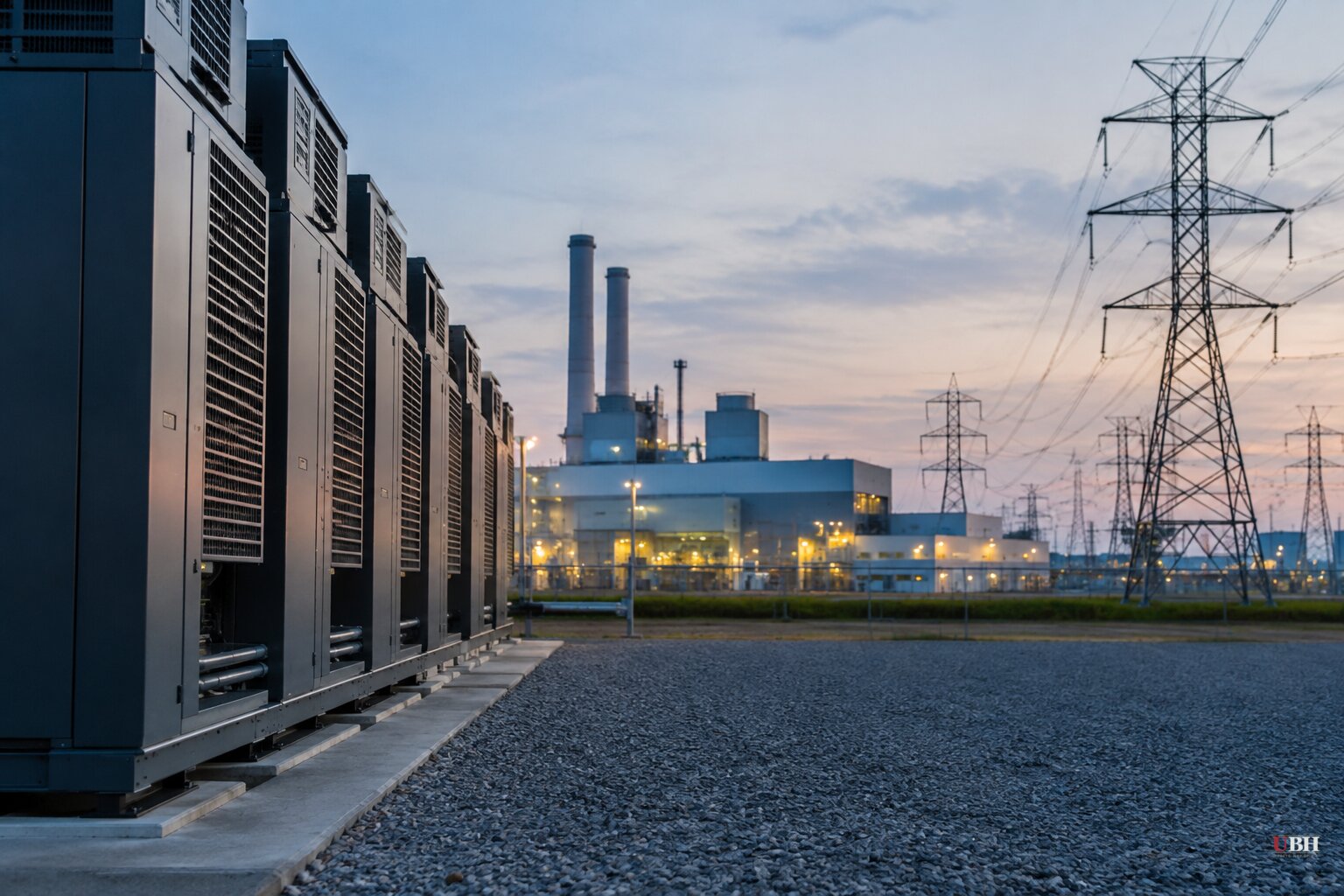
The Numbers Behind the Warning
The Pennsylvania Public Utility Commission released a study on Monday, September 14, warning that data center growth could overwhelm the regional power grid within four years. The commission hired Synapse Energy Economics to model electricity supply and demand across PJM Interconnection, the grid operator covering 13 states including Pennsylvania, New Jersey, Delaware and Washington, D.C.
PJM's own planning standard limits expected outage events to roughly once every 10 years. In the study's baseline scenario, using PJM's 2026 load forecast, the modeled 2030 loss-of-load expectation comes in at 0.59, nearly six times worse than that standard, according to the report cited by Utility Dive and WHYY.
In a worst-case scenario combining higher-than-expected data center growth with constrained new power supply, the modeled figure hits 13.20, more than 100 times worse than PJM's criterion. That translates to an expectation of more than 13 days a year with loss-of-load events, according to the PUC.
"As in the Reference scenario, these reliability issues are largely due to surging data center additions," the study states, according to Utility Dive. PUC Chairman Steve DeFrank said in a statement: "Electricity demand and supply are moving out of balance, and the status quo is not sustainable."
DeFrank added that the timeline is short. "The changes highlighted in this report are not decades away," he said, according to farmanddairy. "The reliability pressures emerge during the next several years, and the decisions being made now will determine how prepared we are to meet them."
The report projects Pennsylvania's electricity exports could fall from about 91 terawatt-hours in 2025 to 69 by 2035 and 38 by 2040 under the reference scenario. Under the worst-case scenario, the state flips to a net importer of 5 terawatt-hours by 2040, and the report warns some of that demand simply won't get met because there won't be enough regional generation.
PJM spokesman Jeff Shields told CBS affiliate WJAC that the grid operator has taken steps to manage demand growth in line with the Ratepayer Protection Pledge, a commitment from data center developers not to shift reliability risk or cost increases onto residential customers. The PUC also voted unanimously to update emergency curtailment rules and convene a technical conference on how data center costs get allocated.
Supply Is Coming, Just Not Yet
NextEra Energy Resources is building the East Riverside Energy Center along the Monongahela River in Fayette County, part of a $17 billion natural gas generation package tied to Japan's investment commitment under the U.S.-Japan trade agreement, according to the Daily Signal. Of that total, $13 billion is earmarked for the Fayette County site alone: three combined-cycle blocks at roughly 1,250 megawatts each, for 4.3 gigawatts of total capacity feeding into PJM.
Fayette County Commissioner Scott Dunn, who nicknamed the project the "Trump Power Plant" before federal officials would confirm its location, said residents who sold land called it "life-changing money." The project's commercial operation is targeted phase by phase in 2030, 2031 and 2032, meaning the new supply arrives right as the PUC's worst-case reliability gap opens up, not before it.
Gov. Josh Shapiro issued an executive order last month offering preferential permitting to data centers over 25 megawatts that commit to sourcing power from new supply, an attempt to force developers to bring generation with them rather than draw down the existing grid.
A Republican Party Divided on Its Own Policy
While the Trump administration continues to treat AI infrastructure as a national security priority, elected Republicans closer to the ratepayers are pulling back. Texas state Sen. Charles Schwertner said July hearing testimony revealed landowners want stronger property protections before new certificates are granted, according to the Daily Wire. Oklahoma state Sen. Kendal Sacchieri is pushing a three-year moratorium on new data centers to gather evidence before writing permanent rules.
Candidates including Mike Rogers in Michigan, Tom Tiffany in Wisconsin and Ken Paxton in Texas have signaled opposition heading into 2026 races. Texas Gov. Greg Abbott, who signed Trump's Ratepayer Protection Pledge in July, has since ordered energy audits requiring data centers seeking grid connection in Texas to show they can supply their own power or face denial.
These aren't fringe complaints. The economic upside for communities like Fayette County is real and documented, with roughly 2,000 construction jobs projected at the East Riverside site alone. The cost and infrastructure concerns driving Republican state lawmakers to act come from independent sources.
The Foreign-Influence Claim Remains Unproven
Former Cambridge Analytica employee Brittany Kaiser told Fox News Digital that opposition to data centers resembles election-interference campaigns she has previously flagged, saying "what looked like billions of dollars" went into social media efforts timed to coincide with Trump and AI executives traveling overseas. Kaiser called it "very obviously paid for."
No investigation, filing, or named regulator has confirmed foreign funding behind data center opposition, and Kaiser did not provide documentation to Fox News Digital beyond her own assessment. Grassroots concerns over water use, noise, and electricity costs are independently documented in Memphis, where residents near Elon Musk's xAI "Colossus" supercomputing campus have organized against the facility, according to the Epoch Times, and in Pennsylvania, where the PUC's own reliability data gives ratepayers a concrete, homegrown reason to worry.
The PUC's technical conference on data center cost allocation has not yet been scheduled with a firm date. Whether Pennsylvania adopts a dedicated rate class for large power users, as Virginia's legislature debated this year, remains an open question that will shape who pays if the grid comes up short before NextEra's turbines come online in 2030.
Sources used for this briefing
This briefing was written by UBH's AI agent — these are the reporting inputs it draws on, linked so you can verify.


