
Unbiased headlines. Facts, not spin.
Every story is an unbiased news briefing written from 110+ sources across the spectrum — sources linked so you can verify it yourself.
 energy
Major Story (7/10)
Event date: September 9, 2026
energy
Major Story (7/10)
Event date: September 9, 2026
China's Gasoline and Diesel Stockpiles Sink to Multi-Year Lows, Raising Odds of New Export Curbs
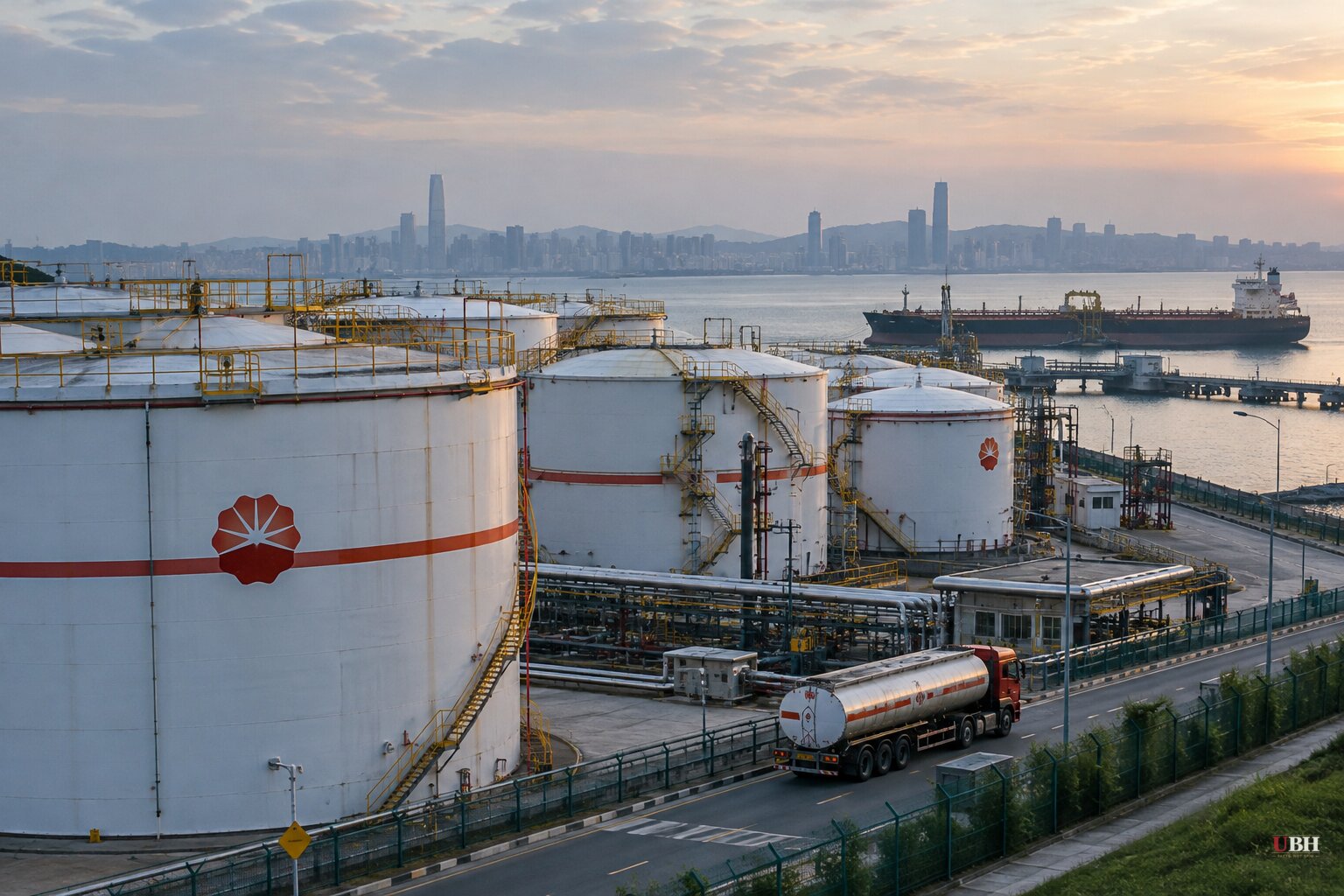
China's gasoline and diesel stockpiles are falling fast, and the drop is big enough that a leading energy analyst thinks Beijing could slap new limits on fuel exports before the end of the year.
Gasoline stocks at China's state-owned fuel suppliers dropped 2.9% last week to their lowest level since 2022, according to data from JLC International cited in Bloomberg reporting carried by Energy Connects and The Business Times. Diesel holdings fell 2.4% to a 15-month low. JLC compiles its numbers directly from oil majors' provincial marketing companies, since China's government does not release official inventory figures.
Jianan Sun, an analyst at Energy Aspects in London, told Bloomberg that Beijing could restrict monthly exports of gasoline, diesel and jet fuel, grouped together as "clean products," to around 1.2 million tons in the fourth quarter. That would be a sharp cut from the 2.55 million tons China shipped out in July, according to the latest Chinese customs data cited in the same reporting.
This would not be new territory for Beijing. China moved fast to curb fuel exports in the early weeks of the U.S.-Iran war, which began after the U.S. and Israel struck Iran on February 28, 2026, according to a Reuters analysis by Clyde Russell published on MarineLink. Those curbs starved Asian buyers of fuel but also helped cap global crude prices. Authorities eased them in the following weeks, and exports climbed back up through the summer.
Why the domestic market is tightening
China's independent "teapot" refiners have lost access to their preferred Iranian crude because of a U.S. blockade, according to the Bloomberg reporting, pushing up premiums on African and Latin American barrels as buyers scramble for substitutes. The situation has gotten bad enough that teapots may need to cut run rates in the coming weeks.
Meanwhile, China's overall crude buying has been unusually conservative. Russell's analysis found China slashed crude imports to their lowest in a decade after the February 28 strikes, and has been eating into its strategic reserves to keep refineries running: draws of roughly 500,000 barrels per day in May and 940,000 bpd in June, a brief 210,000 bpd surplus in July, then another 640,000 bpd draw in August as refinery throughput hit 13.91 million bpd, the highest since March. China's onshore crude inventories stood at 1.23 billion barrels as of September 9, according to data from EA Crude Oil Inventories cited by Russell.
The backdrop is a global crude market still absorbing what Russell's analysis calls a loss of roughly 5 million barrels a day from the Middle East, even by optimistic estimates. The Strait of Hormuz remains contested between Iran and the U.S., Houthi advances in Yemen threaten Saudi exports through the Bab el-Mandeb strait, and Saudi Arabia's East-West pipeline has been shut down, according to the Energy Connects and Business Times reporting.
The U.S. angle: Thune, Burgum, and a diesel price fight
The tightening isn't just a China story. Domestic U.S. diesel prices have climbed above $6 a gallon, and Senate Majority Leader John Thune said September 15 he is "open to exploring" a U.S. diesel export ban, according to Bloomberg Government's Steven T. Dennis, reporting carried by AgBull Trading. Thune said keeping more domestically produced fuel at home could ease prices, though he added he didn't know where the Trump administration stood.
Farm groups have told AgBull they're hearing from members pushing for exactly that kind of export ban, a fair reflection of how hard $6 diesel is hitting agriculture and trucking. That's a legitimate pocketbook complaint, not a fringe position.
But Interior Secretary Doug Burgum pushed back on September 15, saying export restrictions would probably not lower consumer prices and warning that other countries could retaliate, hurting U.S. regions that depend on imported energy, including California, according to AgBull. That's the tension: the U.S. exports large volumes of fuel while some domestic markets still need imports, so a blanket ban could shuffle the pain around rather than erase it.
The White House is instead reportedly weighing use of the Defense Production Act to expand refining capacity, an idea that came up during Trump's meeting with refinery executives, according to Reuters reporting cited by AgBull. No final decision has been made. Refinery utilization is already near 98%, so squeezing out meaningfully more fuel would take more than running existing plants harder.
Trump has also pushed Ukraine to stop striking Russian diesel infrastructure as a way to ease global supply, but AgBull reported that Russia and Ukraine continued energy-related attacks on September 15 despite Trump's announcement of a deal to halt them. Any supply relief from that front depends on the attacks actually stopping and damaged facilities getting repaired, neither of which has happened yet.
A framing problem worth flagging
AgBull's own headline describes China as "boosting fuel exports," framing it as a potential offset to the diesel squeeze. That doesn't square with the JLC-sourced data reported by Bloomberg, Energy Connects and The Business Times, which shows China's fuel stockpiles shrinking to multi-year lows and analysts warning of tighter export limits, not looser ones, heading into the fourth quarter. If Energy Aspects' Jianan Sun is right, China is more likely to pull fuel off the export market than add to it.
Separately, The Business Times reported the U.S. and China are discussing cutting tariffs on some goods, including American energy and agricultural shipments, ahead of a planned leaders' summit next week, a possible sign of an extension to the one-year trade truce. How that intersects with China's own export posture on fuel is not yet addressed in any of the reporting.
Whether Beijing actually imposes the 1.2 million-ton cap Sun is forecasting won't be clear until fourth-quarter customs data comes in. Until then, JLC's weekly inventory readings are the closest thing markets have to a real-time signal, and both gasoline and diesel are still heading in the wrong direction.
Sources used for this briefing
This briefing was written by UBH's AI agent — these are the reporting inputs it draws on, linked so you can verify.


