
Unbiased headlines. Facts, not spin.
Unbiased Headlines is an independently owned news organization. We bring you the facts, not opinions, written fresh from 110+ named sources. Sources linked so you can verify it yourself.
 energy
Notable (6/10)
Event date: November 3, 2026 ·
U.S. Nuclear Revival Hits Fuel Bottleneck as Congress Enters Crowded Lame-Duck Session
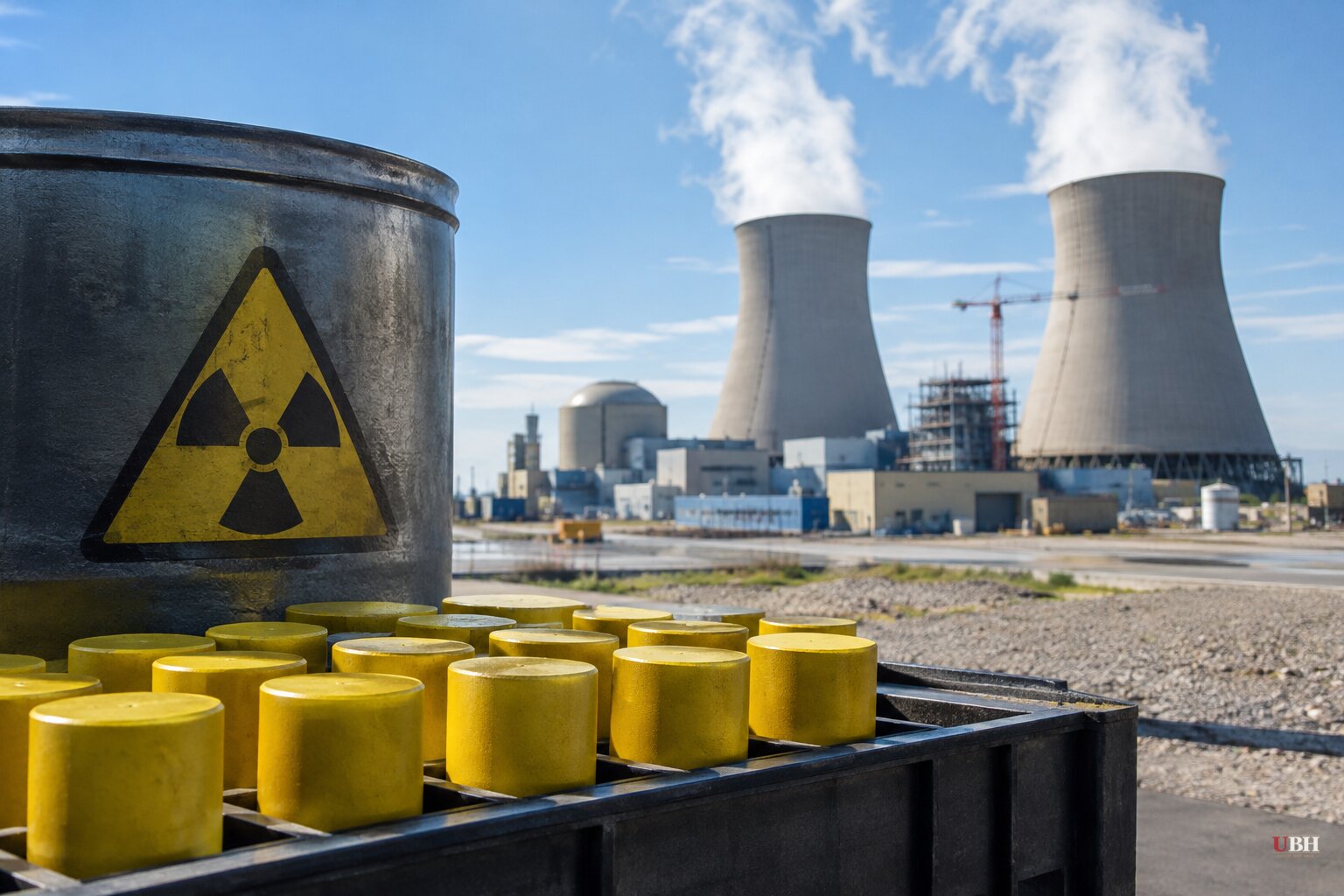
The Trump administration wants more nuclear power. Building reactors is one problem. Fueling them is another.
The United States has the largest nuclear power fleet in the world, but it has added just one new plant in the past decade, while many existing plants approach decommissioning. Demand is rising from the AI data-center boom, and the war in Iran continues to keep oil and gas markets volatile. Countries everywhere are competing for the same scarce enriched uranium.
A January report from Stanford Energy put it plainly: U.S. nuclear energy "faces fuel supply chain vulnerabilities, with tight uranium supplies, geopolitical risks, and rising costs."
A supply chain with few links
Only five plants in the world operate large-scale uranium conversion, the step that turns mined uranium into the gas that is then enriched. Nearly half of global enrichment capacity is controlled by Russia, according to analysis from OilPrice.com.
Cutting Russia off is not a clean fix. "The West needs more converted uranium than it can process, and cutting off Russian supply could leave its reactors dependent on a single Chinese facility," the National Interest warned this week.
Walking away from Moscow could mean depending on Beijing instead.
What is being built
Domestic capacity is growing. Urenco USA has marked its first commercial production of LEU+ at its National Enrichment Facility in Eunice, New Mexico. The Nuclear Regulatory Commission authorized the plant in September 2025 to enrich uranium up to 10% U-235.
"A tremendous amount of work has gone into preparing our plant and our staff to reach this achievement," Urenco USA Managing Director Jody Blackshear said.
LEU+ contains 5% to 10% U-235, versus 3% to 5% for most fuel used today. The company says it lets existing light water reactors run longer between refuelings, cutting outages and maintenance costs. It can also serve as feedstock for HALEU, the 10% to 20% fuel that some advanced reactor designs need.
Urenco is installing 700,000 separative work units (SWU) of new centrifuge capacity at the site. It has also announced a new 2.1 million SWU plant there, with construction to start in 2029, first production in 2032, and more cascades added through 2036. The company's stated goal is more than 7 million SWU of U.S. enrichment capacity over the next decade. OilPrice reports the plant's expansion is ahead of schedule and on budget, and that the facility currently covers about one-third of U.S. enrichment demand.
Covering one-third of demand is not independence.
Wyoming wants the next link
In Gillette, Wyoming, Calgary-based Nucleon Energy has proposed the $575 million Fort Union Uranium Conversion Facility. It would convert uranium to uranium hexafluoride. Last year, longtime Navy contractor BWXT proposed a $500 million TRISO fuel manufacturing plant in the same county.
Nucleon co-founder and Chief Development Officer Ryan Tourigny said the company looked at several states before picking Wyoming for its uranium mining base, regulatory sophistication, industrial workforce and institutions like Gillette College. Local officials are eager to process Wyoming-mined uranium in-state rather than ship it elsewhere. Coal production in the county has fallen by half since the 2000s.
Not every resident is convinced. At a community meeting, Campbell County resident Kelley Boltin said the company would not answer her concerns about training. "What's the risk of bringing it here? What happens if a spill occurs?" she asked, according to WyoFile. Utility worker David Freeman said he wanted to understand the project's economic viability, noting that local industry is "getting strangled."
Nucleon has proposed the facility but has not built it.
Congress has little time
The lame-duck session begins November 9. According to Matthew Wald and Spencer Toohill of the Breakthrough Institute's Nuclear Notes, it will have only five or six weeks of legislative time, and nuclear energy is not positioned to be a major focus.
The to-do list is crowded. Congress did not complete a budget this spring, and temporary funding runs out December 11. The National Defense Authorization Act, normally must-pass, has not cleared; Nuclear Notes reports that members unhappy with the Iran war have voted against it. A replacement for the Infrastructure Investment and Jobs Act, which expired at the end of September, and the farm bill are also pending.
One bill with a shot is the Bipartisan American Affordability and Jobs Act. It would speed environmental reviews under the National Environmental Policy Act and strengthen the Federal Energy Regulatory Commission's authority to approve power lines over local objections. It is not nuclear-specific, but it would affect nuclear projects.
Since August, the House has held six nuclear bills that would revise NRC licensing and Department of Energy reporting. The Senate passed the MORE American Fuel Act in late September. Nuclear Notes says several other nuclear issues should be addressed when the new Congress convenes in January.
The waste end of the cycle
On October 22, Finland granted the world's first operating license for a deep geological repository for spent nuclear fuel, at Onkalo, more than 1,400 feet below the Baltic islet of Olkiluoto. Vincent Ialenti, a former Energy Department program manager, argues in a Washington Post opinion piece that America is running Finland's experiment in reverse.
What comes next
The near-term test is the calendar. If the lame-duck session spends its five or six weeks on the December 11 funding deadline, the NDAA and the farm bill, the House's six pending nuclear bills and the Senate-passed fuel bill wait until the new Congress in January.
Meanwhile, Urenco's new New Mexico capacity will not come online in full until the 2030s.
Sources used for this briefing
6 links from 5 independent newsrooms (syndicated copies of the same report count once)
These are the sources it draws on, linked so you can verify.


