
Unbiased headlines. Facts, not spin.
Unbiased Headlines is an independently owned news organization. We bring you the facts, not opinions, written fresh from 110+ named sources. Sources linked so you can verify it yourself.
 energy
Major Story (7/10)
Event date: November 5, 2026 ·
Revolution Wind reaches full capacity after two Trump stop-work orders; Interior still wants approvals rescinded
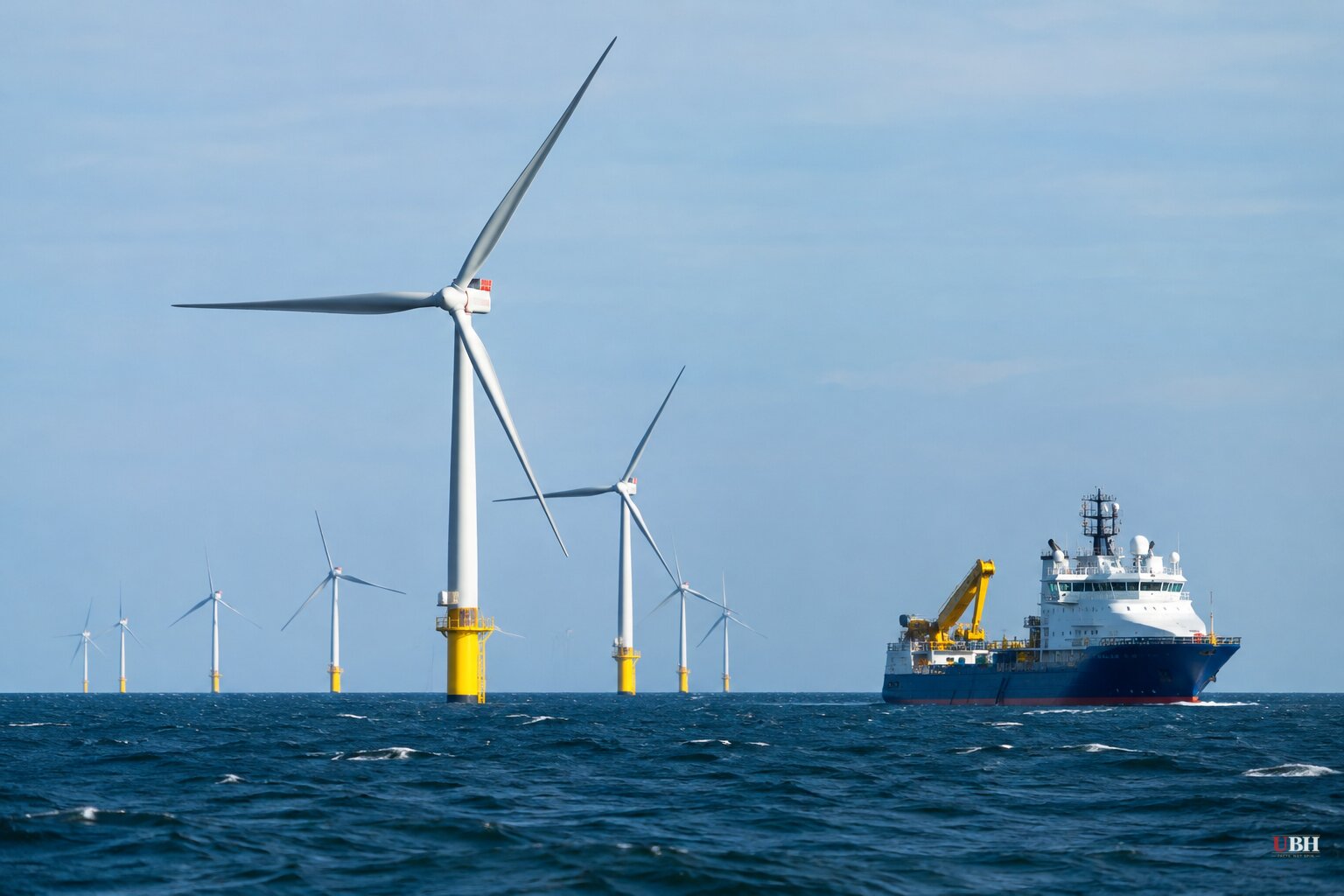
Revolution Wind is running at full capacity. Ørsted said Thursday, Nov. 5, that the 704-megawatt wind farm off Rhode Island and Connecticut began "generating up to its full capacity" in October, a milestone it disclosed alongside its third-quarter results.
The Trump administration tried twice to stop it.
Two stop-work orders, one pending request
Construction started in 2023 on the roughly $6 billion project, which includes 65 turbines about 15 miles south of Point Judith, Rhode Island. The final turbine went up in September. The first power reached the grid in the spring.
The Interior Department issued two stop-work orders. Interior officials said Revolution Wind and other Atlantic Coast projects had the potential to interfere with military radar. A federal judge rejected those arguments and allowed work to continue. U.S. District Judge Royce Lamberth in Washington has twice sided with developers in suits against the administration.
The fight is not over. In October, Interior attorneys asked Lamberth for permission to rescind the prior approvals for the project's construction plan. That request is still pending.
Orsted's own timeline has slipped badly. The project was originally expected to reach commercial operation in January 2024, according to Rhode Island's Office of Energy Resources, which also said federal opposition has raised investment risks and project costs.
Who buys the power, and at what price
Rhode Island contracted for 400 MW of the capacity and Connecticut for the other 304 MW. The buyers are Rhode Island Energy, Eversource and United Illuminating.
For Eversource and United Illuminating customers, the contract price is $99 per megawatt-hour, recovered through the public benefits charge. Ørsted says the farm can power more than 350,000 New England homes.
The savings figures come from state agencies and are projections, not results. Rhode Island's Office of Energy Resources expects $374 million in savings over the 20-year power purchase agreement, plus $139 million from lower wholesale prices. It says residential bills could fall by $4 to $10 a month in the first full year of operation.
Connecticut's Department of Energy and Environmental Protection calculates the project will save customers about $500 million annually starting in 2028, mainly because it is cheaper than other, more expensive sources of electricity.
Demand is also climbing. The 2025 CELT Report projects 1.8% annual electricity demand growth in New England through 2045. The 2018 report used to evaluate the original contract projected 0.9%.
Eversource spokesman William Hinkle called the milestone "important" because it provides "much needed new energy generation to customers at a time when demand is rising."
What it means for Eversource's books
Eversource sold its 50% stakes in three offshore wind projects in 2024, including Revolution Wind, to Global Infrastructure Partners. Revolution Wind is now owned 50-50 by Ørsted and GIP's Skyborn Renewables.
On Eversource's earnings call Thursday, CEO Joseph Nolan said full operations "significantly" reduce the company's risk of additional financial obligations tied to the project. As of June, Eversource had set aside about $409 million for potential obligations related to two of the sold wind farms, according to an SEC filing.
Nolan said the company expects to close out its contractual obligations with GIP next year. He called the process one that will "take some time to fully reconcile." His assessment: "we have an adequate reserve on our books to cover this potential obligation."
The rest of the quarter was less rosy. Eversource reported third-quarter earnings of $0.92 per share, down from $1.19 on a non-GAAP basis a year earlier. Net income fell 22% to $346 million.
The company pointed to four drags:
- The March 19 FERC order cutting New England's base transmission return on equity to 9.57%.
- A roughly $40 million disallowance of Connecticut Light & Power storm costs.
- The absence of earnings from Aquarion, the water utility Eversource sold in June.
- A higher tax rate.
Management narrowed 2026 non-GAAP guidance to $4.62 to $4.70 per share and raised the midpoint to $4.66.
Ratepayer decisions still ahead
Connecticut customers face other bills beyond the wind contract. CL&P has proposed a $451 million rate increase, and Eversource expects the Public Utilities Regulatory Authority to rule in June. CFO John Moreira said the company is proposing a multi-year, performance-based framework with gradual inflation-indexed annual changes to avoid large jumps.
The proposal includes $1 billion for advanced meters. ISO New England has also selected a $2.2 billion Eversource-Avangrid transmission project for the Boston area, with Eversource's share at $700 million. Neither is in the current capital plan.
On FERC, Moreira said meeting the agency's May 2027 refund deadline is challenging. He added that a federal appeals court could rule on the transmission ROE challenge by early fall next year.
The wider offshore picture
Revolution Wind is the third U.S. utility-scale offshore wind farm to reach full commercial operations, after South Fork Wind in New York and Vineyard Wind in Massachusetts. Ørsted's Sunrise Wind, being built out of New London, is about 60% complete according to the company's third-quarter report.
BloombergNEF once projected 39 gigawatts of U.S. offshore wind by 2035. It now expects 5.9 GW, roughly the projects already built or under construction when Trump returned to office in January 2025.
The next concrete decision sits with Judge Lamberth. He has yet to rule on Interior's request to rescind the approvals for a wind farm that is already delivering power to the grid.
Sources used for this briefing
8 links from 8 independent newsrooms (syndicated copies of the same report count once)
These are the sources it draws on, linked so you can verify.


