
Unbiased headlines. Facts, not spin.
Unbiased Headlines is an independently owned news organization. We bring you the facts, not opinions, written fresh from 110+ named sources. Sources linked so you can verify it yourself.
 energy
Notable (6/10)
Event date: November 5, 2026 ·
Braskem Shareholders Pull Funding Offer After Bondholders Reject Debt Conversion, People Familiar Say
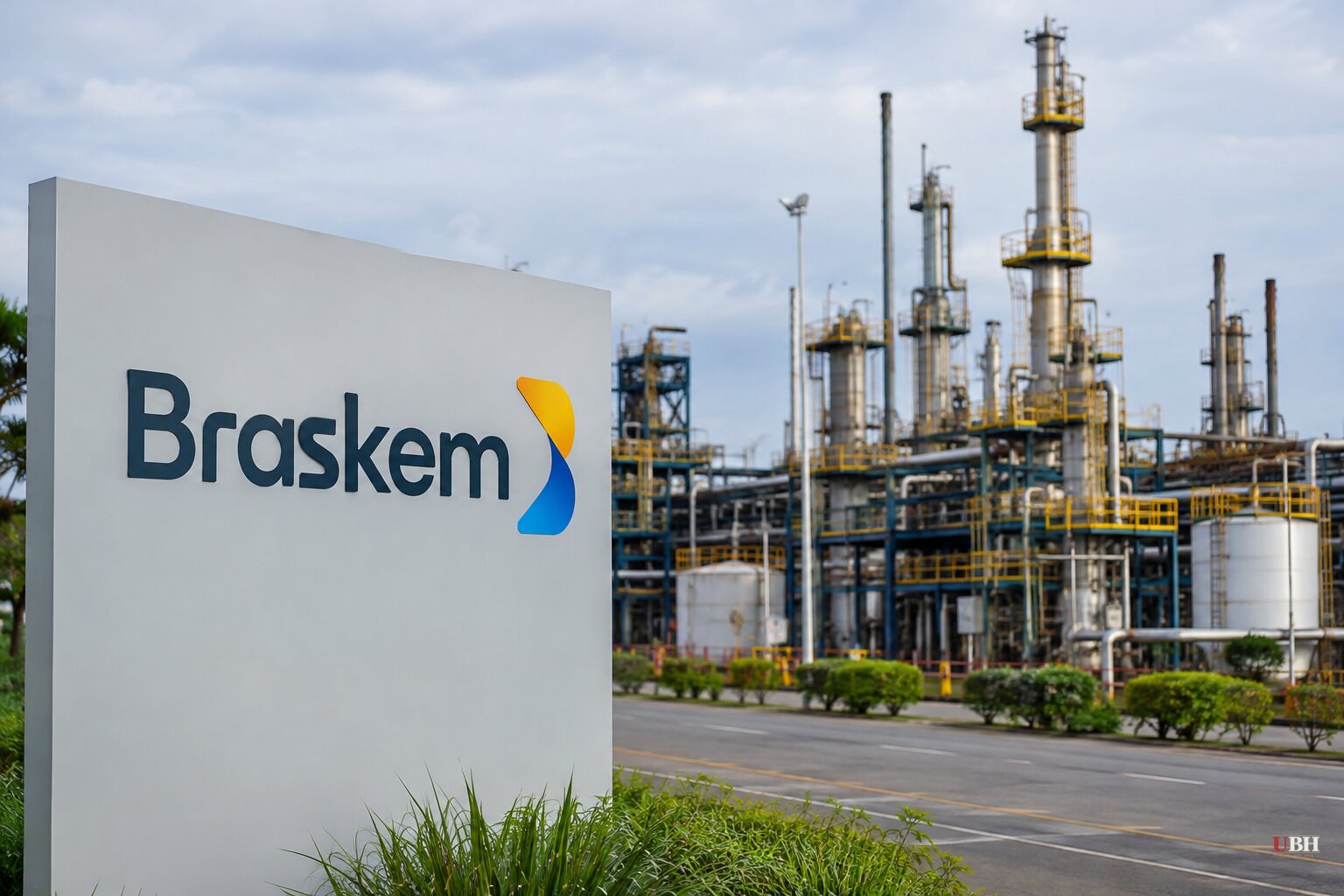
Talks to rework roughly $11 billion of Braskem SA debt out of court have hit a wall, according to people familiar with the matter. Shareholders have taken their promised cash off the table, at least for now.
After meetings with creditors in New York this week, the shareholders backed away from a pledge to inject capital into the Brazilian petrochemical producer. The reason, those people said: bondholders rejected a proposal that included $3.8 billion in debt conversion. They asked not to be named because the discussions are private.
The withdrawn money is described as a conditional $1.4 billion injection from major shareholders Novonor and Petrobras. Negotiations are still ongoing, and no final decision has been made, the people said.
What Braskem has said
The company has not confirmed the shareholder move. Braskem said it keeps routine communication with the market and will disclose any formal material developments through its official regulatory channels.
Its last detailed update came on Oct. 24. Braskem said it had shared an updated business plan, its own restructuring proposal and a separate investor proposal with certain debt holders and investors. After multiple meetings with major shareholders and investors, none of the proposals was accepted, the company said.
Braskem added that it "expects to continue discussions and negotiations with the investors regarding the terms of the updated plan and remains committed to engaging with the Investors and its other financial creditors."
How far apart the sides were
Both camps had sketched blueprints with a common structure: a follow-on share sale backed by fresh money from controlling shareholders and outside investors, paired with a simultaneous conversion of creditor debt into equity. According to people with knowledge of the discussions, the terms differed in size and in who carried the risk.
Under Braskem's own plan, creditors would swap $2.8 billion of debt for stock. Shareholders and third parties would commit $1.2 billion to a $2.25 billion share offering that could launch this year. Shareholders would put in up to $500 million more, and creditors would supply up to $1.5 billion in capital and debt conversion in June 2029, if financial targets required it. Petrobras and IG4 Capital Group would keep control under that plan.
The creditors' version was lighter on conversion and heavier on upfront cash. Lenders accepted the $2.25 billion offering size but wanted $1.85 billion of it backstopped now by the main shareholders or third parties. They also wanted an immediate $1.85 billion debt-to-equity conversion. Any backstop from a party other than the controllers would need creditor sign-off.
The total initial injection plus conversion came to about $5 billion in the company's plan and about $4 billion in the creditors' plan. The creditors' extra 2029 conversion was capped at $450 million.
Those parties were reported to have until Nov. 22 to agree, though a deal could have come sooner. That window now looks tighter. With the shareholders' funding pulled and no consensus on terms, bankruptcy protection has re-emerged as a possible path for the company.
The positions on each side
The two camps are arguing over who bears the cost. Bondholders have rejected a plan that leaned on large debt conversion, and the shareholders' reported response was to withdraw the cash that made the package work. The shareholders have not publicly said why. Creditors' own proposal asked for the controllers or third parties to stand behind $1.85 billion upfront.
Dilution is the pressure point. A share sale sells new stock, and a debt-for-equity swap hands creditors shares. Both shrink the percentage that existing holders own.
Pressure on the stock and the company
Braskem's U.S.-traded ADR fell 37% to $1.07 from $1.70 in one regular session after the company disclosed competing proposals, according to market data from Stocks to Trade. About 14 million shares changed hands. The ADR is down 67% over six months, and the company's market value stands at about $426.5 million.
The same market report also cites an involuntary Chapter 11 petition tied to a Braskem-controlled financing business. The petition asks a U.S. court to put that entity into reorganization. Braskem has not detailed the petition in the statements cited here.
The backdrop is long-running. Latin America's largest petrochemical producer is carrying heavy debt after a global industry downturn and a catastrophe linked to its salt-mining operations in northeastern Brazil. In August, Braskem filed for extrajudicial recovery, a Brazilian process for restructuring debt, as it tried to negotiate with creditors outside a full court-supervised bankruptcy.
What comes next
No formal shareholder or company statement on the withdrawn offer has appeared. The parties are still talking, and the target date for an agreement is Nov. 22. If Novonor and Petrobras do not restore their funding, or the two sides cannot bridge the gap between $2.8 billion and $1.85 billion of upfront conversion, the out-of-court path may close.
Braskem has said it will use its regulatory channels to disclose any formal development.
Sources used for this briefing
7 links from 6 independent newsrooms (syndicated copies of the same report count once)
These are the sources it draws on, linked so you can verify.


