
Unbiased headlines. Facts, not spin.
Unbiased Headlines is an independently owned news organization. We bring you the facts, not opinions, written fresh from 110+ named sources. Sources linked so you can verify it yourself.
 energy
Major Story (8/10)
JP Morgan Puts Oil Market in 1.4 Million Barrel-a-Day Surplus for October as High Prices Cut Demand
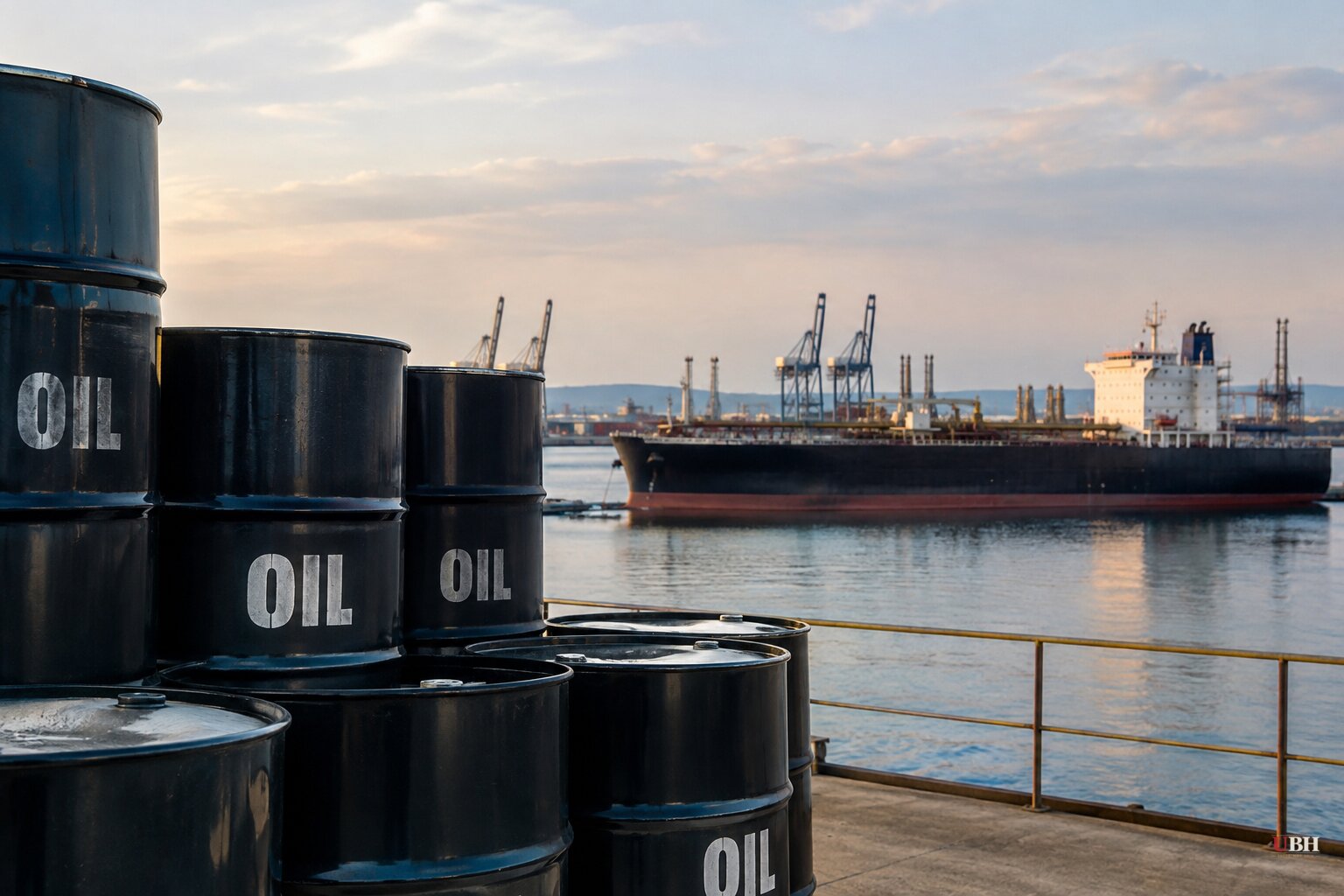
Since the Iran war began in late February, the oil market has swung from the biggest supply disruption on record to a new problem: not enough buyers at these prices. Analysts and traders said on Nov. 6 that the market is drifting back toward excess supply, even though the war has not been resolved.
The numbers behind the surplus
JP Morgan said in a report that supply is above consumption again. "We estimate the global oil market returned to a surplus of 1.1 million barrels per day in September, widening to 1.4 million bpd in October, nearly matching last year's average of 1.3 million bpd," the bank said.
The bank said global crude imports in October rose above average 2025 levels while demand lagged.
Goldman Sachs is less aggressive. It estimates global stocks did not fall in September and October, after dropping sizeably in the months following the start of the war. Goldman sees the market as broadly balanced over those two months, compared with a deficit in March.
Goldman credits a marginal surplus carried over from last year, higher production outside the Gulf, and weaker demand.
Gulf barrels are coming back
The market was widely expected to be in surplus at the start of 2026. The war wiped that out. The International Energy Agency called it the world's biggest ever supply disruption and organized a record release from industrialized nations' strategic reserves. Commercial inventories were drawn down too.
Flows have since recovered. Vortexa, the ship-tracking firm, said crude and condensate exports from the Gulf averaged 14 million barrels a day in October, about 86% of pre-war levels. Shipments edged lower from September, which was the highest month since the war started. Two ship-tracking firms said October could be revised up as more data comes in.
Refined products are lagging. Vortexa put product exports at 3.1 million barrels a day, just over half of normal volumes.
Demand is the other half
Banks and government forecasters have cut their 2026 demand forecasts, in part because of price. That is the plain mechanism: when oil costs far more than it did before the war, people and businesses use less of it.
The pump still stings. AAA data cited by NPR shows gasoline about $1.20 a gallon higher than a year ago. Diesel hit a record high in September.
Brent was near $70 a barrel before the war, according to NPR. On October 30, the January contract was trading at $113.10 and the expiring December contract at $117.14, per Epoch Times market reporting. A price board on OilPrice.com showed Brent quoted around $97.60 and WTI near $89.84 on Friday.
Mixed signals in the futures curve
The short-term physical market is showing the clearest sign of ample supply. Brent contracts for difference for delivery this week trade below the following week's contract, at the steepest discount since July, according to LSEG data. The second- and third-week contracts also trade at a discount to the next week.
That structure is called contango, and it generally reflects a perception that supply for immediate delivery is ample. By contrast, Brent crude futures starting from January 2027 delivery remain in backwardation, where prompt prices are higher than later contracts, which indicates supply remains tight in the near term. Veteran oil trader Adi Imsirovic said Brent futures could also move into contango if the swaps remain there, since such changes usually start in the physical market.
The risk that undercuts the glut
Not everyone reads the surplus as the end of the story. Warren Patterson, head of commodities at ING, wrote in a Thursday market note that European natural gas prices had climbed above 100 euros ($111.4) per megawatt-hour for the first time since 2022, with "little sign of imminent relief in Persian Gulf LNG flows."
Patterson added that "the outlook appears more dire amid the risk of renewed U.S. strikes on Iran following the U.S. midterm elections next week."
The shipping picture backs up the caution. UK Maritime Trade Operations reported a tanker struck by an unknown projectile while leaving the Strait of Hormuz. It also reported that a small boat had attached two explosive devices to another tanker's hull, causing an engine-room fire. A dhow burned and sank near Khasab, Oman. The strait carries roughly one-fifth of global oil.
What the producers are doing with the windfall
High prices have been good to the majors. ExxonMobil earned $15.4 billion last quarter, more than double a year earlier. Shell earned $10.8 billion, nearly double. Chevron earned $9.9 billion, up 180%. Together that is just over $36 billion.
Exxon announced its highest-ever quarterly dividend. Shell's buyback was one of its biggest ever.
Dan Pickering, founder of Pickering Energy Partners, told NPR the companies are not rushing into new drilling because "this is a period where the high prices are driven more by geopolitical events than anything else." His read: "You put the money in the bank and watch to see what happens as we move into 2027."
That caution looks sensible against the new data. If Gulf exports keep recovering and demand stays soft, the surplus JP Morgan describes could widen. If fighting resumes, the same Gulf barrels are at risk again. What remains open is whether the October shipment figures get revised up, and whether any renewed U.S. strikes follow the midterms, as Patterson flagged.
Sources used for this briefing
7 links from 7 independent newsrooms (syndicated copies of the same report count once)
These are the sources it draws on, linked so you can verify.


