
Unbiased headlines. Facts, not spin.
Unbiased Headlines is an independently owned news organization. We bring you the facts, not opinions, written fresh from 110+ named sources. Sources linked so you can verify it yourself.
 energy
Major Story (7/10)
Sanders Demands National Data Center Moratorium After Midterms; Texas Governor-Elect Hinojosa Pledges Approval Ban
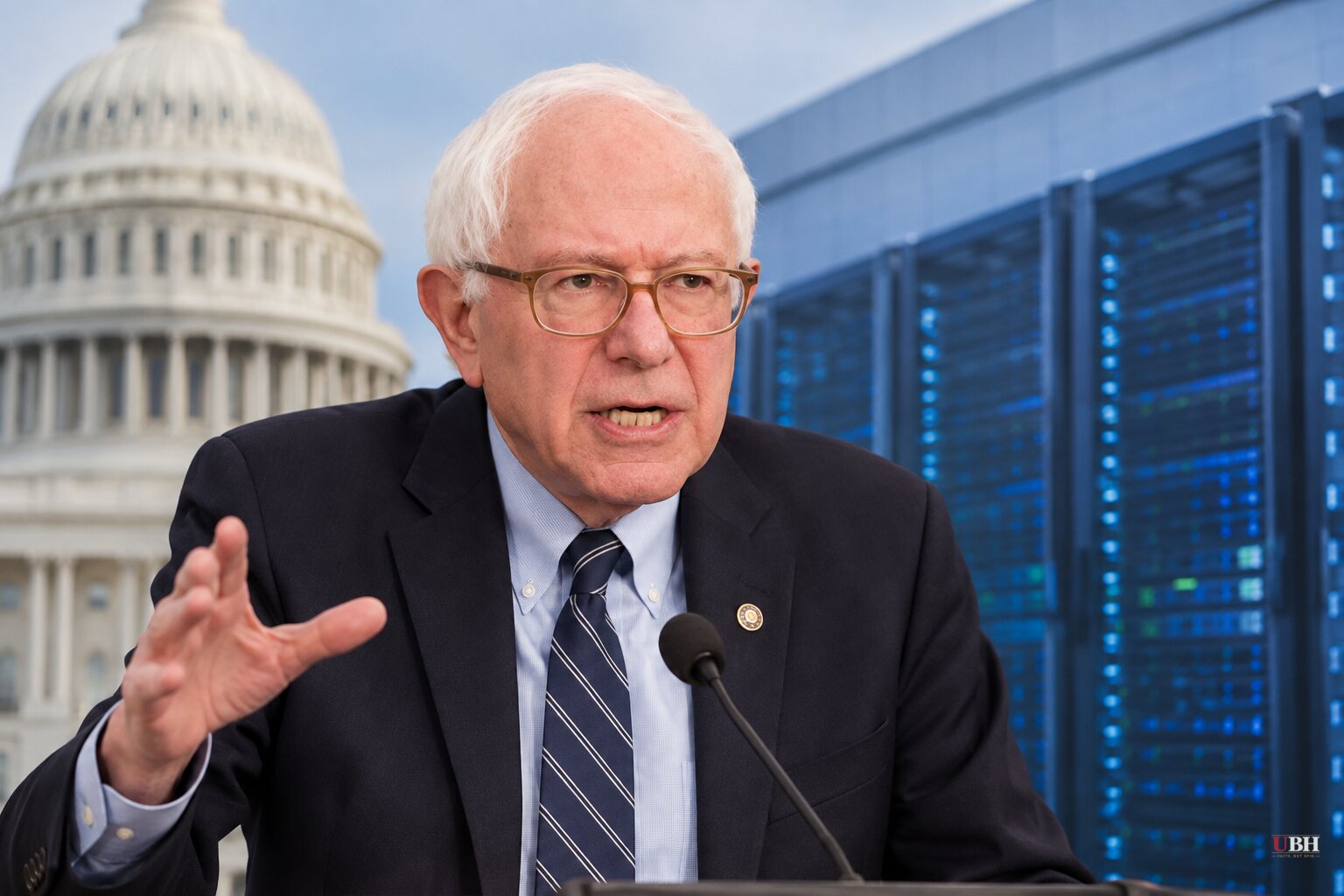
Two days after Democrats won both chambers of Congress, the data center fight has moved from campaign speeches to explicit demands for a federal freeze.
Sen. Bernie Sanders, I-Vt., posted on X: "National data center moratorium now. Americans don't want Big Tech oligarchs wrecking the environment, gutting jobs and threatening humanity's future." He pointed to Tuesday's local referendums, where voters in several places approved restrictions on data centers.
Rep. Yassamin Ansari, D-Ariz., went further. She wrote that pausing AI development should be a top priority for the House Democratic majority on Day 1. Rep. Greg Casar, D-Texas, who chairs the Congressional Progressive Caucus, amplified her post with one word: "Yes!"
These are statements on social media, not bills. No federal restriction has been enacted. Sanders' post names no duration, no coverage rules and no enforcement mechanism.
What the voter poll does and doesn't show
The CNBC Voter Poll found that 56% of voters called AI and data centers a crucial or major factor in their congressional vote. Among those voters, 65% backed a Democrat.
That measures how much the issue mattered. It does not measure support for a national moratorium, the remedy Sanders and Ansari are pushing.
Candidates who ran against the buildout
Several winners made data centers part of their pitch. Annie Andrews, who flipped a South Carolina Senate seat, ran a campaign website branding her Republican opponent "data center Darline." In her victory speech she said voters chose a state where decisions are made "by the people who live in our communities, not the billionaires or data center companies in Washington D.C."
Sherrod Brown, who beat Republican Sen. Jon Husted in Ohio, told supporters: "I do not work for data centers."
Pennsylvania Gov. Josh Shapiro signed an executive order in August to slow data center development. In his victory speech he said local communities should get "the final say."
The biggest single target is Texas. Wells Fargo puts 27% of planned U.S. data center capacity there. Democrat Gina Hinojosa ousted Republican Gov. Greg Abbott. She did not address data centers directly in her victory speech, but they were central to her campaign, where she pledged to issue a moratorium on all data center approvals until laws can be passed.
The authority problem
The path from slogan to policy runs through a legal question. In a Nov. 4 commentary, Brookings scholars Nicol Turner Lee and Darrell M. West described moratoriums as a way to buy time while officials assess electricity, water and land needs. They also noted that energy-use and land-use rules have historically rested largely with states and localities, and they flagged concerns that federal legislation could override state powers.
They expect tougher requirements to raise construction and operating costs. They said lawmakers could require tech companies to pay for added energy demand, infrastructure upgrades or grid modernization.
The national-pause idea therefore collides with an existing division of power. A statewide pause like the one Hinojosa described, or an executive order like Shapiro's, sits inside that framework. A federal moratorium would test it.
Markets
CNBC reported that AI-linked stocks slipped Wednesday, Nov. 4, then fell harder Thursday, Nov. 5, as investors worried Democratic wins could affect data center construction. Chip stocks led the decline. The reported moves: the iShares Semiconductor ETF (SOXX) down nearly 9%, Nvidia down 8% and AMD down more than 14%.
Other fronts the new majority inherits
The American Business Immigration Coalition issued statements the day after the vote urging Congress and the White House to act during the lame-duck session. CEO Rebecca Shi said voters punished Republicans over mass deportations and high costs. The group wants passage of Rep. Maria Salazar's DIGNIDAD Act and a vote on the Dream and Promise discharge petition covering DACA and TPS holders. It also wants worksite raids halted. Matt Teagarden, CEO of the Kansas Livestock Association, said America "cannot solve severe workforce shortages and the resulting high prices by deporting long-term, hard-working immigrants."
Salazar's own race is headed to a recount. Several other Republicans who signed onto her bill lost, including Reps. Mike Lawler, Brian Fitzpatrick, Gabe Evans, Monica De La Cruz and Zach Nunn.
On foreign policy, Ukrainian Foreign Minister Andrii Sybiha said in Bucharest on Thursday, "We expect new dynamics," and that Kyiv expects "new steps to support Ukraine." President Volodymyr Zelenskyy said Democrats "speak very clearly about supporting Ukraine." Trump has largely halted direct financial and military aid to Kyiv.
Iran's Supreme Leader Mojtaba Khamenei said Wednesday that anyone expecting a fundamental shift in U.S. policy because one party replaced another is "gravely mistaken." Hamidreza Azizi of the International Crisis Group told RFE/RL he expects Tehran's position to harden. Indirect talks mediated by Qatar and Pakistan are underway, and Trump has declined to rule out resuming strikes. He remains in office until January 2029.
Sources used for this briefing
8 links from 6 independent newsrooms (syndicated copies of the same report count once)
These are the sources it draws on, linked so you can verify.


