
Unbiased headlines. Facts, not spin.
Unbiased Headlines is an independently owned news organization. We bring you the facts, not opinions, written fresh from 110+ named sources. Sources linked so you can verify it yourself.
 energy
Notable (6/10)
Butane Hits 30-Year High in Northwest Europe at $1,125 a Ton, 14-Year High in US
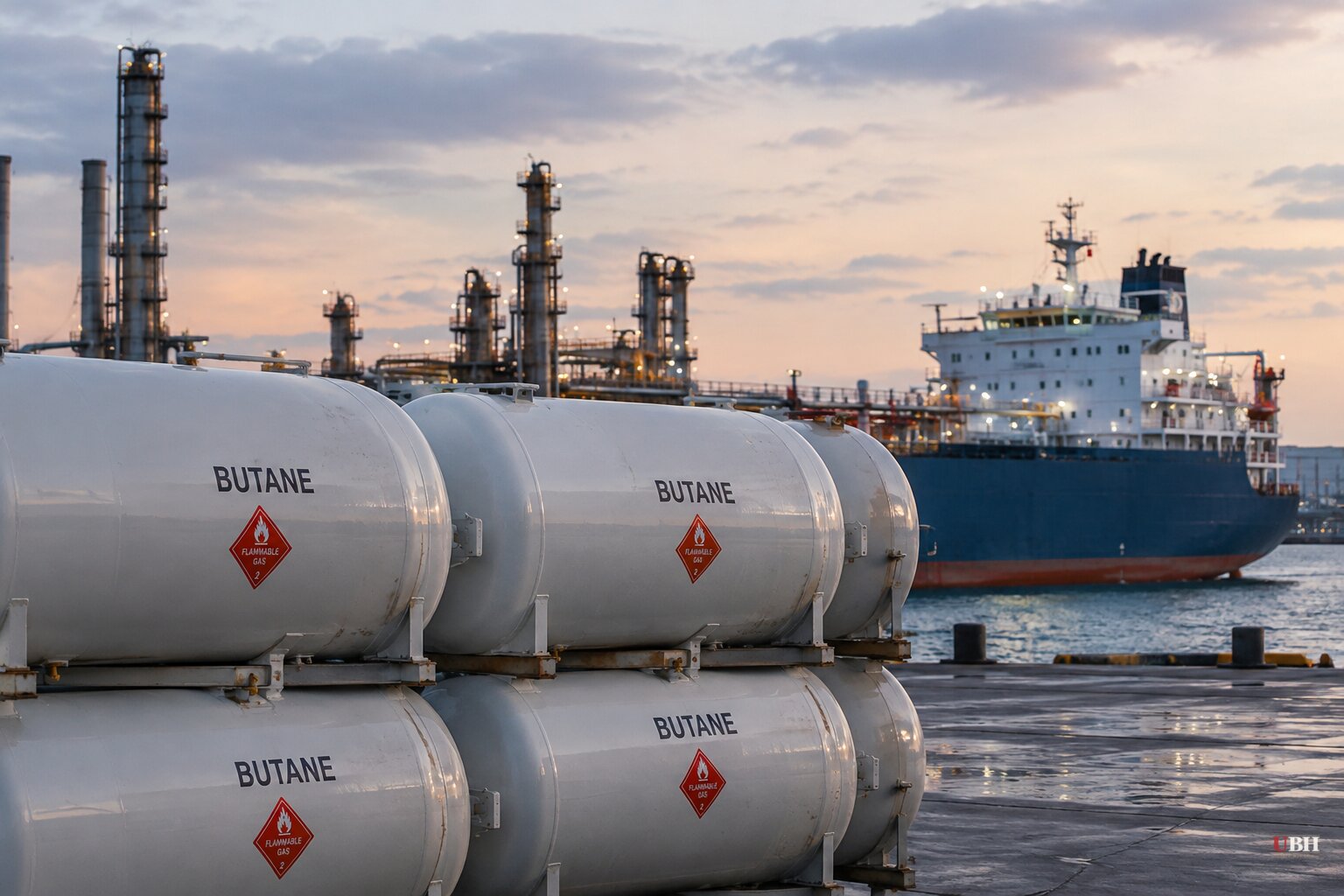
Butane is more expensive than it has been in a generation.
Northwest European November butane reached $1,125 per tonne by early November. That is a 30-year high, above even the spike that followed Russia's 2022 invasion of Ukraine. In Asia, the AFEI butane index stood at $1,180 per tonne on Nov. 3. US Belvieu butane climbed to $920 per tonne, a 14-year high.
How the war rerouted LPG
Before the US-Iran war began in March, the United States supplied roughly 45% to 50% of global LPG exports. The Middle East supplied another 30% to 35%.
After the conflict began, the Gulf share collapsed to 11%. The US share rose to 65%.
Asia took most of the replacement supply. Middle Eastern producers had covered about half of Asia's imports on short voyages. From April through October, US propane and butane supplied as much as 75% of Asian imports, pulling cargoes away from other buyers, Europe among them.
That share eased to around 55% in October as the UAE, Kuwait, Qatar and Saudi Arabia resumed deliveries. Gulf exports have recovered faster in crude oil than in LPG, and the current flow of LPG is still too small to free Asia from American cargoes.
Europe is short
The effect shows up at the Amsterdam-Rotterdam-Antwerp hub. October butane imports there fell to 130,000 tonnes, a multi-year low and 34% below a year earlier.
The mismatch is also chemical. US LPG exports run about 75% propane and 25% butane. India and many other Asian buyers want a blend closer to 50:50, with butane keeping vapour pressure suitable for warm climates. More American propane cannot fully replace missing Gulf butane.
India took the first hit
At the start of the crisis, about 87% of India's LPG imports came from the Gulf. The UAE and Qatar alone supplied half.
Indian imports fell from 2.03 million tonnes in February to 1.17 million tonnes in March, a drop of more than 40%. The government ordered refiners, petrochemical complexes included, to maximize LPG output and put households first.
Some consumers moved to piped natural gas. Its higher cost and only partial indirect government support limited the relief.
India's refiners now have more room to ease emergency LPG production and restore petrochemical output, helped by recovering Gulf imports and heavy reliance on US cargoes.
The pump-price question
Butane also goes into gasoline. In an Oct. 22 statement, AAA said winter-blend gasoline is cheaper to produce because it uses butane and other less costly additives. The national average for regular fell six cents that week.
The national average was $4.29 per gallon on Oct. 23, and California averaged above $6. AAA said October was poised to be the most expensive October ever for gasoline, following records in August and September. Brent futures traded at $116.13 per barrel that Friday morning, up more than 2.6% from the prior close.
No source has measured what $920 butane does to blending costs. The winter-blend savings AAA described were struck when butane was cheaper.
Competing forecasts
President Donald Trump said in an Oct. 19 Truth Social post that fuel prices would come down when the US-Iran war concludes, and that this would happen quickly.
The commodity desk at ING Bank sees it differently. In an Oct. 23 note, Warren Patterson, head of commodities strategy, and Ewa Manthey, commodities strategist, wrote that "re-escalation seems the most likely path." They said their expectation of ICE Brent averaging $80 per barrel in the fourth quarter "is looking unattainable." Even without re-escalation, they wrote, "the mere possibility is likely to keep a sizeable geopolitical risk premium embedded in prices."
Saudi Aramco CEO Amin Nasser warned on Oct. 5 that rebuilding crude stockpiles depleted by the Middle East conflict could take up to two years. The US Embassy in Riyadh said the State Department expected hostilities between Saudi Arabia and the Houthis to escalate rapidly.
What to watch
The next test is the Asian share of US LPG. It has already dropped from as much as 75% to around 55% as Gulf cargoes return. If that share keeps falling, more US butane could flow back to Europe, where ARA imports sit at a multi-year low.
That depends on how fast UAE, Kuwait, Qatar and Saudi LPG shipments recover. They have not yet matched the recovery in Gulf crude.
Sources used for this briefing
5 links from 2 independent newsrooms (syndicated copies of the same report count once)
These are the sources it draws on, linked so you can verify.


