
Unbiased headlines. Facts, not spin.
Unbiased Headlines is an independently owned news organization. We bring you the facts, not opinions, written fresh from 110+ named sources. Sources linked so you can verify it yourself.
 energy
Major Story (7/10)
Event date: October 29, 2026 ·
NOAA Winter Outlook Projects Drought Relief and Stormier South as El Niño Floods Hit the Southwest
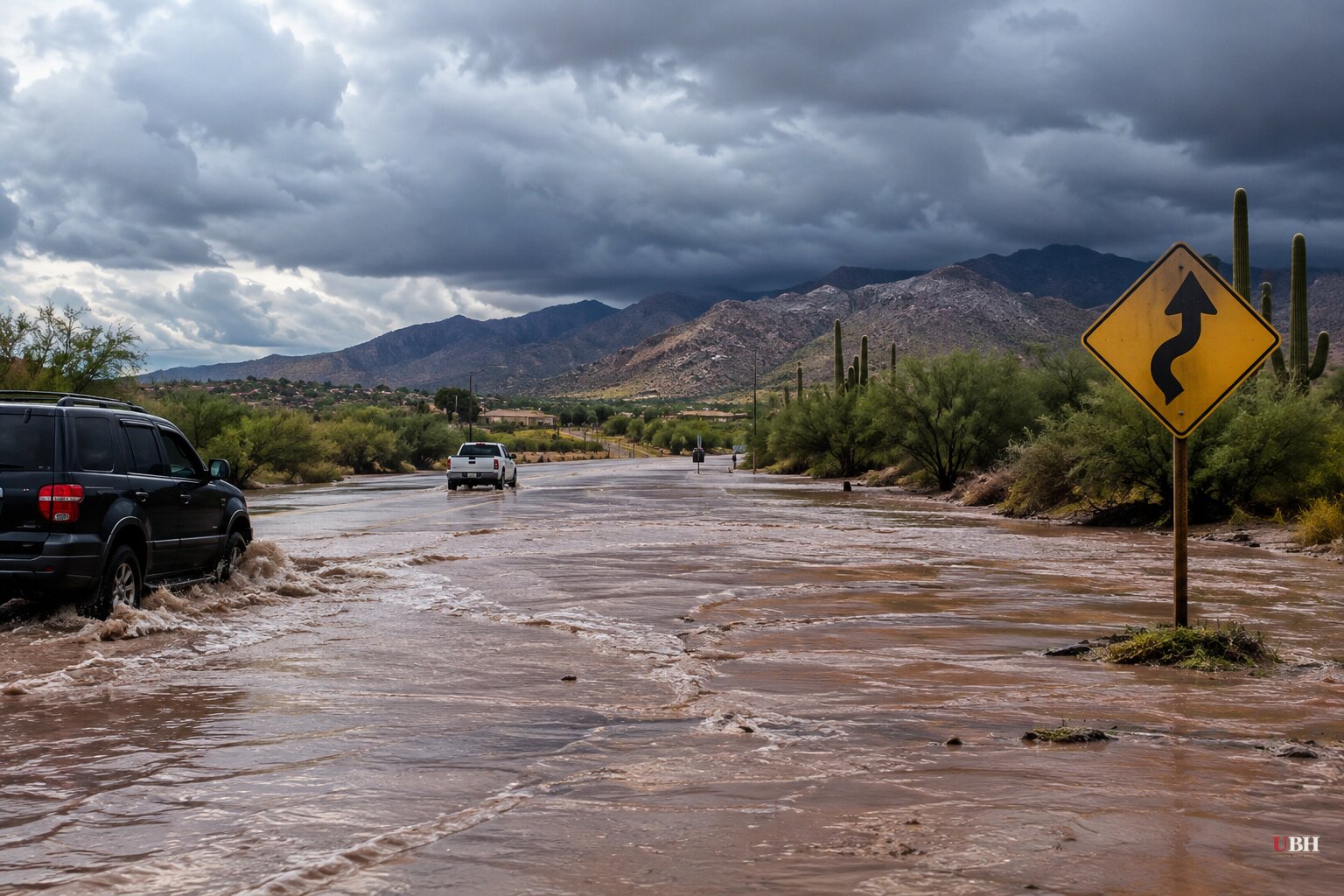
Since NOAA released its 2026-27 winter outlook in October, the pattern it described has started to show up in the Southwest, where back-to-back storms have brought flooding on top of drought.
What NOAA is forecasting
The outlook covers December 2026 through February 2027. NOAA expects warmer-than-average temperatures across the northern U.S. and wetter-than-average conditions across the South, from California to Florida, and along the Eastern Seaboard. It also projects drought improving across the majority of the country, including the East, the Southern Great Plains and the Southwest.
"A very strong El Nino will likely bring a southward and eastward shift to the jet stream for the contiguous U.S., which tilts the odds toward stormier weather across the South," said Ken Graham, director of NOAA's National Weather Service.
Graham attached a warning. "While higher chances of rain and snow may bring relief to drought-afflicted areas, too much precipitation on dry soil can fuel destructive flash floods and mudslides," he said.
NOAA meteorologist Jon Gottschalck said some southern-tier storms could turn northeast along the East Coast and hit Mid-Atlantic and Northeast cities with heavy rain and snow, depending on cold air. "These storms could be very strong," he said.
The outlook does not project seasonal snowfall totals. NOAA says snow forecasts are generally not predictable more than a week out.
The Southwest is already getting hit
Flash floods on Sunday, Nov. 1, forced evacuations across northern New Mexico and central Arizona. A Colorado ski town braced for its main river to reach catastrophic levels. Photos from Colorado Parks and Wildlife staff show flood damage along the Piedra River north of Navajo State Park, dated Nov. 2.
It followed another storm the week before that flooded southwestern states for days. Former NOAA chief scientist Ryan Maue calculated that more than 20 trillion gallons of water fell on the Four Corners states and Nevada over a two-week stretch.
Scientists say El Niño was not the only cause but is making heavy rain more likely and more intense. "We've had super El Niños in the past, but this is a super duper El Niño," said Jeff Masters of Yale Climate Connections.
Daniel Swain of the University of California Agriculture and Natural Resources said big precipitation becomes likelier in the Southwest interior this time of year, "but we're seeing it to a degree we actually haven't seen before."
Peru and Ecuador are also seeing record-breaking flooding, Swain said.
How strong this El Niño is
A Zurich Insurance Group analysis published Oct. 20 put numbers on it. Sea surface temperatures in the Niño 3.4 region, the standard benchmark, hit a daily anomaly of 3.11°C by mid-September. That topped the previous record of 3.08°C and came roughly two months earlier than El Niño typically peaks.
Zurich said forecast models project a peak monthly anomaly of around 4.1°C later this year. It also noted that global sea surface temperatures logged 100 consecutive days of record highs between June and September 2026.
NOAA expects to declare Super El Niño conditions later this year, according to FOX Weather's account of the agency's forecast. That account puts an 83% chance on this becoming the strongest El Niño since record-keeping began in 1950. The event is expected to peak in December, and experts say its effects could last for months afterward.
Arizona State University's Randy Cerveny noted the Pacific is not yet at peak heat. "So yes, we will see more of these particular events," he said.
Drought
Parts of Southern California and the Southwest remain in a decades-long megadrought. NOAA data show 2000-2021 was the driest such span since the megadroughts of the 800s to 1600s, with precipitation 8.3% below the 1950-1999 average.
Lake Mead and Lake Powell, the country's largest reservoirs, fell to record lows this summer. The Colorado River that feeds them supplies roughly 40 million people across seven Western states. Both reservoirs have since seen a short-term rise.
A wet winter could help. But a short-term bump is not the same as refilling reservoirs drained over two decades.
What forecasters say they can and cannot promise
Seasonal outlooks deal in odds, not certainties. Forecasters stress that El Niño shifts probabilities toward certain conditions without guaranteeing them. Other factors, including the polar vortex, will also shape how much cold air and snow reach the northern tier.
History gives a sense of the downside. During the strong 2015-16 El Niño, catastrophic flooding hit South Carolina and a blizzard struck the East Coast.
NASA Jet Propulsion Laboratory climate scientist Josh Willis described the phenomenon this way: "It rises up out of the ocean like Godzilla, and it breathes fire on Indonesia and Southeast Asia: they're having severe drought and major wildfires." He added that its "tail is kicking up hurricanes and storms and high tides on our end of the Pacific."
Scientists quoted by NPR and the Associated Press also tie the intensity partly to long-term ocean warming from fossil fuel emissions, which they say sits on top of the natural cycle. Cerveny said ocean temperatures already warmer than a century ago make El Niño events "even more intense."
Graham framed the point of the outlook as preparation. "Earlier and better decisions saves lives," he said.
NOAA's Weather Prediction Center updates its three-month outlook monthly. The next update is due Nov. 19.
Current watches and warnings are posted at weather.gov.
Sources used for this briefing
7 links from 7 independent newsrooms (syndicated copies of the same report count once)
These are the sources it draws on, linked so you can verify.


