
Unbiased headlines. Facts, not spin.
Unbiased Headlines is an independently owned news organization. We bring you the facts, not opinions, written fresh from 110+ named sources. Sources linked so you can verify it yourself.
 energy
Major Story (7/10)
Event date: November 3, 2026 ·
Clean Energy Stocks Rise After Democrats Win Congress as Gasoline Sits Above $4 and Oil Majors Post Huge Profits
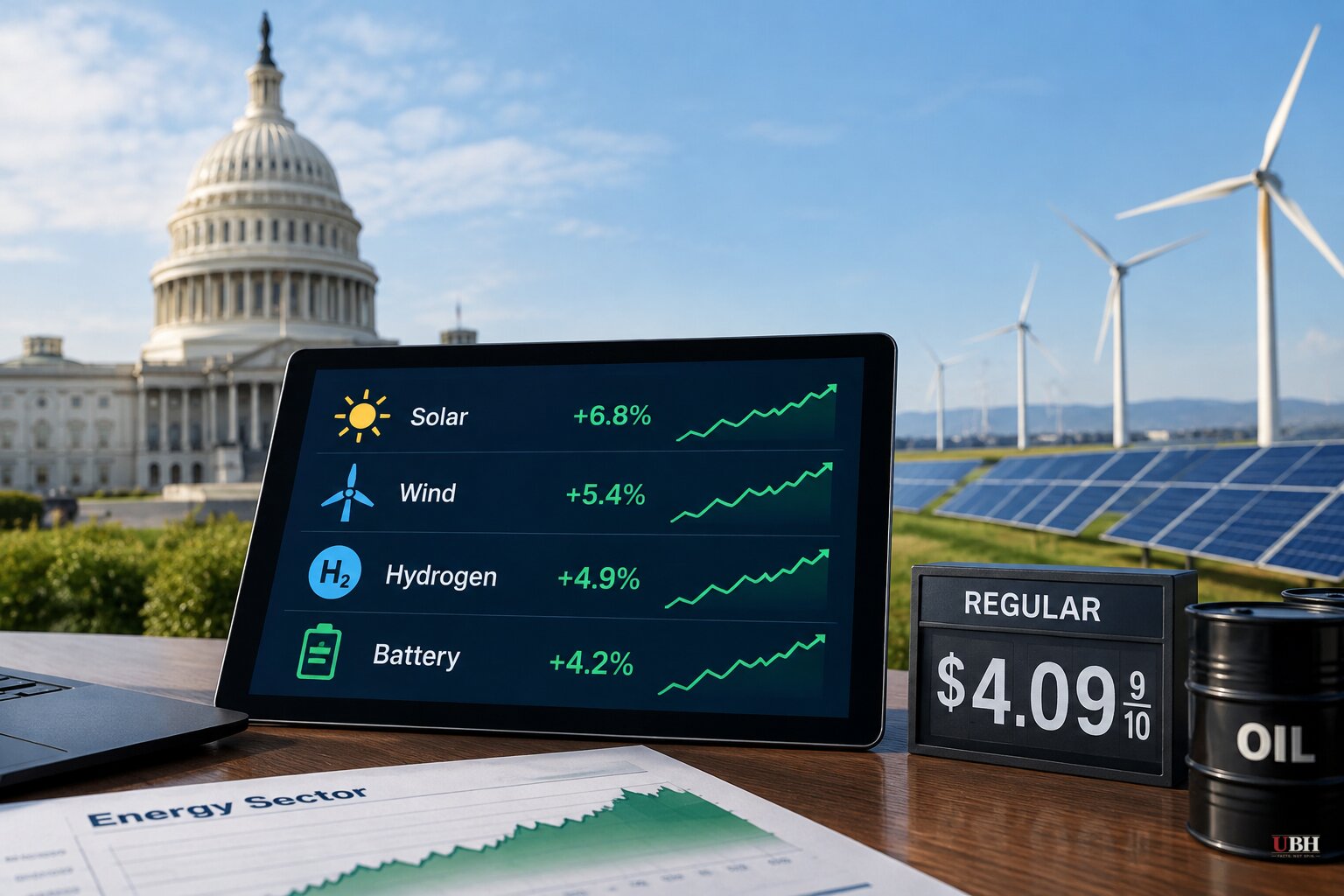
Since Democrats won the House and Senate on Tuesday, Nov. 3, the first clear market reaction in the energy sector has come from renewables. Solar and clean-energy shares rose in morning trading today, Nov. 4.
Dow Jones Newswires reported that First Solar, Sunrun, Enphase Energy, Array Technologies and Nextpower all climbed. So did turbine maker Vestas Wind Systems and offshore-wind developer Orsted. Plug Power and Fluence Energy also gained. No percentage moves were given.
Dow Jones reported that the change in power removes the threat of a legislative repeal or further clawback of the 2022 Inflation Reduction Act. Plug Power rose because the Senate outcome keeps the hydrogen production tax credit intact for projects that begin construction by Jan. 2028, according to the same report. Fluence gained on continued incentives for grid-scale batteries.
These companies are trading on federal subsidies, which are taxpayer dollars. A rally on the expectation that Congress will keep writing those checks is a data point on how much of the sector's value depends on Washington.
The pocketbook backdrop
Voters did not walk into this election worried about tax credit transferability. They were worried about the pump.
AAA data showed regular gasoline at $4.33 a gallon and diesel at $6.29 on Oct. 14. A year earlier, regular was $3.07 and diesel $3.65. A Pew Research Center poll released Oct. 8 found 74% of U.S. adults were concerned about the price of gasoline and energy, the largest share among all issues surveyed.
A KFF/AP survey of more than 2,000 rural voters found 67% were very or somewhat concerned about paying for fuel and transportation. That was higher than the share worried about health care, food, rent or utilities.
Pollster Robert Cahaly of the Trafalgar Group called rising fuel costs "the only real factor that's having an impact." He told The Epoch Times in an October analysis that voters think, "I want to punish somebody."
Oil's windfall
The companies benefiting most from high prices are not the ones rallying today. ExxonMobil earned $15.4 billion last quarter, more than double a year earlier. Shell earned $10.8 billion, nearly double. Chevron earned $9.9 billion, up 180%. Together the three took in just over $36 billion.
The cause is the Iran war, which has cut the flow of oil through the Middle East. Brent crude is trading around $113 a barrel, versus about $70 before the war began, NPR reported.
Executives said much of the cash is going to shareholders. Exxon announced its highest-ever quarterly dividend, and Shell's buyback was among its largest ever.
Dan Pickering, founder of Pickering Energy Partners, said the majors are not rushing to drill. "This is a period where the high prices are driven more by geopolitical events than anything else," he said. His read of the industry's posture: "You put the money in the bank and watch to see what happens as we move into 2027."
Not everyone agrees gas prices explain the result
Fox News columnist Liz Peek gives a different diagnosis of the Democratic sweep. She argues voters punished President Trump for overreach, comparing it to the 2010 backlash against Barack Obama. In her telling, Trump "mistook his landslide 2024 win for a mandate," and went too far with an aggressive push to deport all undocumented people, including long-term residents.
Peek also points to a possible upside for Republicans. Other conservatives have blamed the Iran war and high gas prices for the loss. Trump, speaking on Fox's election coverage, said he was surprised by the results and noted he holds the veto.
What Congress can actually do
The veto is the practical constraint on any energy agenda. A Republican remains in the White House, and any bill revising the 2025 law (OBBBA) that shortened the IRA's clean-energy benefits needs Trump's signature or enough votes to override him.
Hasan Nazar, head of policy at Crux, a company that connects tax credit buyers and sellers, told Utility Dive that "history shows us that energy crises create policy openings." He expects at least a discussion of new tax credit incentives and hopes for bipartisan cooperation. He named data centers, energy tax credits and permitting reform as the areas most likely to be affected.
Dylan Reed of Advanced Energy United said affordability is the message voters sent. He added that for utility bills, the governor's office has the most direct influence right now. Pennsylvania Gov. Josh Shapiro was among the governors who threatened in 2025 to pull out of the PJM Interconnection's markets over surging prices.
Whether a Democratic Congress and a Republican president can agree on anything that lowers prices at the pump is unclear. Neither side has put forward a plan to do so. Gasoline remains about $1.20 above where it stood a year ago, per AAA, and the oil majors are waiting to see what 2027 brings.
Sources used for this briefing
6 links from 6 independent newsrooms (syndicated copies of the same report count once)
These are the sources it draws on, linked so you can verify.


