
Unbiased headlines. Facts, not spin.
Unbiased Headlines is an independently owned news organization. We bring you the facts, not opinions, written fresh from 110+ named sources. Sources linked so you can verify it yourself.
 energy
Major Story (7/10)
Ohio voters approve data center bans or limits in at least 14 municipalities, unofficial results show
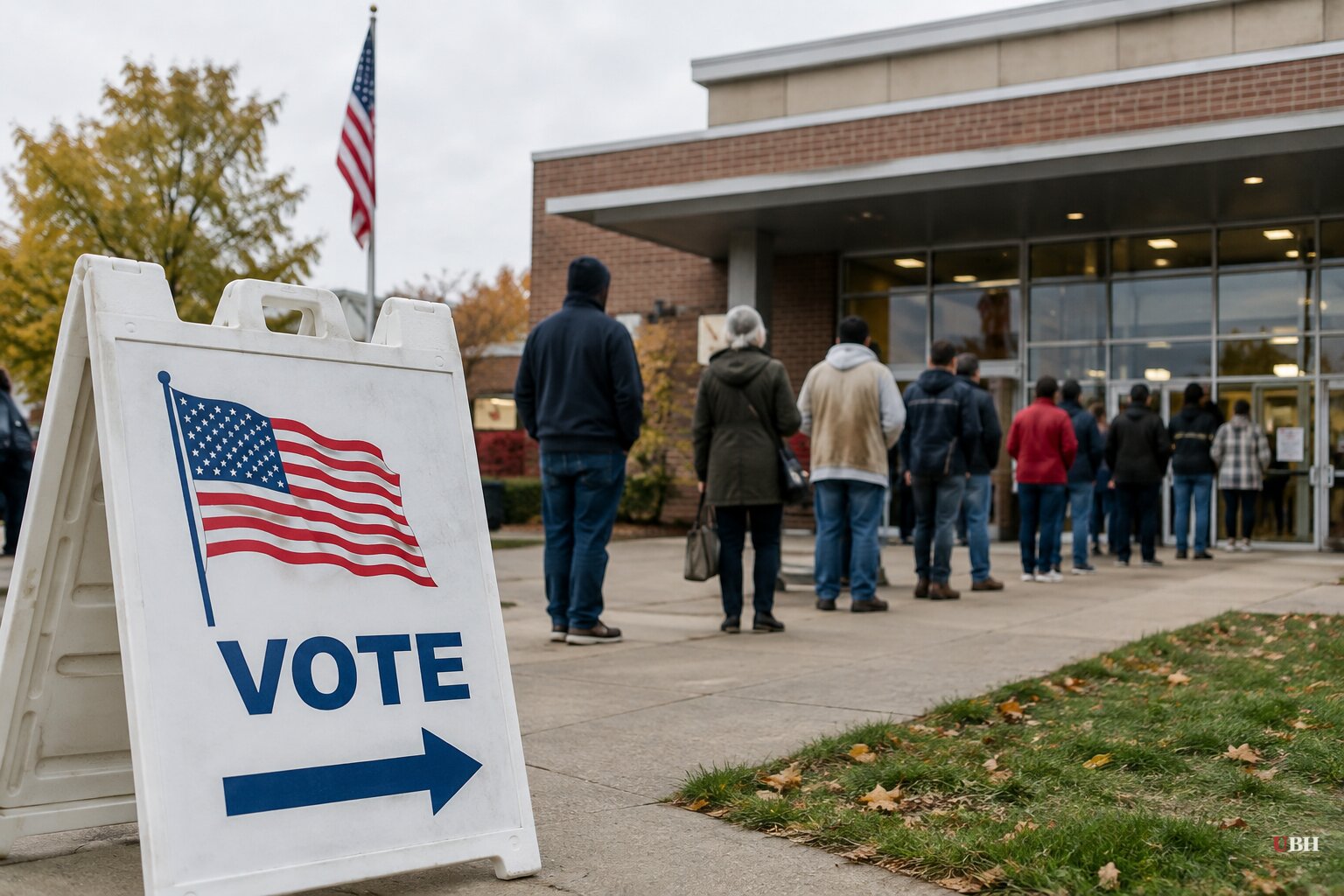
Ohio voters on Tuesday, Nov. 3, approved bans or restrictions on data centers in at least 14 municipalities. The results are unofficial until county boards certify them.
The state had 21 data center measures on the ballot across 18 municipalities. That is more than half of the 41 data center measures voted on nationwide. Ballotpedia counted measures in at least 13 states, with Ohio leading.
What passed
Most of the measures targeted "high impact" campuses drawing more than 25 megawatts of power. Thirteen municipalities voted on bans or heavy restrictions: Conneaut, Defiance, Granville, Grove City, Hubbard, Monroeville, Oregon, Pataskala, Piqua, Sunbury, Trenton, Upper Sandusky and Urbana. Results in Oregon were not available as of midnight.
The margins were lopsided in places:
- Sunbury: A charter amendment banning data centers of 25 MW or more passed with 78% of the vote. It was aimed at a possible hyperscale Amazon project of about $2 billion that was already paused under a city moratorium and pending further approvals.
- Trenton: A ban passed 80% to 20%. Organizers hope it blocks an 18-building Amazon Web Services campus. It likely will not affect a four-building AWS site already under construction nearby.
- Perry: More than 87% of voters approved a requirement that developers seeking tax breaks give the village financial guarantees.
- Wilmington: Around 80% of voters rejected rezoning in four separate referendums meant to accommodate a data center project.
- Pataskala: Voters approved a charter ban on large data centers.
- Ashville: Voters backed blocking a data center campus that is already under construction.
All five central Ohio communities with data center questions voted against the projects.
Piqua is the test case
The most closely watched vote was in Piqua, where Meta plans a campus on about 607 acres. Voters approved a charter amendment banning data centers with a peak load above 25 MW, 66.7% to 33.3%. They also recalled the mayor and two city commissioners, the Dayton Daily News reported.
It is not clear the amendment stops the Meta project. The city had already signed development and utility agreements for the campus. Miami County must certify the results by Nov. 24.
The backdrop
Ohio has more than 200 operating data centers, fifth most in the country. According to state data, companies plan to invest up to $40 billion in AI infrastructure in the state by 2030. The state already has 125 local data center moratoriums, as counted by Fortune.
Voters elsewhere have leaned the same way. Ballotpedia said six measures decided earlier this year in special and primary elections in other states all favored greater limits on data center development.
Polling points the same direction. An October survey of 1,650 Ohio adults by Ohio Northern University's ICAPP and SurveyUSA found 55% opposed data center construction in the state and 65% opposed tax breaks for these projects. A Gallup poll in May found about 70% of Americans opposed new data centers in their own area.
Local opposition has centered on electricity and water demand, tax incentives and a lack of transparency.
The industry's case
The industry argues the projects mean jobs and investment. Build American AI, a group linked to the super PAC Leading the Future, bought at least $2.54 million in Ohio television ads from Sept. 7 to Oct. 21, according to its Federal Communications Commission filings. The ads said data centers have brought more than $40 billion in investment and over 95,000 jobs to Ohio. "The future won't be built by politicians or special interests," one ad says. "It'll be built by American workers right here in Ohio."
The ads did not endorse a Senate candidate. Group spokesman Jesse Hunt confirmed the group is spending more than $5 million across Ohio, Wisconsin and Kansas.
Leading the Future had taken in about $125.79 million this cycle as of Oct. 29, according to FEC filings. That includes $50 million from Andreessen Horowitz, $25 million each from Marc Andreessen and Ben Horowitz, and $12.5 million each from OpenAI's Greg Brockman and his wife Anna.
Steve Everley of FTI Consulting, a communications firm that works with the data center industry, acknowledged the public mood. "The community concerns and the pushback and the questions—it's all real," he told The Epoch Times.
Politics and the Senate race
Data centers became a campaign issue in the Ohio Senate race. Democrat Sherrod Brown ran on ending data center tax breaks and making operators pay for the utility costs they create. Republican Sen. Jon Husted, appointed to fill Vice President J.D. Vance's seat, had backed the incentives and introduced the Ratepayer Protection Act. The bill passed the House with broad bipartisan support but fell short in the Senate, where Democrats said it left too much to the states.
Brown won the race, according to AP tallies cited in post-election reporting.
Brown's own finances drew scrutiny. His August 2026 personal financial disclosure shows his wife, Connie Schultz, holds between $265,002 and $550,000 in two mutual funds with indirect exposure to Amazon, Microsoft, Nvidia, Meta and Alphabet, according to Breitbart's review of the filing. Brown's campaign position on the projects is separate from those holdings, and no one has alleged a rules violation.
What comes next
A statewide ballot initiative to restrict larger data centers did not qualify for 2026 but could appear on the 2027 ballot. H.B. 646, a bill that could impose statewide moratoriums, is also pending in the legislature. Gov. Mike DeWine has not said how he would respond.
One large project sits outside the ballot fights. OpenAI, SoftBank, Nvidia and the U.S. Department of Energy are partners in a data center complex planned on federal land in Pike County, with an on-site 9.1-gigawatt gas-fired power plant.
The next concrete date is Nov. 24, when Miami County certifies Piqua's results and the city learns whether its signed Meta agreements survive a charter ban that voters approved by two to one.
Sources used for this briefing
7 links from 7 independent newsrooms (syndicated copies of the same report count once)
These are the sources it draws on, linked so you can verify.


