
Unbiased headlines. Facts, not spin.
Unbiased Headlines is an independently owned news organization. We bring you the facts, not opinions, written fresh from 110+ named sources. Sources linked so you can verify it yourself.
 energy
Notable (6/10)
Brazil Publishes Voluntary Fossil Fuel Phaseout Roadmap Days Before COP31 Opens in Antalya
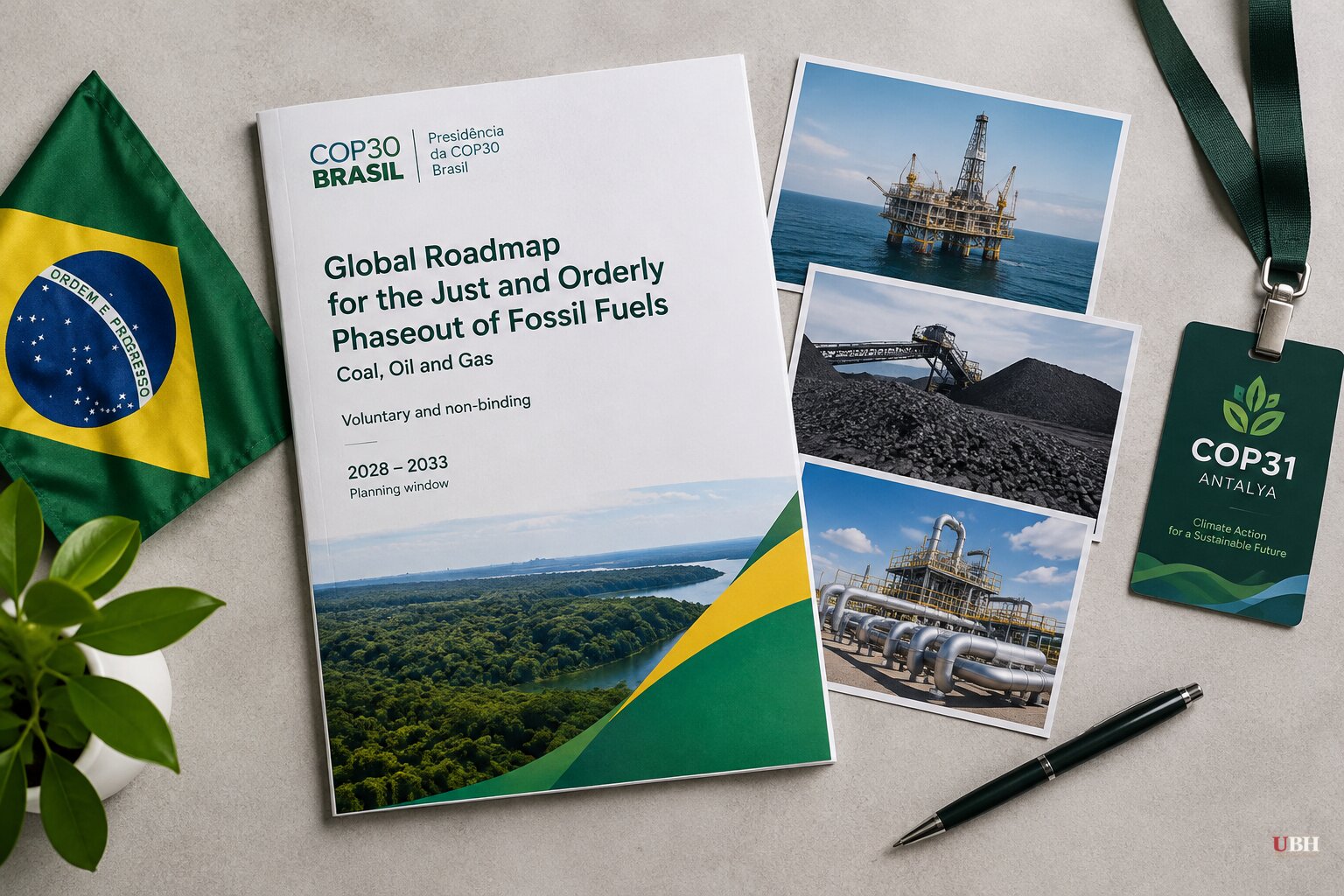
Brazil put out a plan on Tuesday, Nov. 3, for the world to move away from fossil fuels. Nobody has to follow it.
The COP30 presidency released the roadmap six days before the next UN climate summit, COP31, opens in Antalya, Turkey, on Monday, Nov. 9. Brazil hosted last year's summit in Belém. The document is voluntary and sits outside the UN negotiating system.
How Brazil got here
The roadmap is a consolation prize. The COP30 final agreement in 2025 never explicitly mentioned fossil fuels, after fierce opposition from major oil producers including Saudi Arabia and Russia.
Brazil's hosts offered to produce a voluntary roadmap instead. Nearly 200 nations had already adopted a COP28 text in Dubai in 2023 calling for "transitioning away from fossil fuels in energy systems."
The presidency's own conclusion is blunt. In the text, it says transitioning away from fossil fuels is "urgent, inevitable and yet possible." It also concedes that "there is no unique solution for this complex puzzle" and tells countries to tailor measures to their own circumstances.
What the roadmap says
The document proposes a "collective agenda" in three phases, running from 2028 to 2033. During that window, countries are supposed to draw up plans and rebuild their energy systems.
It centers on what it calls the "Belém Readiness Approach." That framework examines how exposed a country is to fossil fuels and how well it can handle a transition. It looks at energy demand in transport, industry and buildings, at fossil fuel supply, and at the broader economy, including fiscal dependence, investment and the cost of capital.
The text also says cuts in fossil fuel production must match declining demand. Low-emissions energy has to grow enough to keep supply reliable and affordable, the document says.
According to the COP30 presidency, energy accounts for 75% of global greenhouse gas emissions and forest loss for 11%. Brazil released a second roadmap the same day, on halting and reversing deforestation by 2030.
The presidency also admits the world is behind. Policies and plans announced so far "still leave the world short of the energy outcomes agreed in Dubai," the document says.
A call to act, not to negotiate
Brazilian officials say the point is implementation, not another round of talks. "We are not suggesting negotiations," COP30 president André Corrêa do Lago said. "Everyone can start to act now," he added, noting that the knowledge and technology already exist.
Corrêa do Lago told The Guardian the roadmaps should be handled by finance, transportation, energy and infrastructure ministries, not climate negotiators. "There is a different group of people that negotiate and that implement," he said.
COP30 chief executive Ana Toni said the roadmap would be discussed in Antalya on Nov. 10. Her pitch to governments was economic: "The transition is inevitable, so start planning now and as soon as possible, because this will be good for your country, for your society, for your economy."
Critics say it is too soft
Joeri Rogelj, a professor of climate science and policy at Imperial College London, called the roadmaps a step forward but limited. They "fall short of clearly indicating the pace of change needed by including no timeline or key benchmarks," he said. That leaves much undefined about reaching the Paris goal of holding warming well below 2°C, and preferably to 1.5°C.
Oil Change International's Romain Ioualalen called the document "a valuable blueprint" but warned against another round of dialogue. He objected to the suggestion that global action on fossil fuel supply could wait until the 2030s. "That would be a grave mistake," he said, arguing that existing extraction projects already commit the world to emissions nearly seven times the remaining 1.5°C carbon budget. He also criticized finance tools in the document, such as debt swaps and derisking, as having a track record of failing.
Fanny Petitbon, a policy analyst at 350.org, said the roadmap "must not end up as just another report gathering dust on a shelf."
One cost question runs through the document: who pays. Ioualalen argues that rich countries could raise trillions a year by taxing polluters and extreme wealth and ending fossil fuel subsidies. Those are his group's proposals, not terms of the roadmap.
Competing plans
The Brazilian roadmaps are separate from a parallel effort. In April, governments met in Santa Marta, Colombia, to discuss the transition. Nearly 60 countries formed a "coalition of the willing" outside the COPs to write their own national phaseout roadmaps. Germany, France and the Netherlands have since produced national plans.
According to The Guardian, the Santa Marta roadmaps are far more specific and prescriptive than Brazil's.
What COP31 will and will not do
A new fossil fuel agreement is unlikely at the two-week summit, according to AFP. Türkiye holds the COP31 presidency and Australia is steering the negotiations. Together they are championing a voluntary programme on "electrification."
Critics have warned that the electrification text does not specify the energy source. That, they say, could let electrification serve as cover for fossil fuel expansion rather than clean power.
The test comes Nov. 10 in Antalya, when the roadmap is on the discussion agenda. Brazil says it is not up for negotiation, and the next fixed checkpoint in the document is the Second Global Stocktake in 2028. Between now and then, whether any government, especially a major oil producer, adopts the plan is entirely up to each capital.
Sources used for this briefing
7 links from 7 independent newsrooms (syndicated copies of the same report count once)
These are the sources it draws on, linked so you can verify.


