
Unbiased headlines. Facts, not spin.
Unbiased Headlines is an independently owned news organization. We bring you the facts, not opinions, written fresh from 110+ named sources. Sources linked so you can verify it yourself.
 energy
Major Story (8/10)
Event date: November 4, 2026 ·
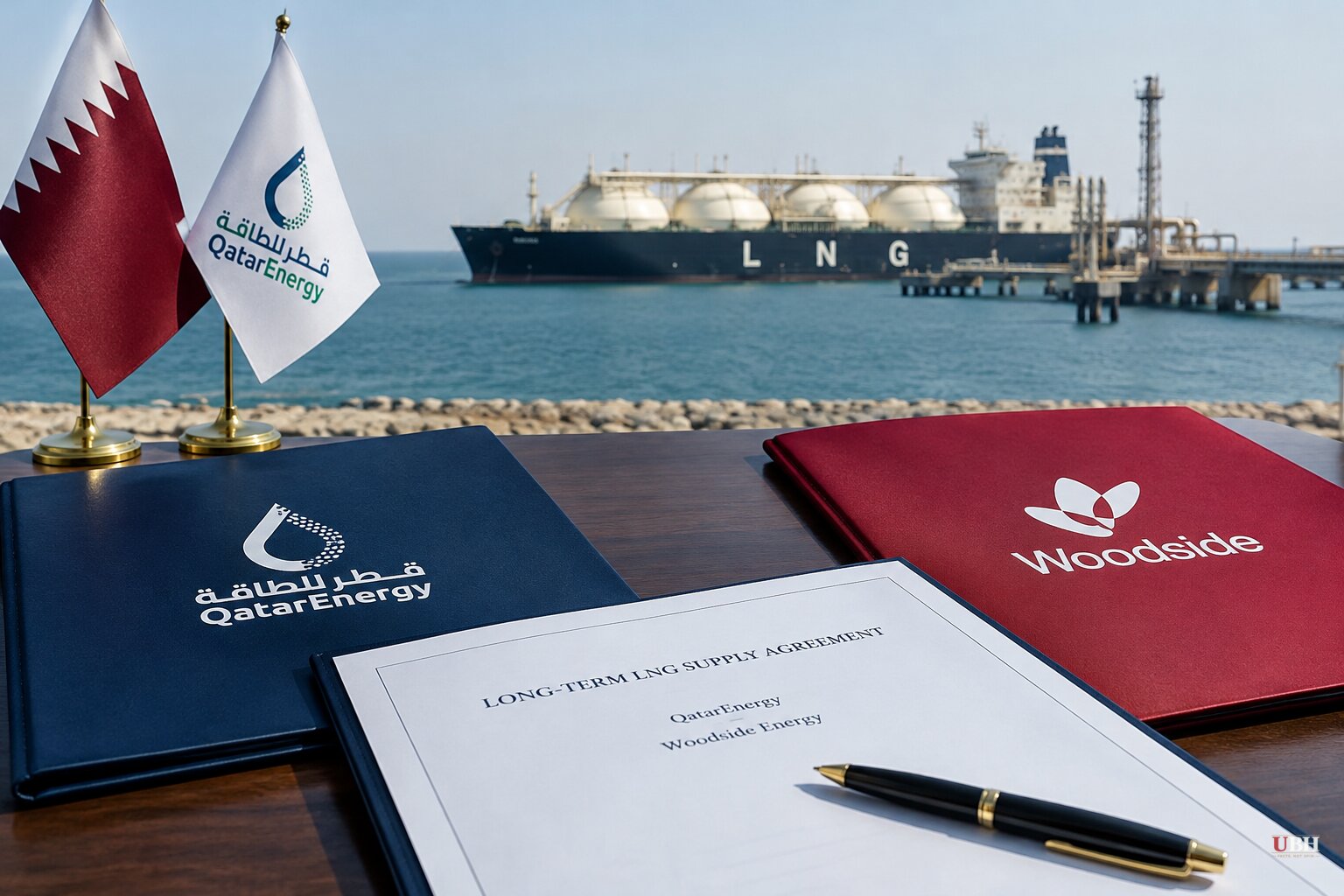
QatarEnergy Signs 20-Year Woodside Deal, Set to Become Largest Buyer of U.S. LNG
Since the U.S.-Israeli war with Iran began Feb. 28, Qatar's LNG exports have fallen below a third of their usual level. The Strait of Hormuz is the country's only export route to customers outside the Gulf, and traffic through it remains largely blocked. The new development is where Doha is putting its money in response: American gas.
In late October, QatarEnergy signed two U.S. supply agreements totaling 7 million tonnes a year. One is a 20-year deal for up to 3 million tonnes annually from Woodside Energy's Louisiana LNG project. The other is a deal with Cheniere Energy for up to 4 million tonnes a year from Sabine Pass and Corpus Christi, running through 2054.
QatarEnergy says the volumes make it the largest buyer of U.S. LNG. The world's second-largest LNG exporter before the war is now buying from the country that overtook it as top supplier in 2023.
What the contracts say
The Woodside supply is free-on-board. It starts when the project's second train begins operating and rises to the full 3 million tonnes when the third train starts up. QatarEnergy expects first deliveries in 2030, according to Qatar's state news agency.
Louisiana LNG, near Lake Charles, will have three trains with a combined 16.5 million tonnes a year of capacity. Woodside took a final investment decision in April last year and is targeting first LNG in 2029. Woodside CEO Liz Westcott called the deal "a strong vote of confidence in Louisiana LNG."
The Cheniere volumes begin in 2031. Add QatarEnergy's 70% stake in the Golden Pass project in Texas, which began exports in March, and the company is projected to control 23.7 million tonnes a year of U.S. LNG by 2033, according to Wood Mackenzie projections.
That gas is not headed to Qatar. QatarEnergy plans to resell it to customers in Asia and Europe.
Why Doha is doing it
Al-Kaabi framed the purchases as part of a "long-term growth and diversification strategy." Qatar was already buying stakes in LNG projects across North America and Africa before the war started.
The damage at home gives the push urgency. Iranian missile attacks in March knocked out about 17% of Qatar's export capacity. QatarEnergy estimated the hit at $20 billion in annual revenue, and repairs could take up to five years.
QatarEnergy has also declared force majeure, in some cases for up to five years, on certain long-term contracts. Last week it extended force majeure on deliveries to Asia and Europe through the end of December 2026. Italy's Edison said it received the extension notice. Buyers in Pakistan and Bangladesh were also told their notices were extended.
U.S. cargoes avoid Hormuz entirely. That matters to a company that, before the war, had a record of never missing a shipment.
Jason Feer, global head of business intelligence at shipping broker Poten & Partners, said expanding outside the Middle East addresses the perception that QatarEnergy leaned too heavily on Gulf production. He said it could help restore the company's reputation for reliability.
What it does not fix
None of this helps a utility short on gas this winter. Deliveries start in 2030 and 2031. Customers facing shortages now get nothing from these contracts.
The length of the commitments is what caught analysts' attention. "If you were just trying to fill a three- or four-year gap, you wouldn't be signing 20-year contracts," Hersh Oberoi, global research director at Balfour Capital Group, told Reuters. "Qatar is clearly treating the Hormuz risk as something that is not going away."
Al-Kaabi's own stated position points the other way on the strait itself. He has said Qatar is "ready to resume normal operations within a few weeks of the reopening of the Strait of Hormuz." He has also ruled out pipelines as an alternative, saying in September that building redundant facilities "makes no economic sense."
Saudi Arabia and the UAE are expanding pipeline networks to move crude and refined fuels around Hormuz. LNG can't do that. Gas would have to be piped out as gas and liquefied elsewhere.
The U.S. side
Cheniere, which signed one of the deals, raised its full-year guidance last week. It now expects adjusted EBITDA of $8.75 billion to $9.25 billion, up from $7.9 billion to $8.4 billion. Third-quarter revenue rose 39% to $6.17 billion on 188 cargoes shipped. The company said Middle East gas disruptions lifted demand for U.S. cargoes.
Bob McNally, founder of Rapidan Energy Group and a former White House energy adviser under George W. Bush, recalled that U.S. officials once worried Washington would become as dependent on Qatar for LNG as it was on OPEC for oil. The shale revolution flipped that. A country that once looked like America's future supplier is now a customer.
Qatar keeps a cost edge. Its production costs are estimated at $3 to $5 per million British thermal units, roughly half those of many U.S. projects. The International Energy Agency estimates about 300 billion cubic metres of new global LNG export capacity will arrive between 2025 and 2030, a roughly 50% expansion. The U.S. is expected to supply more than half of it and Qatar about a quarter.
What comes next
Al-Kaabi told Reuters QatarEnergy expects to sign more long-term U.S. and other supply deals by the end of the year, targeting volumes "much higher" than the 7 million tonnes agreed so far. He said the company is talking to "everybody," including Venture Global, and that buying LNG requires no capital spending and costs far less than building pipelines or new trains.
Feer expects another two or three U.S. deals, and possibly agreements elsewhere. Whether Venture Global is the next signature, and how much gas Qatar commits to, should become clear before the end of December, when the current force majeure period is set to run out.
That is also the point at which customers will learn whether it gets extended again.
Sources used for this briefing
7 links from 7 independent newsrooms (syndicated copies of the same report count once)
These are the sources it draws on, linked so you can verify.


