
Unbiased headlines. Facts, not spin.
Unbiased Headlines is an independently owned news organization. We bring you the facts, not opinions, written fresh from 110+ named sources. Sources linked so you can verify it yourself.
 energy
Major Story (7/10)
Event date: November 1, 2026 ·
Democratic Governors Who Ran on Data Center Limits Will Oversee 45% of Planned U.S. Capacity, Goldman Sachs Says
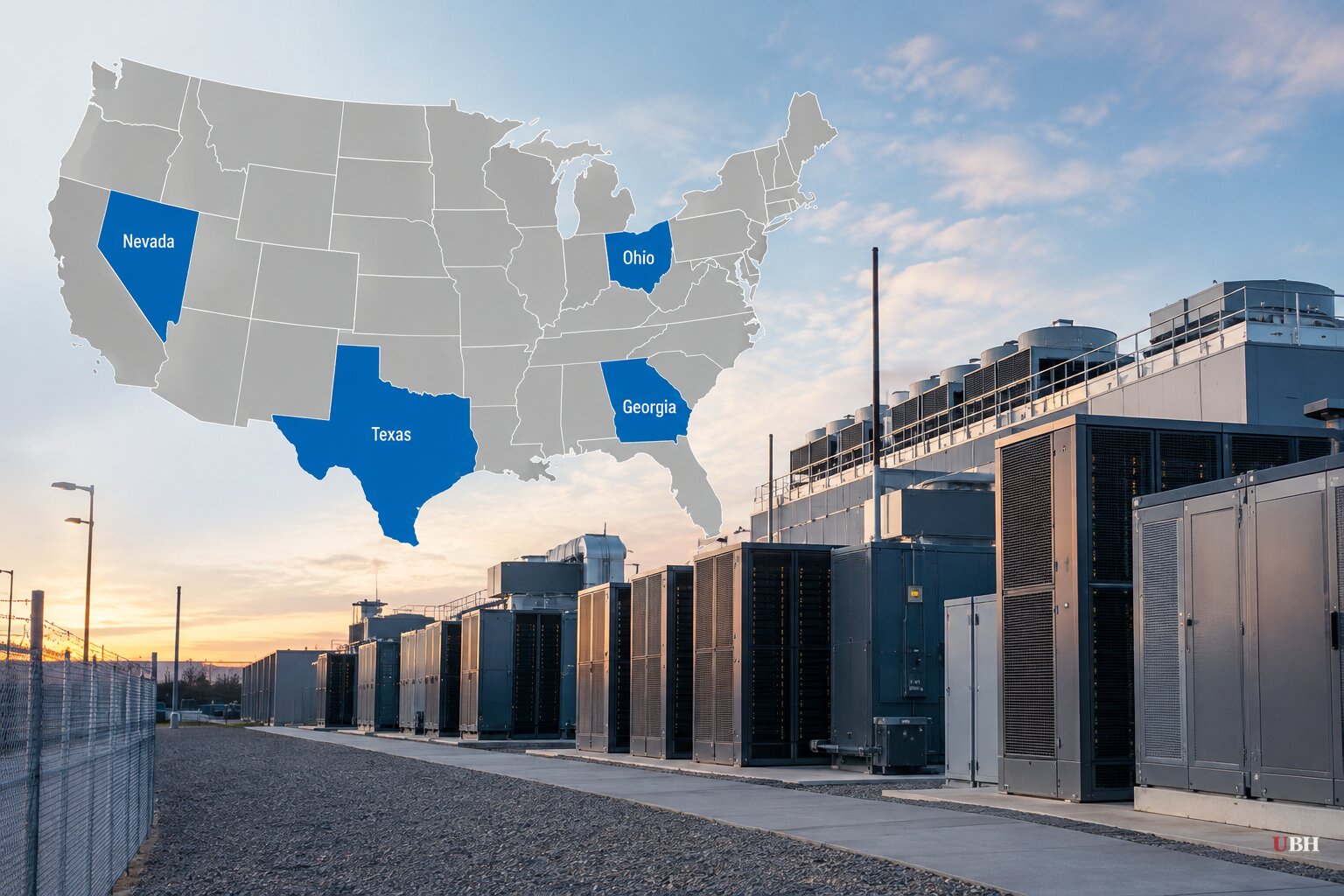
Voters sent a message on Tuesday, Nov. 3: they are tired of data centers in their backyards. Now the question is what the governors-elect do with it.
CNN reported that Democrats gained gubernatorial seats in Nevada, Georgia, Ohio and Texas, where candidates campaigned on tightening data center regulations. Proposals from the governors-elect include ending tax breaks, tightening climate and electricity restrictions, and allowing local governments to impose their own moratoriums on data center construction.
Goldman Sachs estimates that, come January, states controlled by Democrats who support expanding or extending AI construction moratoriums will account for 45% of America's planned data center capacity. A quarter of the planned national AI infrastructure buildout is in Texas alone.
That does not mean half the pipeline is frozen. CNN noted that Democratic governors couldn't stop every data center from being constructed even if they wanted to, and that Donald Trump is still president. In Texas, Republican Gov. Greg Abbott had already imposed a data center moratorium that Democratic governor-elect Gina Hinojosa campaigned on extending until lawmakers establish stronger AI regulations. ERCOT and the PUCT are among the regulatory bodies observers are watching on grid reliability in the state with the largest data center queue.
The money at stake
Columbia Business School economist Stijn Van Nieuwerburgh expects AI infrastructure spending to approach $1 trillion a year for the foreseeable future. ING economists say the AI investment boom has accounted for as much as a quarter of total U.S. economic growth this year.
Those are big numbers resting on a political foundation that just shifted. CNN reports the economic benefits are already real, supporting thousands of jobs. Mona Dajani, co-chair of Cooley's infrastructure, energy and real estate practice, said state and local politicians have enough jurisdiction to change whether some projects get financed, and that hundreds of developments still awaiting permits, utility service or tax incentives could be particularly exposed. Delays add costs: interest, equipment commitments and utility expenses keep accruing while a project is on ice.
The grid is also under real pressure. The Energy Information Administration projects record U.S. electricity consumption in 2026 and 2027, with data centers playing a significant role. PJM capacity auctions have hit their price caps. An Ohio State University study, discussed by OSU ag economist Ani Katchova, expects data centers owned by Amazon, Apple, Google, Microsoft, Meta and Oracle to account for about 1% of the world's electricity by 2030. Katchova says concentrated hubs with smaller grid footprints would face very sharp electricity increases and that transmission bottlenecks could hit constrained areas, eroding on-farm profitability.
What the price data actually shows
The campaign message was simple: data centers mean higher bills. Democratic Senate candidate Sherrod Brown ran an Ohio ad saying no one is "getting a damn thing from it except higher electric bills." Democratic Senate candidate James Talarico ran a Texas ad alleging his opponent's data center support led to "skyrocketing utility bills." Tens of millions of dollars have been spent on ads making such claims, according to AdImpact, as cited by FactCheck.org.
The evidence is messier. A July report from Lawrence Berkeley National Laboratory and the Brattle Group found that load growth, including from large data centers, contributed to significant price increases in the PJM region in 2025. The same report found most of the observed price increases of the past few years were NOT due to data centers, and that until 2025, increased load growth was associated with lower retail electricity prices. In Texas, prices have risen only modestly.
The other side has its own problem. Energy Secretary Chris Wright said on Sept. 17 that data centers "almost always are accompanied by a multiyear freeze in electricity prices" and are "a massive force to reduce the price of electricity." FactCheck.org found that is possible in principle and has happened in some places, but it omits data, including from his own agency, showing the opposite is happening for many Americans, at least in PJM. A Trump administration official gets the same scrutiny as a Democratic ad.
Public opinion is not in dispute. A Gallup poll earlier this year found 71% of Americans oppose construction of a data center in their local area. Another poll cited by FactCheck.org found rising electricity prices is the top reason to oppose them.
Making the builders pay
The more practical answer than a moratorium may be contract terms that keep costs off households. Google has proposed an agreement with Xcel Energy for its 780-megawatt Project Skyway data center in Pine Island, Minnesota. Google would finance Xcel's addition of 1.4 gigawatts of wind, 200 megawatts of solar and 300 megawatts of battery storage.
The deal includes minimum monthly charges based on at least 75% of contracted capacity, even if Google's consumption falls below that level. Exit fees could reach the equivalent of as much as eight years of minimum demand charges. Xcel executive Amanda Rome said: "Nobody wants to have a big buildout and then have nowhere for that power to go and nobody to pay for that power. That's where these protections come in."
The structure puts the risk of an AI downturn on the company, not on ratepayers. Xcel says the new resources will serve the wider grid. Because wind and solar generation fluctuate with weather and battery storage does not generate additional electricity, the project's combined capacity overstates firm supply. Local residents remain unconvinced: in a Pine Island survey conducted in August, 75.8% of participants opposed the project.
Big tech is also paying for existing nuclear output. Amazon has taken 690 megawatts from Constellation's Calvert Cliffs plant in Maryland, and Google has signed an agreement that will bring 890 megawatts of additional nuclear capacity into the United States. Constellation is investing more than $4.3 billion to upgrade 11 reactors in Illinois, Pennsylvania and New Jersey. The Department of Energy is providing up to $4.4 billion in loans to support the restart of three shuttered plants, aiming to restore about 2.25 gigawatts. Palisades in Michigan is contracted to be generating again by March 2027.
What comes next
The Google-Xcel agreement is pending approval from the Minnesota Public Utilities Commission. The new governors' moratorium and tax-break proposals will have to be pursued from January onward, and Texas law grandfathers in some projects' permits, protecting them from future changes to local permitting requirements. How much of the Goldman-estimated 45% of planned capacity ends up delayed will depend on those fights.
Sources used for this briefing
6 links from 6 independent newsrooms (syndicated copies of the same report count once)
These are the sources it draws on, linked so you can verify.


