
Unbiased headlines. Facts, not spin.
Unbiased Headlines is an independently owned news organization. We bring you the facts, not opinions, written fresh from 110+ named sources. Sources linked so you can verify it yourself.
 energy
Major Story (8/10)
Event date: November 4, 2026 ·
Iran Links Hormuz Exemptions to Indian Medicine Imports and Chinese Backing, While Indian Sailor Dies in Oman Attack
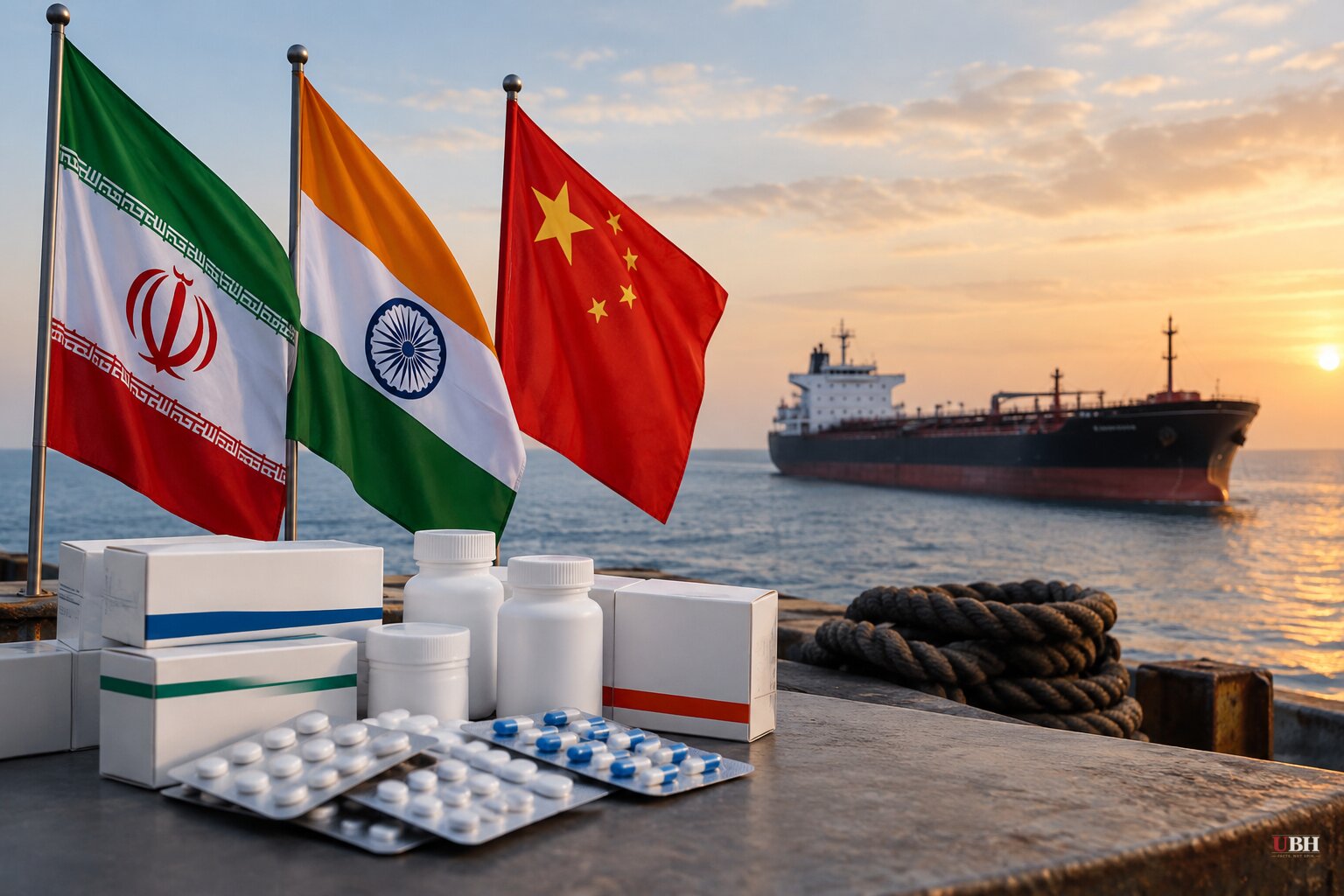
Since the U.S. and Israel launched strikes on Iran on Feb. 28 and Tehran moved to close the Strait of Hormuz, Iran has sorted shipping into those it lets through and those it screens. Amir Hayat-Moghaddam, deputy chairman of the Iranian parliament's National Security and Foreign Policy Committee, has now put reasons on that sorting.
Speaking to the Iranian Students' News Agency on Tuesday, Nov. 3, he said Iran has exempted India, China, Iraq and Qatar from transit restrictions. "Ships from these countries pass freely, and the Americans do not intercept them either," he said. The interview was in Farsi.
"We are conducting business, and each of these exemptions has a distinct reason," he added.
What Tehran says it wants in return
Hayat-Moghaddam said the Indian exemption exists so Iran can import medicines from India. The Chinese exemption, he said, is meant to "secure" Beijing's political backing for the Islamic Republic.
Qatar's treatment is different. He said Iran levies no transit tolls on Qatari vessels.
Indian and Chinese ships do pay transit fees, he said. He did not say whether Iraqi vessels pay.
That qualifies the phrase "pass freely." Under his own description, two of the four exempted flags are paying Tehran to cross a waterway Iran has restricted since February.
His claim that U.S. forces do not stop these ships is also his own. Washington imposed a naval blockade on Iranian ports weeks after the war began, and no U.S. official is quoted on how that blockade treats vessels from the four countries.
India's exposure
India imports almost 90% of its crude oil. The Union Petroleum Ministry has said that before the current conflict, over 45% of crude imports and nearly 90% of LPG imports moved through the strait. Indian press reports say the crude share has since fallen to roughly 30% as New Delhi bought more from Russia, the U.S., West Africa and Fujairah in the UAE.
LPG remains the pressure point. About 90% of India's LPG imports transit Hormuz, and more than half its LNG imports from Qatar and the UAE do too. The International Energy Agency estimates that in 2025 almost two-thirds of India's LNG purchases came through the strait. The waterway is also a route for fertiliser.
India has not endorsed Iran's framing. The Indian government has called repeatedly for unimpeded energy supplies and freedom of navigation, and for a solution through dialogue and diplomacy. It has described the continuing attacks on commercial shipping as "deeply concerning."
Iran's ambassador to India, Mohammad Fathali, said in March that Iran would provide a secure route for India-bound vessels. "We believe that Iran and India are friends," he said.
The human cost keeps rising
On Monday evening an Indian sailor was killed in an attack on the commercial vessel MSV Al Jusufi near Limah in Oman. At least 15 Indian seafarers have died in attacks on ships in the region since the conflict began, according to figures carried by the Press Trust of India.
India's Ministry of External Affairs has given a separate count of 22 Indians, including 14 seafarers, killed in the West Asia conflict. Another Indian injured in an attack on a Saudi airport has since died, pushing one reported total to 24. The tallies differ in scope and date.
The EU has said the IRGC Navy requires ships to provide identification and information on cargo and destination. Other vessels undergo screening and, in some cases, pay fees.
Iran has also reported further tanker fires in the strait, adding to what the IRGC has described as incidents on routes it calls unauthorized.
What is still open
No exemption list has been published. Iran's account rests on one lawmaker's interview, and neither New Delhi nor Beijing has been quoted confirming the terms he described. Neither has said whether it agreed to pay fees.
Indian shippers still need to know whether an informal exemption from a lawmaker, with fees attached, protects a hull from the attacks that killed an Indian seafarer on Monday.
Sources used for this briefing
8 links from 8 independent newsrooms (syndicated copies of the same report count once)
These are the sources it draws on, linked so you can verify.


