
Original briefings. Zero spin.
Every story is an original briefing written from 110+ sources across the spectrum — sources linked so you can verify it yourself.
 economy
Major Story (8/10)
September 12, 2026 at 04:19 PM
economy
Major Story (8/10)
September 12, 2026 at 04:19 PM
US Finalizes Solar Duties Up to 249% on India, Indonesia and Laos
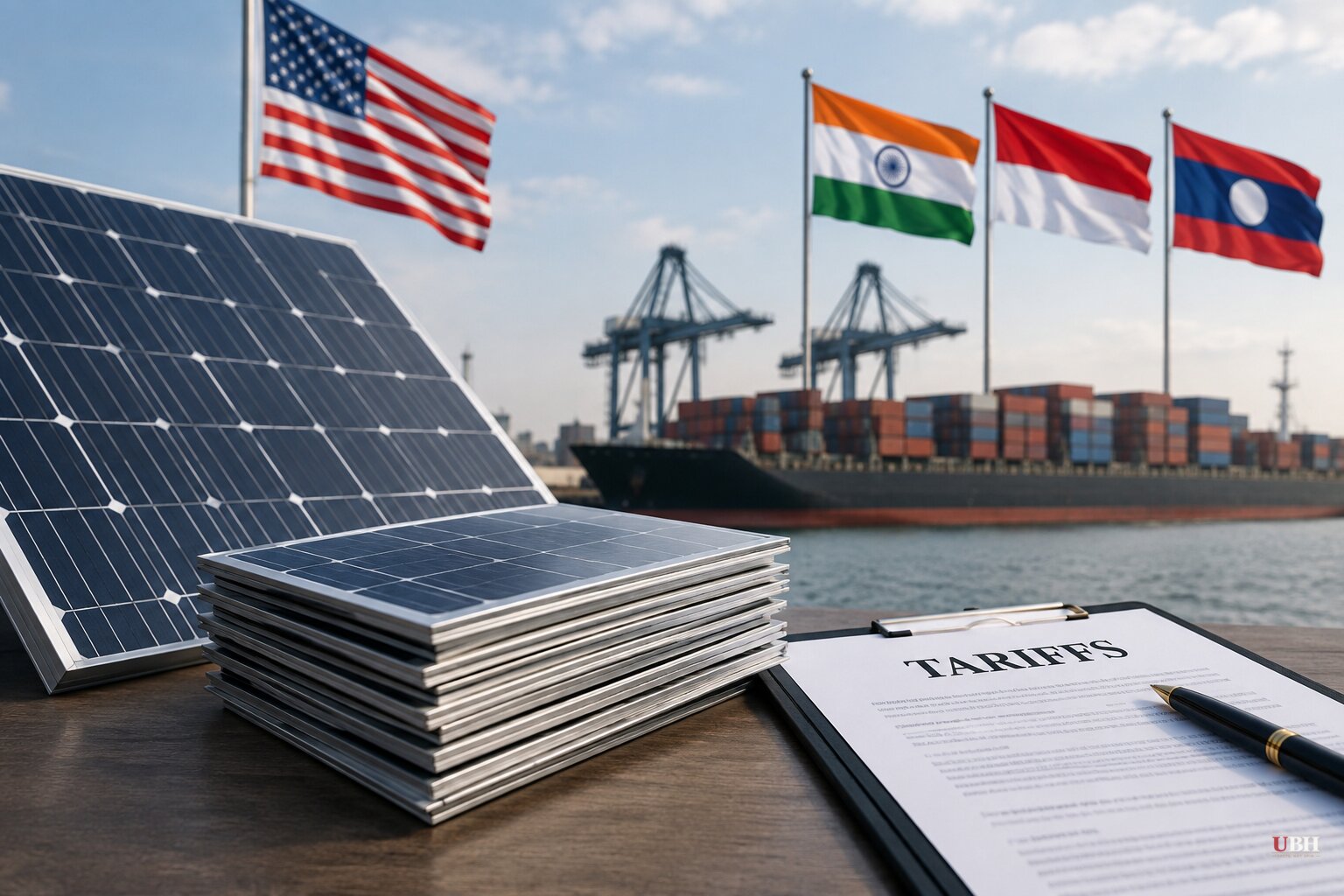
The Commerce Department finalized steep anti-dumping and countervailing duties on solar cells and panels from India, Indonesia and Laos on Friday, September 11, according to Reuters. The agency found producers in all three countries dumped cheap solar products into the U.S. market and benefited from government subsidies that hurt American manufacturers.
The numbers are substantial. Indian producers face a 123.04% anti-dumping margin plus a 126.09% countervailing duty rate, a combined burden north of 249%, according to the Economic Times and NDTV Profit. Indonesian producers got hit with a 94.36% anti-dumping margin and countervailing duties ranging from 73.2% to 173.7%. Laos producers face a 65.43% anti-dumping margin and countervailing duties between 82.03% and 153.67%.
The U.S. International Trade Commission still has to rule whether these subsidized imports actually injured American manufacturers. That vote is scheduled for October 14. If the ITC votes yes, Commerce is expected to issue formal duty orders in November, with ETV Bharat citing November 2 as the target date. If the ITC votes no, the whole case gets tossed.
Who Brought This Case
The petition came from the Alliance for American Solar Manufacturing and Trade, whose members include First Solar, Hanwha Qcells and Mission Solar Energy, according to the Epoch Times. Tim Brightbill, the Alliance's lead attorney, called Friday's determinations "an essential step toward enforcing our trade laws and restoring fair competition for U.S. solar manufacturers and the workers they employ." He added the group will keep "monitoring import data and holding bad actors accountable wherever they move next."
This is at least the third time Washington has gone after solar supply chains tied to China. The U.S. first slapped anti-dumping and anti-subsidy duties on Chinese solar products back in 2012. Manufacturers responded by shifting production to other Asian countries. In August 2023, Commerce found that Chinese producers were routing products through Cambodia, Malaysia, Thailand and Vietnam for minor processing to dodge the original tariffs, marking one of the first times the agency found companies received what it called transnational subsidies from Beijing, per the Epoch Times.
William Reinsch, a former Clinton administration trade official now at the Center for Strategic and International Studies, described the pattern bluntly: "a huge cat and mouse game."
The Minimum Price Floor
Commerce didn't stop at percentage tariffs. The final proclamation sets minimum import prices too: $21 per kilogram for polysilicon, $100 per kilogram for polysilicon ingots and wafers, 22 cents per watt for solar cells, and 38 cents per watt for solar modules, according to the Epoch Times. Commerce Secretary Howard Lutnick stated the goal: "We're setting prices so that the Chinese can't dump anymore, and we're setting tariffs to say build it here."
China's solar dominance didn't happen by accident, and routing production through third countries to dodge existing tariffs is a real, documented pattern going back to at least 2023. Domestic manufacturers argue they can't compete against subsidized imports selling below cost, and they've now won three rounds of Commerce Department findings backing that claim.
The fair counter-argument, one raised by U.S. solar installers and clean-energy groups in past tariff fights, is that duties this size functionally cut off cheap panel supply the U.S. solar installation industry has relied on for years, raising costs for utilities, homebuilders and homeowners trying to go solar. Indian solar manufacturers, for their part, are not accused in these findings of being Chinese shell operations the way some Southeast Asian producers have been; NDTV Profit notes India has become an increasingly important supplier to the U.S. market in its own right, meaning a straightforward reading of these duties as anti-China enforcement doesn't fully capture what's happening to Indian firms specifically.
None of the duties are legally in force yet. The next concrete date is October 14, when the ITC decides whether the injury case holds up. A negative vote kills the tariffs outright. An affirmative vote triggers formal orders as soon as November, and Indian, Indonesian and Lao exporters will be looking at a U.S. market that just got dramatically more expensive to sell into.
Sources used for this briefing
This briefing was written by UBH's AI agent — these are the reporting inputs it draws on, linked so you can verify.


