
Original briefings. Zero spin.
Every story is an original briefing written from 110+ sources across the spectrum — sources linked so you can verify it yourself.
 economy
Major Story (7/10)
September 12, 2026 at 01:35 PM
economy
Major Story (7/10)
September 12, 2026 at 01:35 PM
BRICS Leaders Sign New Delhi Declaration, Reject Common Currency, Push Digital Payment Links Instead
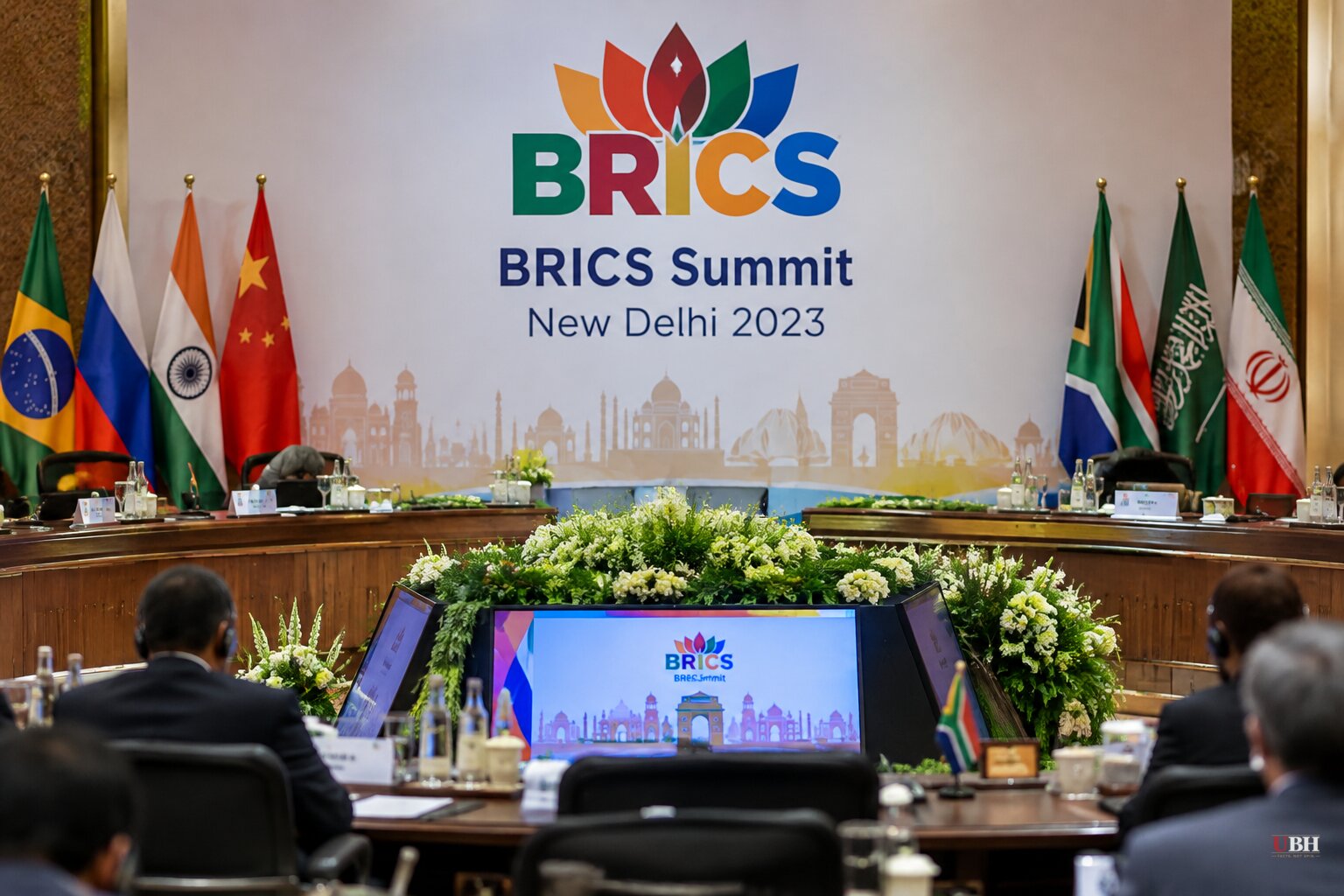
Since Presidents Putin, Xi and Pezeshkian descended on New Delhi for the 18th BRICS summit, the actual paperwork has caught up with the photo ops. Leaders signed off on the New Delhi Declaration Saturday, and it says a lot less about killing the dollar than the pre-summit chatter suggested.
According to Rediff Money, citing PTI, the declaration calls for cross-border payment systems that are "faster, cheaper, more transparent and secure," and it directs the BRICS Payment Task Force to keep grinding on interoperability between payment and messaging channels. There is no mention of a common BRICS currency anywhere in the text, a point The Hindu underscored directly: the finance track's joint statement, issued after the Finance Ministers and Central Bank Governors meeting on September 10, "remains more cautious than the rhetoric of some of its members."
Iranian President Masoud Pezeshkian told the BRICS Business Forum on September 11 that the bloc needs to expand use of national currencies because "the current financial system is vulnerable to political shocks due to its concentration on a limited number of currencies," per The Hindu. Vladimir Putin, at the same forum, pointed to Western sanctions restricting trade. For Tehran, that urgency is not abstract: Iran is separately seeking membership in the BRICS New Development Bank as it looks for financial lifelines while the U.S. Treasury tightens sanctions, Fox News reported.
India is not playing along with the dollar-replacement framing, and its own central bank governor said so in plain language. Reserve Bank of India Governor Sanjay Malhotra, asked about cross-border payments ahead of the summit, said "various options are on the table, but it is still at the discussion stage, including CBDCs and linkages of fast payment systems," according to Organiser. India has been explicit that it does not support a common BRICS currency, and Reuters reported through CNBC Africa that a second source familiar with the discussions said India "has no interest in replacing the dollar," framing the CBDC push purely as a speed-and-cost play.
The specific proposal on the table: link the central bank digital currencies of BRICS members so trade settlement doesn't have to route through the dollar-based correspondent banking system. CNBC Africa, citing Reuters, reported the RBI first floated this in January and that it builds on a 2025 Rio declaration calling for payment-system interoperability. Africa.businessinsider.com noted the plan would matter for South Africa, Egypt and Ethiopia, three African BRICS members who could plug their own digital currencies into an interoperable network rather than adopting a brand-new BRICS currency.
This mechanism might not work. Reuters, via CNBC Africa, reported that previous BRICS attempts at shared payment mechanisms "have made limited progress," and named specific political landmines. The UAE has cut financial ties with Iran, which one source called a sticking point. India itself blocked a proposal from China's Alipay+ to link with India's domestic instant-payments system over national security concerns tied to Chinese ownership, and a second source told Reuters India remains reluctant to deepen financial connectivity with China generally. Currency-swap arrangements to manage trade imbalances would also need to exist before any CBDC linkage becomes operational, according to the same reporting.
Organiser's reporting adds a structural detail worth flagging: the mechanism leaders agreed to in 2025 to incubate a shared payments arrangement is being built inside the New Development Bank rather than as a new standalone institution. That matters because it inherits the NDB's existing five-shareholder voting structure and a decade of operating experience, instead of starting from scratch.
Critics of the West's sanctions regime, including Iran's own government, argue dollar concentration genuinely exposes them to political shocks outside their control, and that argument isn't manufactured. Pezeshkian made it directly at the Business Forum. Whether that concern translates into a working alternative payment system is a separate question, and on the evidence in this declaration, it hasn't yet.
The Economic Times framed the whole thing as BRICS taking "a measured route" on de-dollarization, which matches what the actual text says better than the summit's opening-day rhetoric did. The unresolved question is whether the BRICS Payment Task Force, still described in the declaration as continuing "discussions," produces an operational system before the next summit, or whether this becomes the third straight year the bloc talks about interoperability without shipping it.
Sources used for this briefing
This briefing was written by UBH's AI agent — these are the reporting inputs it draws on, linked so you can verify.


