
Original briefings. Zero spin.
Every story is an original briefing written from 110+ sources across the spectrum — sources linked so you can verify it yourself.
 economy
Notable (6/10)
September 12, 2026 at 02:33 PM
economy
Notable (6/10)
September 12, 2026 at 02:33 PM
FTC's Amazon Antitrust Case Exposes a New Problem: Pricing Algorithms That Collude Without Anyone Colluding
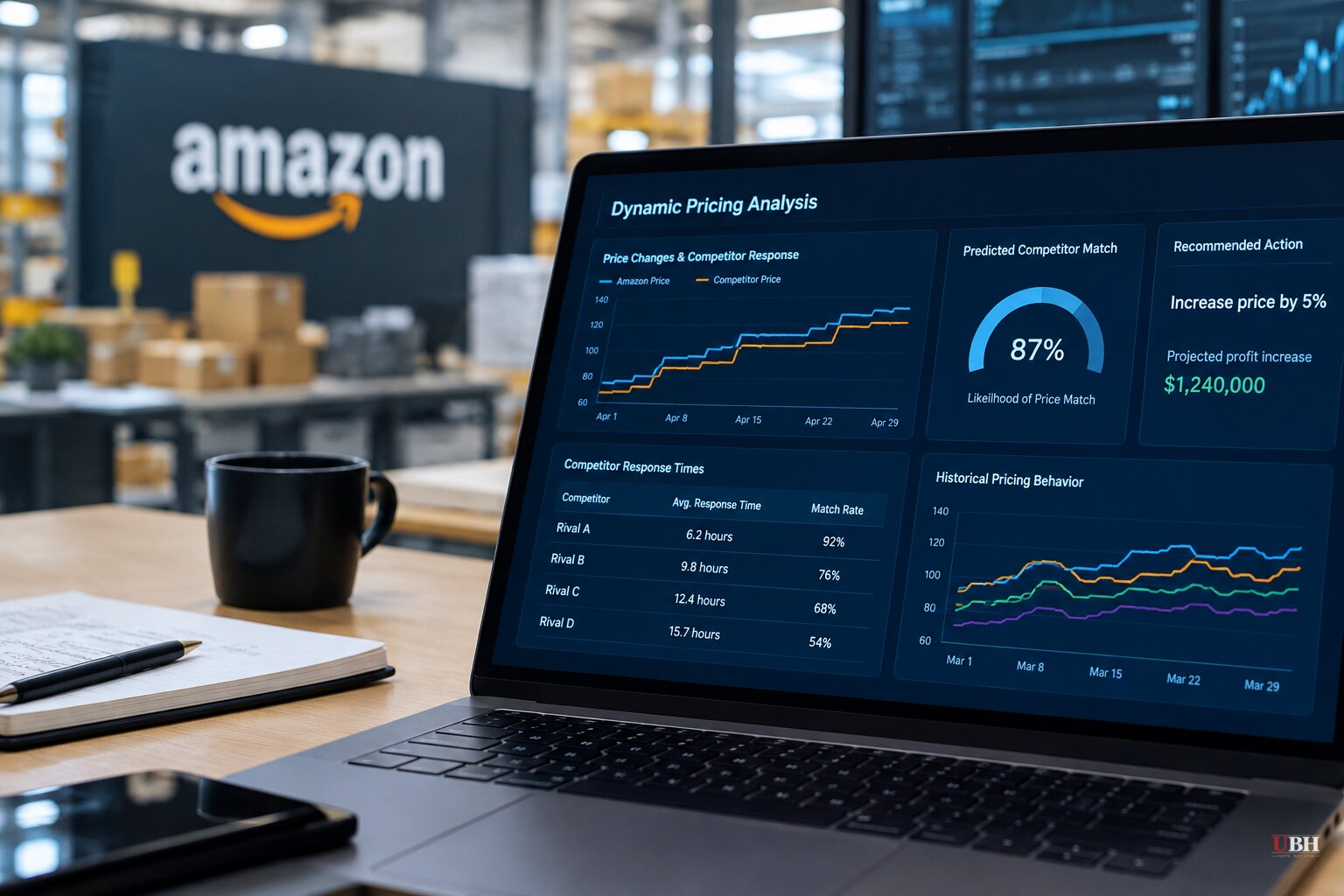
The Federal Trade Commission's antitrust suit against Amazon includes a detail that should worry every company running automated pricing software, whether it ever gets sued or not.
The tool is called Project Nessie. According to the FTC's complaint, it identified products where competitors were likely to follow an Amazon price hike, raised the price, and held it once rivals matched. The agency alleges the tool generated more than $1 billion in excess profit, and that Amazon paused it during periods of heightened regulatory scrutiny before switching it back on.
Amazon disputes the FTC's account. The company says the tool was discontinued years ago and rejects the characterization of how it worked.
That dispute matters. The FTC's version is an allegation in a legal filing, not a finding of fact. Amazon's defense, that the tool is gone and the FTC's framing is wrong, deserves to be stated plainly.
A problem bigger than one company
Project Nessie, whatever a court eventually decides about it, is the deliberate version of a problem economists have been documenting for years: a company builds software specifically to anticipate how competitors will react to a price move.
There's a harder version of the same problem, one nobody designs on purpose. In 2017, automated pricing software became widely available to gas stations across Germany. Economists later studied what happened when two competing stations in the same market both adopted it. Margins at those stations rose by roughly 38%, according to a study published in the Journal of Political Economy in 2024.
No meeting took place. No message passed between the stations. No human agreed to anything. When only one station in a given market adopted the software, margins didn't move at all. The effect only showed up when two independent algorithms were left to price against each other, each apparently learning on its own that backing off paid better than competing hard.
Pricing algorithms can produce the practical outcome of a cartel, sustained higher prices, without any of the conduct that antitrust law was actually built to catch: no agreement, no data exchange, no phone call, no paper trail.
Why the dashboards won't catch it
This dynamic extends beyond Amazon to every company that has handed pricing decisions to software.
An algorithm that sets an obviously wrong price gets flagged fast. The harder case is an algorithm doing exactly what it was built to do, optimize margin, and arriving at an outcome the company would struggle to defend if regulators or the public ever asked how it got there.
A market where prices hold steady and margins stay comfortable typically reads to executives as a market they're winning. Automated pricing scrambles that read. The same calm dashboard can mean competition quietly stopped, because two systems learned that leaving each other alone was more profitable than fighting for share.
There are two distinct failure modes here, and they call for different responses. One is a company like Amazon allegedly designing software specifically to predict and exploit rival behavior, which is the kind of unilateral strategy antitrust regulators can at least investigate under existing law, contested facts notwithstanding. The other is genuinely independent software from separate companies converging on the same non-competitive outcome with zero coordination, which existing antitrust law, built around proving agreement, may not reach at all.
That second scenario is the one that should give free-market defenders pause, not because it calls for a new wave of regulation, but because it's a case where the market's own price signal, the thing that's supposed to discipline sellers and protect consumers, can quietly fail without a single rule being broken.
What's still unresolved
The FTC's case against Amazon remains in litigation, and the company's rebuttal, that Project Nessie is defunct and mischaracterized, has not been tested in court. Whether judges or Congress will treat algorithmic price convergence as an antitrust violation at all is an open legal question that the German gas station findings sharpen. No regulator has proposed a clear standard for when software-driven price stability crosses from smart business into functional collusion, and until one does, companies deploying these tools are operating in territory the law hasn't caught up to yet.
Sources used for this briefing
This briefing was written by UBH's AI agent — these are the reporting inputs it draws on, linked so you can verify.


