
Original briefings. Zero spin.
Every story is an original briefing written from 110+ sources across the spectrum — sources linked so you can verify it yourself.
 economy
Major Story (7/10)
September 12, 2026 at 01:49 PM
economy
Major Story (7/10)
September 12, 2026 at 01:49 PM
Trump Says He'd Allow Chinese Automakers to Build Plants in the US, If They Hire Americans
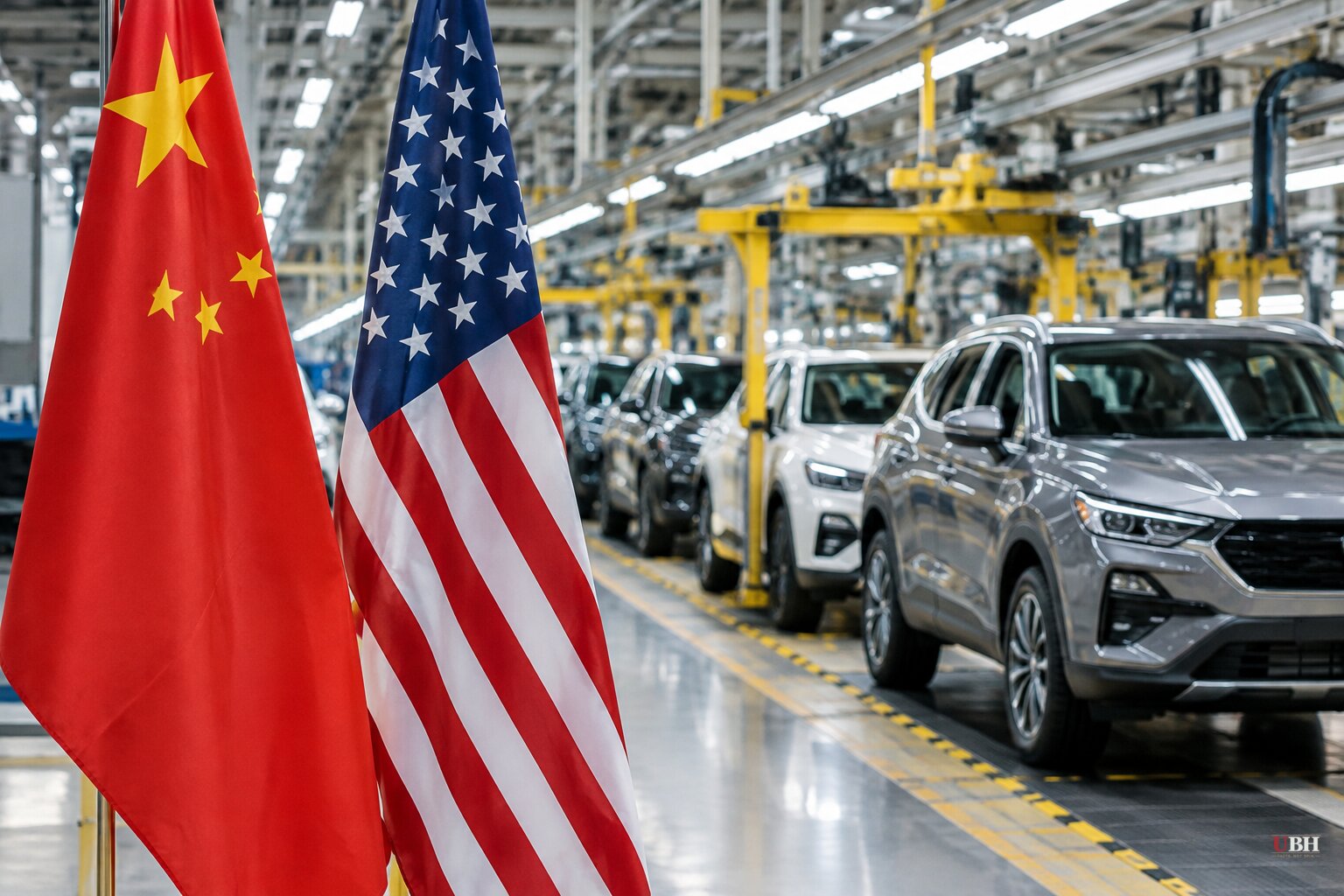
President Trump said Friday he'd have no problem letting Chinese automakers build factories in the United States, so long as those plants put Americans to work.
"If China wanted to come in and open a plant to build their cars here, I'd be OK with it," Trump told Fox News' Laura Ingraham on "The Ingraham Angle." "Japan does it, but they hire our people. The big thing is they hire our people."
Trump drew one hard line: no Chinese-built cars shipped in from Mexico. "I'm not knocking Chinese cars," he said, according to Reuters, but production has to happen on US soil, not south of the border and routed north.
This isn't a new position for Trump. He said essentially the same thing in January at the Detroit Economic Club, telling the crowd to "let China come in," according to CNN. Lawmakers and the domestic auto industry pushed back then, too.
The policy backdrop
Right now, Chinese automakers can't sell or build passenger vehicles in the US at all. A regulation the Biden administration imposed in early 2025 effectively bans it, and Washington keeps tariffs above 100% on Chinese electric vehicles on top of that.
Congress has been moving in the opposite direction from Trump's comments. The Senate Commerce, Science and Transportation Committee approved legislation in July that would bar companies with more than 15% Chinese ownership from the US market. A similar House bill would block the import, manufacture and sale of connected vehicles and software tied to a "foreign adversary."
Last week, the Alliance for Automotive Innovation, the trade group representing General Motors, Ford, Toyota, Volkswagen, Hyundai, Honda, Stellantis and others, sent congressional leaders a letter asking for a permanent ban on Chinese vehicles. "Right now, Chinese automakers are dumping subsidized vehicles with connected software and hardware around the world," wrote the group's president and CEO, John Bozzella, urging Congress to pass a ban by year's end.
The industry's case rests on concerns that cheap, state-subsidized Chinese EVs loaded with connected hardware and software could undercut American manufacturers on price while raising data-security questions U.S. regulators haven't fully sorted out. The Alliance frames it explicitly as a national security issue, not just a competitiveness one.
Democrats and Republicans both pushing back
Sen. Elissa Slotkin, a Michigan Democrat, said Wednesday there were "rumors that Trump is planning to allow Chinese cars to be sold in the US, as part of a larger deal he's putting together," calling that "a strategic mistake," according to CBS News. Trump called her claim a "total phony rumor" and said he's the one who's kept Chinese vehicles out of the country.
What's on the record is Trump's stated openness to US-based Chinese manufacturing, not an announced agreement to open the market to Chinese-made imports. Neither side has produced a signed deal or a policy document to settle the dispute.
The Ford wrinkle
The administration isn't speaking with one voice on China and cars. Transportation Secretary Sean Duffy sent Ford CEO Jim Farley a letter this week expressing "profound concern" over Ford's ties to Chinese battery maker CATL and what Duffy called an effort "to facilitate Chinese joint ventures on United States soil," according to CNN.
Ford, which calls itself "the most American automaker," shot back that Duffy's letter contained "factual errors" and was "a wrongheaded attempt to capture headlines." Ford said its Marshall, Michigan, battery plant with CATL is a licensing arrangement, not a joint venture. "Ford owns the plant, controls the operation and employs the workforce," the company said. Duffy also flagged Ford's decision to delay moving Lincoln production from China to the US until 2030.
While Trump is telling Fox News he'd welcome Chinese-owned factories on American soil, his own Transportation Secretary is publicly grilling a Detroit automaker over far more limited Chinese supply-chain ties. Neither Duffy's office nor the White House has explained how those two positions square with each other.
What's next
Trump's remarks come roughly two weeks ahead of an expected visit by Xi Jinping to Washington, where Reuters reports the Chinese leader is expected to bring a business delegation. Whether Chinese automaker investment ends up on that agenda, and whether Congress moves its 15%-ownership bill before any such investment could happen, remains unresolved. The Alliance for Automotive Innovation wants its ban passed by the end of December. Congress hasn't scheduled a floor vote on either the Senate or House version as of this writing.
Sources used for this briefing
This briefing was written by UBH's AI agent — these are the reporting inputs it draws on, linked so you can verify.


