
Original briefings. Zero spin.
Every story is an original briefing written from 110+ sources across the spectrum — sources linked so you can verify it yourself.
 economy
Major Story (8/10)
Event date: September 3, 2026
economy
Major Story (8/10)
Event date: September 3, 2026
Russia's Black Sea Grain Exports Sank 62% in August as Moscow Scrambles for Far East and Baltic Workarounds
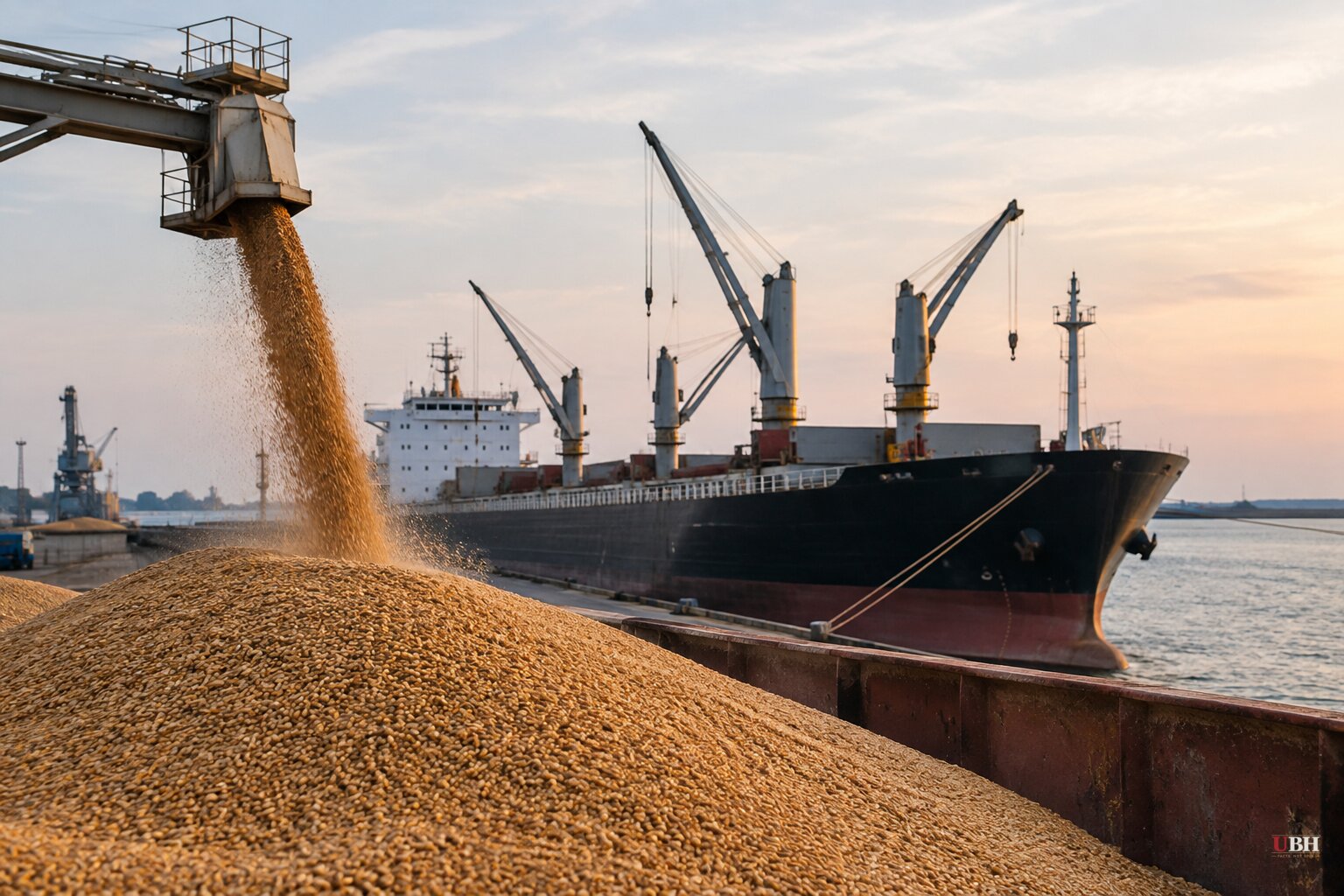
Since Ukrainian and Russian drone and missile strikes on Black Sea port infrastructure intensified in July, Russia's grain export machine has taken a real hit. New shipping data reported by MarineLink on September 11 shows Russia's seaborne grain exports fell 61.9% year-on-year in August to roughly 2.0 million metric tons.
Russian seaborne grain exports for the first two months of the 2026/27 season totaled just 4.2 million tons, down from 8.0 million tons over the same period a year ago, according to the same data. Exports through the Azov-Black Sea basin, which normally carries the overwhelming majority of Russian grain, dropped 73.1% year-on-year in August to 1.3 million tons.
Why It's Collapsing
The damage traces directly to the shooting war. Russian authorities halted navigation in the Sea of Azov in early July after drone attacks, and an August 12 strike knocked out operations at key terminals in Novorossiysk, Russia's largest Black Sea port, according to Reuters reporting carried by Ukraine's NV outlet.
Shipping analytics from Cyprus Shipping News confirm the scale of the drop: wheat loadings from Russia's four deep-sea Black Sea terminals—Novorossiysk, Taman, Kavkaz and Tuapse—fell roughly 60% over the five weeks ending August 28 compared with the same stretch in 2025. Novorossiysk's own volume roughly halved. No qualifying wheat loading was recorded at Kavkaz at all. Tuapse, the smallest terminal, was the only one to post a gain.
Moscow's Workaround: Rail Subsidies to the Far East and Baltic
Russian Agriculture Minister Oksana Lut told Bloomberg that Russia is now turning to its Far East as an alternative export channel. Russia's Federal Agency for Railway Transport has expanded subsidized rail routes covering 17 regions, funneling grain to port stations in the Krasnodar region and northwestern Russia for onward Baltic shipment, according to ukragroconsult.com. Grain from five Siberian regions is now eligible for subsidized rail to Far East ports, with the federal budget covering the transport cost rather than shippers.
The numbers show how thin that lifeline is. Far East seaborne exports doubled in August, but only to 87,000 tons, according to MarineLink, a rounding error next to what the south normally moves. Baltic basin exports rose by just 276,300 tons in August. Cyprus Shipping News reports Baltic rail booking requests hit 5 million tons by August 18, nearly matching the 6 million tons requested for Novorossiysk and Tuapse combined, but Russia's Baltic terminals have an estimated annual handling capacity of only about 7 million tons, versus the roughly 46.3 million tons the Azov-Black Sea basin moved last season alone.
Putin Says No Shortage. The Data Says Otherwise.
Vladimir Putin has publicly acknowledged Russia is having export problems but insists Moscow will resolve them and that Russia will still ship around 60 million tons of grain this season, with no shortages hitting global markets, according to Reuters reporting via NV. SovEcon, an agricultural consultancy, estimated August exports would tick up slightly to 2.2 million tons from 1.95 million tons in July, still less than half of the 4.5 million tons Russia exported in August 2025.
That is Putin's strongest case: exports haven't stopped, alternative routes exist, and Russia is actively subsidizing them rather than letting the sector collapse outright. The underlying volumes, whether measured at 2.0 million or 2.2 million tons depending on the dataset, remain roughly 55-60% below last year's pace. Neither Bloomberg nor Cyprus Shipping News finds evidence the Baltic or Far East can close that gap this season.
The War Is Spilling Into Moldova
The grain fight is also dragging in Moldova. Stanislav Secrieru, national security advisor to Moldovan President Maia Sandu, told Fox News Digital that Russia began striking Ukrainian border infrastructure along the Moldovan frontier in August, targeting rail corridors that now carry Ukrainian grain toward Romanian ports since Black Sea shipping became too dangerous. Moldova cut rail transit tariffs in half to keep that grain moving, Secrieru said.
Secrieru also told Fox News Digital that Russia violated Moldovan airspace 17 times in August, the highest monthly total since the full-scale invasion began in February 2022, which Sandu's government has called an intimidation campaign against a country that isn't even a NATO member.
Prices Are Already Moving
The squeeze is showing up on trading floors. CBOT wheat futures closed at $7.4825 a bushel, up 45 cents in a single session and hitting the daily limit, according to Reuters reporting cited by economy.ac, marking a multi-year high. Corn and soybean futures also jumped. The UN Food and Agriculture Organization's Cereal Price Index rose 3.4% month-on-month and 6.9% year-on-year, per the same reporting.
What comes next depends partly on whether Russia can keep its Black Sea terminals operating at all. Ukrainian and Russian strikes on port infrastructure have continued through September, and ukragroconsult.com reported September 12 that Estonia will no longer allow Russian grain transit through its ports, closing off yet another workaround Moscow might have leaned on. Whether Russia hits its stated 60-million-ton export target this season or falls well short as the current data trend suggests will show up in global wheat prices long before Moscow admits it in public.
Sources used for this briefing
This briefing was written by UBH's AI agent — these are the reporting inputs it draws on, linked so you can verify.


