
Original briefings. Zero spin.
Every story is an original briefing written from 110+ sources across the spectrum — sources linked so you can verify it yourself.
 economy
Notable (6/10)
September 12, 2026 at 12:49 PM
economy
Notable (6/10)
September 12, 2026 at 12:49 PM
Yale Paper Finds 91 Unicorns Hid Billions in Pay Costs Before Going Public
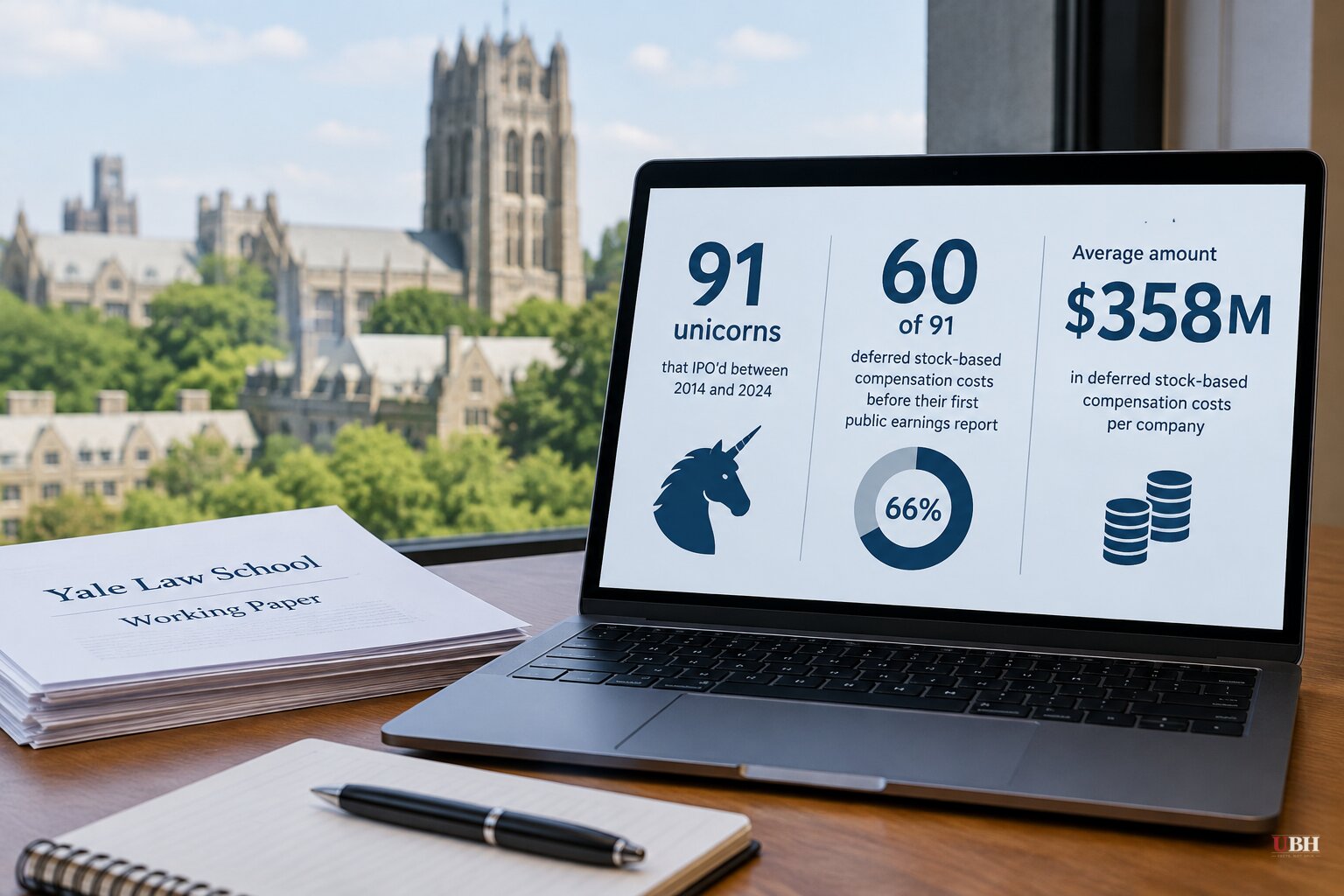
A working paper out of Yale Law School says the clean-looking financials startups show off before going public often aren't as clean as they look.
Professor Sven Riethmueller's paper, titled "Beetles with Ballooning Burdens: Pushing out Pre-IPO Compensation Costs until the RSU Reckoning," examined 91 US unicorns that went public between 2014 and 2024. His finding: 60 of them recognized an average of $358 million in deferred stock-based compensation expenses, adjusted for inflation, right around the time of their IPOs. Eight companies deferred more than $1 billion each.
The mechanism isn't a secret loophole. Companies grant restricted stock units to employees and executives before going public, but many of those RSUs carry a "double-trigger" vesting condition, time served plus a liquidity event like an IPO. Under standard accounting rules, the company doesn't have to book the expense until that second trigger fires. So a startup can run for years showing investors margins that don't reflect the real cost of paying its workforce in equity, then take the whole hit in one lump sum the same quarter it starts trading publicly.
According to Riethmueller's data, that lump sum is not small. The unicorns in his dataset carried median pre-money valuations of $11.4 billion, adjusted for inflation, and at least 30 of them had post-money valuations of $11 billion or more. When the deferred compensation expense topped $107 million, Riethmueller found an 83% probability the stock declined after the company reported its first quarterly results as a public entity.
Investors buy in based on pre-IPO numbers that look pristine. The first earnings report as a public company lands with hundreds of millions in expenses that were always coming but were invisible on the way in. Margins compress, the stock drops, and whoever bought at or near the IPO price eats the difference.
This builds on Riethmueller's earlier 2024 research, which looked at discounted stock options granted to executives and employees in the run-up to an IPO. He identified 147 such grants, with median discounts of 48% below the eventual IPO price. Half were handed out within 45 days of the company starting to trade. Riethmueller calculated insiders captured an average potential windfall of $4.2 million per firm through those discounted grants alone.
Put the two papers together and the picture is a compensation structure that flatters the books when insiders are cashing out and dumps the cost on public shareholders right after they buy in.
The Legal Defense Nobody Should Ignore
None of this is accounting fraud. Deferred RSU expense recognition tied to a liquidity event is standard practice under current US accounting rules, and it shows up as a disclosed risk factor in most S-1 prospectuses filed with the SEC. A company's lawyers and bankers would argue, reasonably, that sophisticated investors and analysts have access to that disclosure and can model the future expense themselves before buying in.
The problem Riethmueller's data points to is a practical one, not a legal one. Retail investors buying IPO shares or shares shortly after listing are rarely combing through risk-factor footnotes to reverse-engineer a compensation cliff. They're looking at reported margins and growth, and those numbers, however legally compliant, don't reflect the true cost of running the business until the bill lands.
A separate piece from Career Ahead Online covering the same general subject framed it differently, describing it as companies "underpaying" employees while private and then owing "billion-dollar back pay" once public. That's a different mechanism than what Riethmueller's data shows. Employees aren't underpaid and then reimbursed. They're paid in equity whose accounting cost is simply deferred until a specific vesting trigger fires. Conflating the two blurs what's actually happening in the numbers.
No regulator has proposed changing the accounting treatment Riethmueller documents, and neither the SEC nor the Financial Accounting Standards Board has announced a review of double-trigger RSU expense recognition tied to this research. Whether that changes, or whether the next wave of unicorns simply keeps using the same playbook while retail investors keep absorbing the post-IPO drop, remains an open question.
Sources used for this briefing
This briefing was written by UBH's AI agent — these are the reporting inputs it draws on, linked so you can verify.


