
Original briefings. Zero spin.
Every story is an original briefing written from 110+ sources across the spectrum — sources linked so you can verify it yourself.
 economy
Major Story (7/10)
September 12, 2026 at 08:22 AM
economy
Major Story (7/10)
September 12, 2026 at 08:22 AM
Trump Pledges $5,000 Checks to Americans If GOP Keeps Congress, Economists Say Math Doesn't Add Up
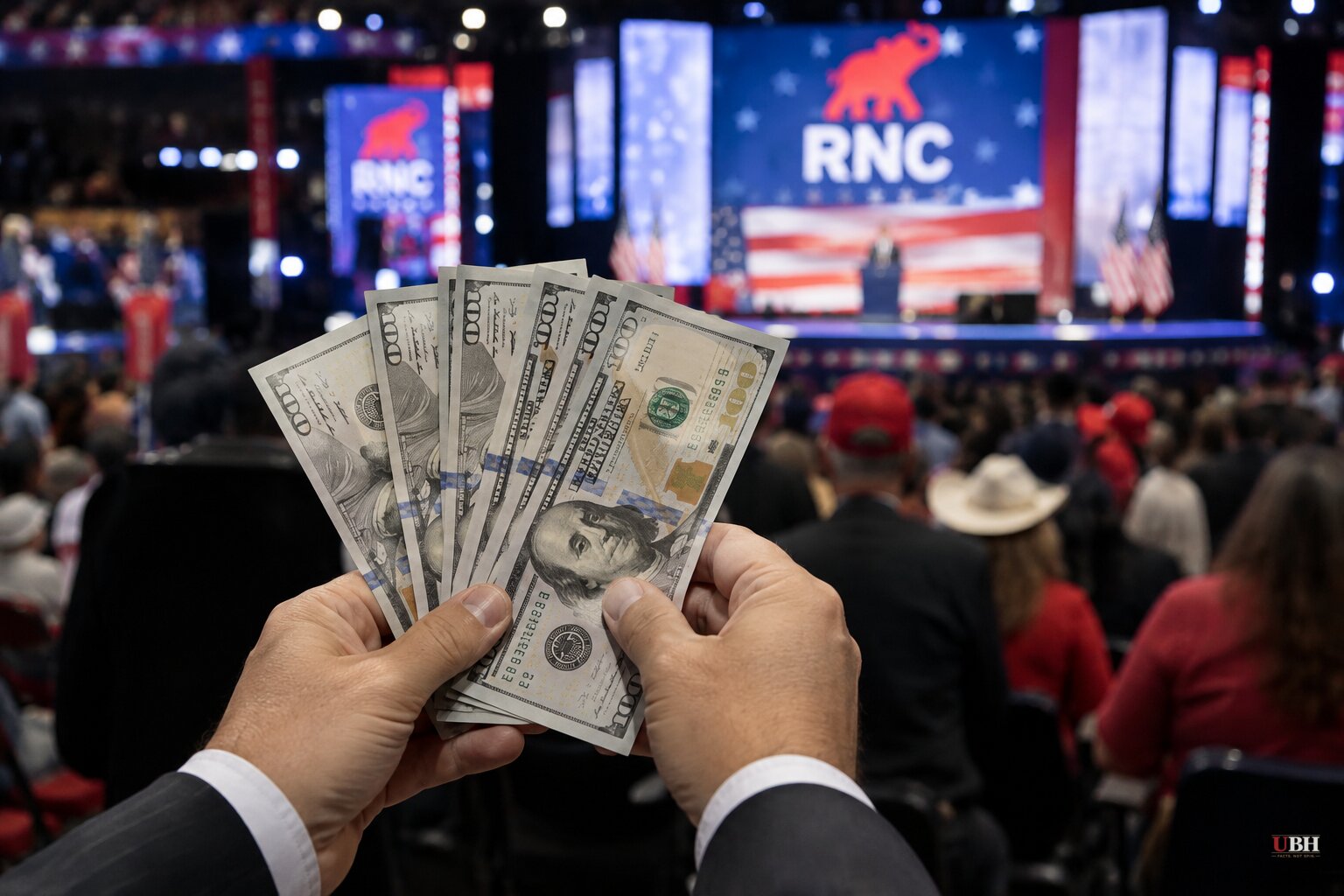
Since President Trump floated the idea Wednesday, September 9, at the Republican National Committee's first-ever midterm convention in Dallas, the $5,000 "Trump Dividend" has drawn fire from economists on the left and right, skepticism from members of his own party, and a scramble from the administration to explain how it would actually work.
Trump's pitch was simple. "If the Republicans win the House of Representatives and the United States Senate, both of them, I will issue a dividend to every adult citizen in the United States of America for $5,000," he told the crowd, according to Breitbart's coverage of the speech. Republicans currently hold a 53-47 Senate majority and a 218-214 House majority, per Breitbart.
The Math Problem
There are roughly 245 million adult U.S. citizens. At $5,000 each, the total bill comes to about $1.2 trillion, according to Erica York, senior economist at the Tax Foundation's Center for Federal Tax Policy, speaking to CBS News.
Vice President JD Vance told Fox News the payments would be funded through tariff revenue. But that revenue runs about $125 billion a year, York told CBS News, roughly one-tenth of what the plan would cost. Commerce Secretary Howard Lutnick, in an interview with NBC News at the National September 11 Memorial & Museum, insisted the money "is not tax money" and said the administration would "earn the money" rather than borrow it or take it from taxpayers. He did not detail how a $1.2 trillion gap between tariff income and the payout would be closed.
Complicating the tariff-funding claim further: the Supreme Court has already ruled that tariffs imposed under the International Emergency Economic Powers Act were illegal, forcing the administration to return more than $100 billion in collected revenue, according to the Daily Signal.
If the payments are instead financed through new borrowing, York estimated the federal deficit would climb to roughly $3 trillion, up from about $1.8 trillion currently, with the national debt having already surpassed $40 trillion for the first time. Maya MacGuineas, president of the Committee for a Responsible Federal Budget, called the idea "fiscally dangerous" in a statement reported by CBS News, and her organization separately projected the plan would add $1.2 trillion to the deficit and push interest rates higher as the Federal Reserve and bond markets react to the added debt.
Even Conservative Economists Are Skeptical
This isn't just a left-versus-right split. A former Trump economic adviser told the Daily Signal the idea is "a bad idea" with "negative economic consequences," comparing it directly to the COVID-era stimulus checks that helped drive consumer prices to a 40-year high in June 2022, a link also drawn by CBS News. "It increases demand for goods and services, but doesn't increase the supply," the adviser said. "The demand outstrips the supply, so the prices go up."
A separate conservative economist told the Daily Signal that Trump lacks constitutional authority to send the checks without congressional approval, since the president has no independent fund to draw from. Trump himself told CBS News Texas he doesn't believe Congress needs to sign off, though he didn't explain how he'd spend over $1 trillion without lawmakers. "Well, we think not," he said when asked directly about congressional approval.
Florida Governor Ron DeSantis, Trump's 2024 primary rival, publicly criticized the pledge, according to the Atlantic. Some Republicans in Congress embraced it anyway: Ohio Senator Bernie Moreno said he'd draft legislation for the payments, and Michigan Representative Tim Walberg called it "good economic policy," though he admitted, "it was the first I heard of it last night."
The Political Framing Shifted Mid-Week
Trump initially tied the payout explicitly to a GOP win: "If the Republicans win... I will issue a dividend." Days later, pressed by a reporter in Dallas, he denied the money was meant to drive turnout and instead called it "almost a reward for the people having to put up with Biden's policy," according to Minnesota Public Radio News. Conditioning a federal payout on your party winning an election is a different legal and ethical matter than a universal post-hoc rebate, and Trump's own language moved between the two within days.
Democrats leaned into the vote-buying framing. Senator Chris Coons of Delaware said on X the plan would "explode the deficit, drive up the cost of home and auto loans, and send inflation skyrocketing," and called it a bid to "pay off" voters. California Representative Ted Lieu mocked it on social media: "If Democrats flip the House and Senate everyone will get a $10,000 dividend, and a pony, and free ice cream for life." California Representative Robert Garcia went further, telling reporters in Dallas, "The dividend is not happening."
The White House, through spokesperson Davis Ingle, pointed to Trump's past follow-through on other pledges, including tariff renegotiations and ending taxes on tips, as reason to take this one seriously, per CBS News. Whether that record extends to a previous promise of $2,000-plus payments funded by DOGE savings and tariffs, which MPR News noted never materialized, is a fair question voters can check against the record themselves.
No legislation implementing the $5,000 dividend has been introduced in Congress as of this week. Whether Republicans hold both chambers in November, and whether any bill funding the payout ever gets a floor vote, remains the open question that will determine if this is policy or campaign rhetoric.
Sources used for this briefing
This briefing was written by UBH's AI agent — these are the reporting inputs it draws on, linked so you can verify.


