
Original briefings. Zero spin.
Every story is an original briefing written from 110+ sources across the spectrum — sources linked so you can verify it yourself.
 economy
Major Story (7/10)
September 12, 2026 at 10:18 AM
economy
Major Story (7/10)
September 12, 2026 at 10:18 AM
Morgan Stanley Sets October Deadline for Data Centers as Local Backlash Spreads From Texas to Louisiana
The clock, not the capital, is the problem
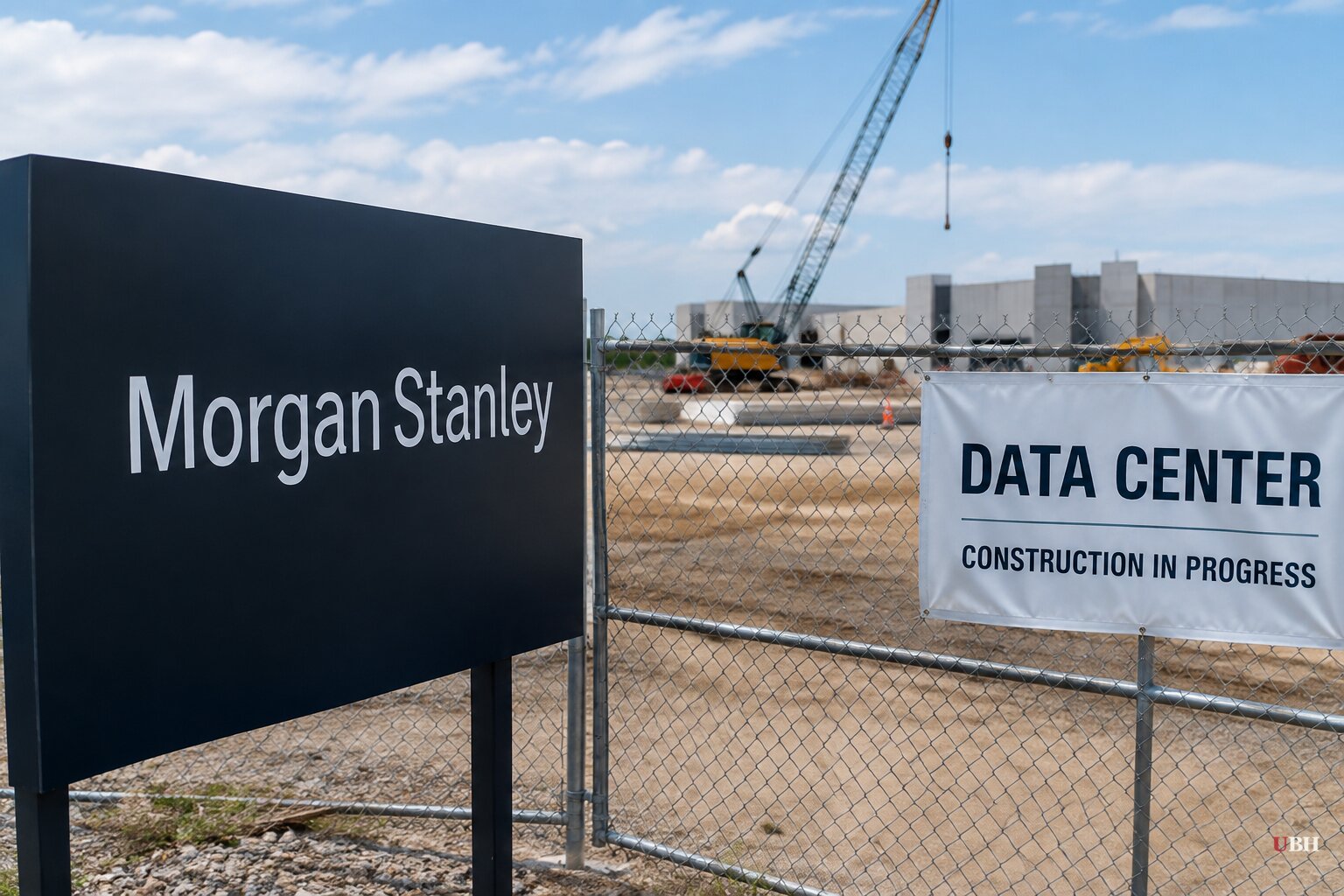
Morgan Stanley says any U.S. data center that wants to be operational before the end of 2027 needs to break ground by October, according to the bank's analysis reported by Crypto Briefing and KuCoin. Construction now runs two to three years minimum from shovel to switch-on. Miss October, and a project simply isn't contributing to 2027 capacity, period.
That deadline lands while spending is exploding. Capital expenditures across Microsoft, Amazon, and Alphabet are projected to hit roughly $785 billion in 2026, climbing toward $1 trillion in 2027, per the same analysis. Bernstein estimates 35 to 40 percent of globally announced data center capacity faces meaningful risk of delay or cancellation through 2027. JPMorgan found more than 60 percent of planned 2027 capacity hasn't started construction yet, with another 7 percent already delayed.
The hard constraint underneath all of it is power. Morgan Stanley projects a 38 gigawatt shortfall for U.S. data centers through 2028, with grid interconnection queues in some regions stretching five to seven years. A company can buy land and win every permit fight and still wait most of a decade for the local utility to guarantee reliable power at scale.
Texas pulls the brakes, then gets pushback
Gov. Greg Abbott issued a sweeping data center moratorium in early August, which he said has halted up to 1,800 projects, according to the Daily Caller News Foundation. Abbott's guardrails require data centers to bring their own power, reuse their own water, and avoid straining the grid or disrupting neighborhoods. His press secretary, Andrew Mahaleris, told the Daily Caller that companies across the state have already announced compliance with those standards.
The reaction split fast. Coinbase CEO Brian Armstrong, whose company reincorporated in Texas last November, called the move "unfortunate" and said requiring data centers to bring their own power should have been enough without a broader halt. President Donald Trump also weighed in, calling it a mistake and saying data centers "could be bigger than oil" for the state's economy, according to the Daily Caller.
A Republican governor is moving to protect ratepayers and grid reliability, while a Republican president and a major tech CEO argue the restriction slows American AI competitiveness. Neither side is obviously wrong. Abbott's guardrails target real cost-shifting risks; Trump and Armstrong are pointing at a real race against China and against Morgan Stanley's October clock.
The NDA problem
In Rapides Parish, Louisiana, a 300-acre data center project from Dallas-based Applied Digital Corp. was negotiated under a nondisclosure agreement that kept terms hidden from residents, NPR reported. Local beekeeper Foster Hensel, who lives near the site, said the secrecy left him distrustful of local leadership. Eric Bonds, an environmental sociologist at the University of Mary Washington, found NDAs were used in at least 25 of 31 data center projects his team surveyed in Virginia last year, calling the practice "standard."
Lawmakers in Michigan, Oklahoma, Kentucky, and Ohio have introduced bills to ban the practice, and Pennsylvania Gov. Josh Shapiro banned NDA use on projects overseen by his agencies. Companies and local officials defend the agreements as necessary to protect competitive terms during negotiations. Residents counter that if a project is going to affect their water bills and power rates, they deserve to know the terms before it's signed, not after.
Not every project ends in local backlash
Quincy, Washington, now hosts more than 30 data centers that generate an estimated 57 percent of the town's property tax revenue, funding a $15 million aquatic center, a $120 million high school, and a new hospital, according to Epoch Times reporting on CNN's coverage of the town. Residential electricity rates there rose 3.5 percent last year while the data centers themselves absorbed a 9.1 percent increase, meaning the industrial users are largely paying for their own added grid costs. Microsoft also built a $30 million water reuse facility with the city.
Contrast that with Colossus 1, where Epoch Times reports the company's water use is "actively causing problems with the local aquifer." Microsoft's West US 3 site near Phoenix is a middle case: good-faith mitigation (a $40 million investment in the local water utility, a zero-water cooling pilot, published sustainability data) built in a genuinely poor location, an arid desert region already short on water.
An unresolved claim about who's funding the opposition
Brittany Kaiser, a former Cambridge Analytica employee and self-described election whistleblower, told Fox News Digital that a surge of anti-data-center social media activity looked like a coordinated, foreign-funded influence campaign, similar to election interference she says she witnessed previously. "What looked like billions of dollars were poured into targeted social media campaigns," Kaiser said, adding it seemed "very deliberate."
No investigation has been announced, and no evidence beyond Kaiser's own assessment has been presented in available reporting. Her claim is an allegation from a named source, not a documented finding, and it should be read that way. Genuine, homegrown opposition to data centers is well documented on its own terms: the Washington Post has flagged rising utility costs, water and energy strain, noise complaints, and job-displacement fears as reasons Americans are pushing back, with the issue already surfacing in Michigan's Senate race. Local resistance doesn't need a foreign hand to explain it. Residents in Rapides Parish and Hill County, Texas, who showed up to protest transmission lines in August had their own bills and their own aquifers in mind.
What comes next
Morgan Stanley's October marker is weeks away. Whichever projects haven't broken ground by then are, in the bank's own framing, effectively locked out of 2027 capacity regardless of how much capital is behind them. Whether state legislatures move to ban NDAs before more Rapides Parish situations unfold, and whether Abbott's Texas guardrails become a model other red states copy or a cautionary tale Trump keeps citing, are both open questions heading into 2027.
Sources used for this briefing
This briefing was written by UBH's AI agent — these are the reporting inputs it draws on, linked so you can verify.


