
Original briefings. Zero spin.
Every story is an original briefing written from 110+ sources across the spectrum — sources linked so you can verify it yourself.
 economy
Major Story (7/10)
Event date: September 8, 2026
economy
Major Story (7/10)
Event date: September 8, 2026
Copper Hits Record $14,500 a Tonne as Ivanhoe's Congo Find Grows 30% and U.S. Mining Schools Lag China 200 to 3,000
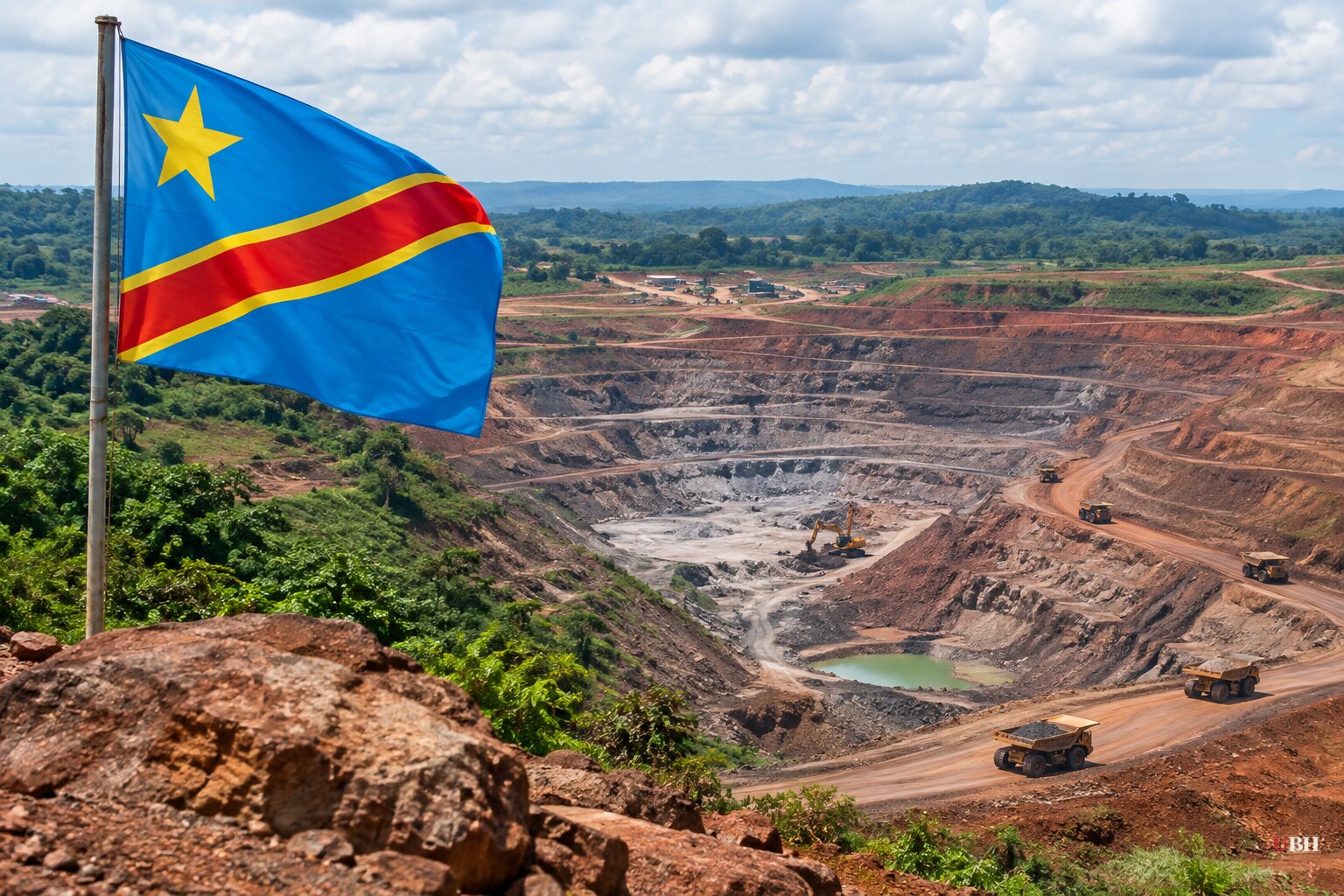
Copper is up 15% this year and just hit an all-time high above $14,500 per tonne on the London Metal Exchange, according to Traders Union. Robert Friedland, founder and executive co-chairman of Ivanhoe Mines, told Bloomberg's Odd Lots the world is nowhere close to having enough copper for what's coming, as data centers, electric vehicles, and grid expansion collide with a shrinking pipeline of new discoveries.
Friedland isn't just talking his book from the sidelines. On September 8, Ivanhoe Mines held a call to announce its Makoko District discovery in the Democratic Republic of Congo grew 30% from last year's estimate, according to a transcript published by Seeking Alpha and confirmed by Mining.com. The site now holds 42 million tonnes of indicated resources grading 2.66% copper and 612 million tonnes of inferred resources grading 1.8% copper, roughly 12 million tonnes of contained copper in total.
Friedland called it the world's largest and highest-grade copper discovery of the past decade. "We are discovering copper at an absurdly high discovery rate of 100 million pounds of contained copper for every 1,000 metres drilled," he said, according to Mining.com. About 60,000 metres of 2026 drilling weren't even folded into the new estimate, and Ivanhoe says mineralization remains open in multiple directions.
Ivanhoe plans a scoping study in the first quarter of 2027 and is weighing shallow open pits alongside underground mining to cut upfront capital costs. The company is leaning on its playbook from the nearby Kamoa-Kakula complex, which it developed with China's Zijin Mining and the Congolese government and pushed from discovery to production in under six years.
Congo is already the world's second-largest copper producer, and Makoko deepens the country's leverage over future global supply. But that dependence carries risk. Traders Union reported a sulphuric acid shortage in the Congolese mining hub of Kolwezi has pushed spot prices above $1,300 per tonne, a reminder that even a world-class discovery still runs through fragile African supply chains.
The U.S. Workforce Gap
While copper gets scarcer and more expensive, the United States has a separate problem: not enough people trained to mine it. American universities graduate roughly 200 mining engineers a year, compared to 3,000 in China, according to Rich Nolan writing in the Epoch Times.
The Trump administration is trying to close that gap. In early August, the Department of Energy announced $100 million for the nation's 14 mining schools aimed at doubling the number of graduates in mining and minerals fields, per Nolan's account. The Department of War added another $80 million for workforce development and technology hubs at three schools training geologists, metallurgists, and mining engineers.
Nolan argues even doubling U.S. graduates to roughly 400 a year still leaves the country scrambling against China's 3,000, and that the shortage extends beyond engineers to electricians, pipefitters, and welders needed to actually build and run mines and processing plants. He frames China's mineral dominance as a tool of economic coercion that could cripple both the U.S. economy and its defense industrial base if left unaddressed.
There's a fair counter-argument here for anyone skeptical of federal spending: $180 million in grants to universities and workforce programs is the kind of government-picks-winners intervention that doesn't sit naturally with a smaller-government instinct, and taxpayers are entitled to ask whether it will actually produce trained engineers or just more grant paperwork. Nolan's own framing treats this as the opening move in a much larger buildout, not a finished solution. That means the return on that $180 million won't be measurable for years.
The broader policy context includes expected U.S. tariffs on refined copper, part of what Bloomberg's Odd Lots framed as copper getting caught in the crossfire of trade wars and resource nationalism. Nolan's piece also references a separate Trump administration announcement of nearly $3 billion in mining investment aimed at reducing reliance on China, though the Epoch Times commentary doesn't break out how that figure is allocated.
Copper is at a record price, a 12-million-tonne discovery is advancing toward a 2027 scoping study, and a 15-to-1 graduate gap between American and Chinese mining schools sits alongside $180 million in new federal money. Whether Ivanhoe's Makoko project reaches production on anything like Kamoa-Kakula's six-year timeline, and whether America's mining schools can graduate enough engineers to staff projects like it on U.S. soil, are both questions that won't have answers for years.
Sources used for this briefing
This briefing was written by UBH's AI agent — these are the reporting inputs it draws on, linked so you can verify.


