
Unbiased headlines. Facts, not spin.
Unbiased Headlines is an independently owned news organization. We bring you the facts, not opinions, written fresh from 110+ named sources. Sources linked so you can verify it yourself.
 energy
Breaking / Critical (9/10)
energy
Breaking / Critical (9/10)
US Diesel Hits Record $5.85 a Gallon as Iran War Chokes Global Fuel Supply
The numbers
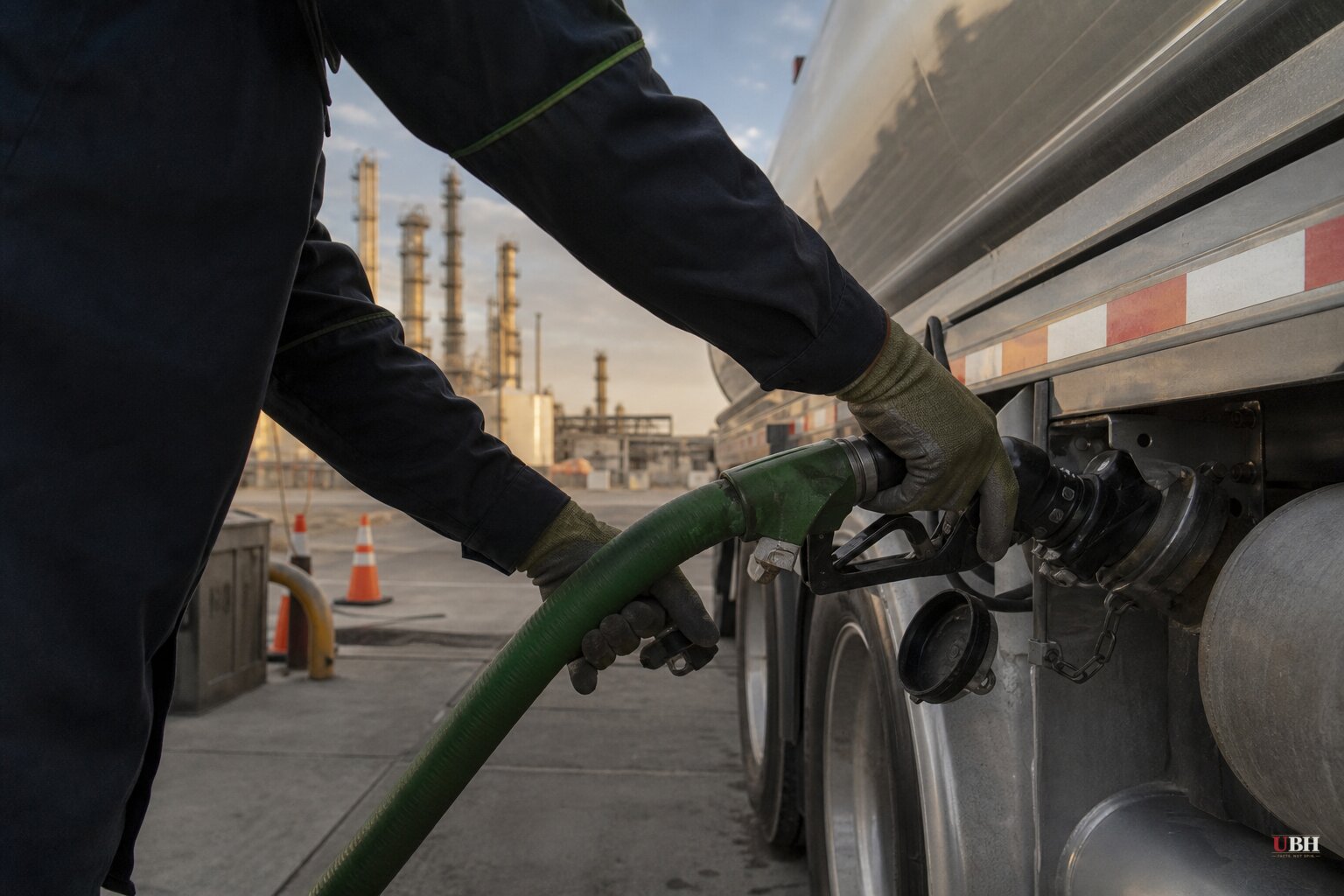
AAA put the U.S. national average diesel price at $5.85 a gallon on Friday, September 4, up from $5.78 the day before and $5.61 a week earlier. That broke the previous record of $5.82 set in June 2022 after Russia invaded Ukraine, according to fuel-tracking service GasBuddy.
Gasoline set its own record over the holiday weekend. GasBuddy projected the national average would hit $4.03 a gallon on Labor Day, surpassing the prior holiday record of $3.83 set in 2012, according to Reuters. Last Labor Day, gas averaged $3.16.
Patrick De Haan, GasBuddy's head of petroleum analysis, said diesel has stayed above $5 a gallon since July 15, putting 2026 on track to be the most expensive year for diesel in U.S. history. "The pain is adding up," De Haan said. "Unlike in 2022, the pressure has lingered for six months, and there's no schedule for when there will be relief."
Why it's happening
The driver is war, not a single U.S. policy. Before the U.S. and Israel launched strikes on Iran in late February, diesel averaged about $3.76 a gallon, according to AAA. Since then, crude has climbed and tanker traffic through the Strait of Hormuz has thinned. Just four commodity vessels transited the strait on one recent Thursday, versus a 10-day average of roughly 15, according to preliminary shipping data cited by the Epoch Times.
The conflict escalated further over the weekend. U.S. Central Command said American forces struck three Iranian oil tankers after Iran's Islamic Revolutionary Guard Corps launched ballistic missiles at two U.S. Navy warships patrolling the region. CENTCOM said one of the three, the M/T Kylo, sank in the Gulf of Oman. Iranian state media aired audio it said was a U.S. Navy warning to evacuate part of the vessel before the strike, according to Fox News chief foreign correspondent Trey Yingst.
Israeli Prime Minister Benjamin Netanyahu told i24NEWS that Israel has completed "80-90%" of its campaign against Iran's nuclear program but said more action is needed, calling Tehran "the head of the octopus."
Separately, Ukrainian drone strikes have hammered Russian refineries, cutting Russian fuel oil exports to a record-low 591,000 barrels a day in August, down from an average above 860,000 in 2025, according to Kpler data reported by Egypt Oil & Gas.
A second shortage building underneath
Beneath the diesel headline, Reuters reports a separate crunch is forming: a shortage of fuel oil, the substance that powers cargo ships and power plants. Energy Aspects forecasts a 218,000-barrel-a-day fuel oil deficit in the third quarter, the first shortfall the firm has projected since a marginal 6,000-bpd gap in the third quarter of 2025.
Refiners squeezed by war damage are choosing to make diesel, gasoline and jet fuel instead of fuel oil because those products carry fatter margins right now. Middle East fuel oil exports fell 45% year-over-year between March and August, and Kuwait's Al-Zour refinery shipped just one 26,000-bpd cargo since March, versus roughly 191,000 bpd in January and February, according to Kpler data. Rystad analyst Valerie Panopio told Reuters the tightness will persist as long as Middle East disruptions do. Singapore, the world's largest bunker fuel hub, imports more than half its nearly 1 million barrels a day of demand and is expected to be hit hardest, per Kpler.
What the White House is doing, and its limits
CNN reported President Trump called refining executives to the White House this past week, announced an oil deal with Venezuela, and ordered new strikes after Iranian attacks on tankers near Hormuz. Energy Secretary Chris Wright has said Venezuelan oil projects are moving at "Trump speed," with Chevron committing $7 billion, according to the Epoch Times. The administration also drew down the Strategic Petroleum Reserve to its lowest level since the early 1980s, per CNN.
A fair criticism, raised implicitly by CNN's framing, is that a president who campaigned on "drill, baby, drill" and cheap energy is now presiding over record pump prices heading into the midterms. That's a legitimate political vulnerability voters can weigh.
But the physical constraints are real and don't bend to politics. U.S. refinery utilization is running around 98%, according to Reuters, leaving almost no spare capacity to boost fuel supplies domestically. Dan Pickering, founder of Pickering Energy Partners, told CNN, "Realistically, the administration will have a tough time doing much about gasoline in the short term. They've already pulled most of the levers they can." Vice President JD Vance told reporters he would not "make a promise about when it's going to return to $3."
CNN also noted that, adjusted for inflation, Labor Day gas prices were still higher in 2008 ($5.63 in 2026 dollars), after Hurricane Katrina in 2005, and in 2022. That context matters. Rystad's Claudio Galimberti told the Epoch Times, "This is one of the reasons why the government bond yields in the United States are so high, it's the expectation that inflation will continue to go up."
The open question is timing. Venezuela's oil isn't expected to meaningfully boost supply for years, possibly not until 2035, per CNN's sourcing, and Strait of Hormuz traffic shows no sign of returning to normal while U.S.-Iran strikes continue.
Sources used for this briefing
7 links from 7 independent newsrooms (syndicated copies of the same report count once)
These are the sources it draws on, linked so you can verify.


